
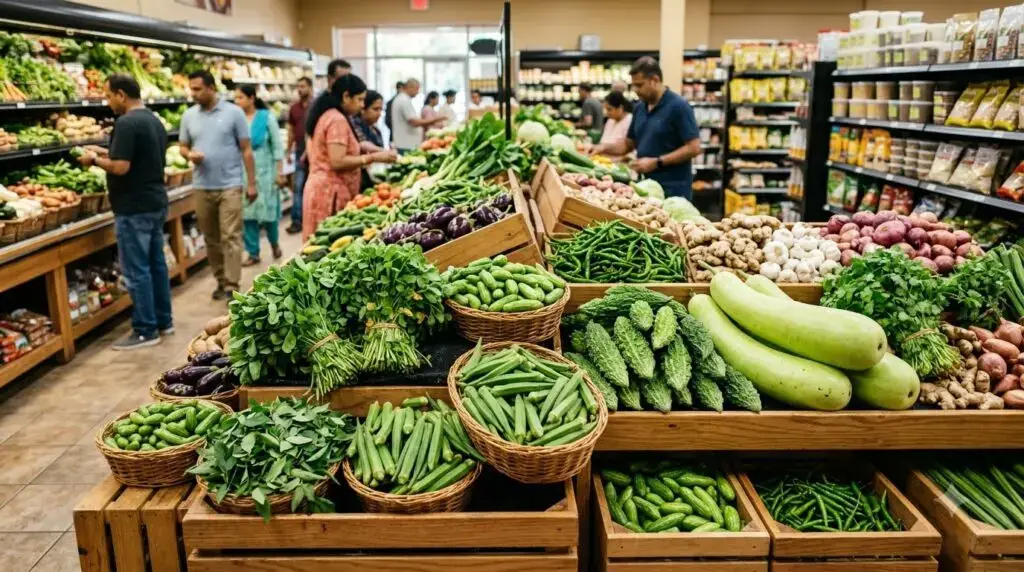
Fresh produce can determine whether an Indian dish tastes bright and balanced or tired before it reaches the table.
Aloo methi needs aromatic leaves. Bhindi should remain firm enough to cook without becoming overly soft. Lauki needs a tender, hydrated texture. Curry leaves should release a noticeable aroma when handled. Coriander should look lively enough to survive both the chutney and the garnish.
That is why buying Indian vegetables in NJ requires more than placing familiar produce into the cart.
A smart shopper should consider:
- Firmness
- Color
- Surface moisture
- Aroma
- Bruising
- Intended recipe
- Cooking schedule
- Refrigerator space
- Seasonal and store availability
Subzi Mandi identifies itself as a New Jersey Indian supermarket carrying South Asian groceries and fresh produce. Its current contact page lists stores in Iselin, Cherry Hill, East Windsor, Hamilton Township, Parsippany and Piscataway.
Product selection can vary by store and delivery day, so contact the intended location when a specific vegetable is essential to the week’s menu.
How Can You Tell Whether Indian Vegetables Are Fresh?
Use this vegetable-by-vegetable guide:
| Vegetable | Choose | Avoid |
| Methi | Green leaves, noticeable herbal aroma, tender-looking stems | Yellowing, slimy leaves, sour smell |
| Okra or bhindi | Firm, dry pods with clean-looking ends | Wet slime, deep dark patches, collapsed pods |
| Karela | Firm body, defined ridges, no leaking areas | Soft ends, mushy spots, severe shriveling |
| Lauki | Firm, smooth skin, solid weight for its size | Cracks, soft patches, leaking or collapsed areas |
| Tindora | Firm, compact pieces with fresh green color | Wrinkled, soft or heavily yellowed pieces |
| Turai | Firm ridges and unbroken skin | Deep bruises, leaking or soft sections |
| Drumsticks | Green, firm pods without badly dried ends | Brittle, heavily browned or hollow-feeling pods |
| Curry leaves | Fragrant, flexible, green leaves | Blackened, brittle or odorless leaves |
| Coriander | Green leaves, firm stems, clean aroma | Slime, yellowing or decaying stems |
| Green chilies | Firm, smooth or glossy skin | Wrinkled, split or soft chilies |
| Amla | Firm, smooth fruit without major bruises | Shriveling, softness or broken skin |
Freshness does not mean every item must look cosmetically perfect.
Minor natural marks may not affect cooking quality. Softness, leakage, decay, mold and unpleasant odors are stronger reasons to leave an item behind.
Use Four Checks Before Buying Produce
A simple four-part inspection works across most Indian vegetables.
1. Check firmness
Gently handle the vegetable without squeezing or damaging it.
Firmness is especially important for:
- Okra
- Karela
- Lauki
- Tindora
- Turai
- Parval
- Tinda
- Drumsticks
- Eggplant
Firm does not always mean hard.
An extremely mature vegetable may feel hard but cook fibrously. Look for a solid, fresh texture without collapsed or mushy areas.
2. Examine the surface
Look for:
- Cuts
- Wet patches
- Mold
- Leaking
- Deep bruises
- Excessive shriveling
- Blackened areas
The FDA recommends choosing produce that is not bruised or damaged and discarding items that appear rotten.
3. Notice the aroma
Aroma is particularly useful for:
- Methi
- Mint
- Coriander
- Curry leaves
- Ginger
- Green chilies
Fresh herbs should smell recognizable when handled gently.
A sour, fermented or decaying odor is different from the naturally strong smell of ingredients such as methi or bitter vegetables.
4. Match the vegetable to the cooking date
Do not buy every vegetable as though it has the same storage life.
Cook delicate ingredients first:
- Methi
- Coriander
- Mint
- Spinach
- Curry leaves
- Other leafy greens
Plan firmer vegetables later:
- Karela
- Tindora
- Turai
- Whole lauki
- Cabbage
- Carrots
This order can vary according to the condition of the produce when purchased. Inspect everything again at home rather than trusting the shopping date alone.
How to Choose Fresh Methi
Methi is commonly used in:
- Aloo methi
- Methi paratha
- Thepla
- Dal
- Saag
- Rice dishes
Choose a bunch with:
- Predominantly green leaves
- A fresh herbal aroma
- Stems that do not look badly dried
- Minimal slime or blackening
Some leaf variation is normal. The problem is not one imperfect leaf but a bunch that appears wet, crushed, yellowed throughout or actively decaying.
Shopping strategy
Buy methi only when it has a clear place in the upcoming meal plan.
Leafy greens lose quality more quickly than onions, potatoes or firm gourds. Buying several bunches without a cooking schedule often produces more refrigerator compost than methi paratha.
Storage approach
Remove badly damaged leaves, keep the bunch reasonably dry and refrigerate it with moisture-absorbing paper in a suitable bag or container.
Do not tightly compress the leaves.
Wash thoroughly before cooking, then remove excess water according to the recipe.
How to Choose Okra for Bhindi Dishes
Okra is used in:
- Bhindi masala
- Bharwa bhindi
- Kurkuri bhindi
- Sambar
- Dry stir-fries
Choose pods that are:
- Firm
- Dry on the surface
- Free from obvious slime
- Not deeply bruised
- Suitable in size for the intended recipe
Small and medium pods often cook more tenderly. Very mature pods can become fibrous, although size alone does not determine quality.
Protect okra from excess moisture
Moisture can affect okra’s texture and storage quality.
Keep it dry during refrigeration and wash it before preparation. Dry the pods thoroughly before cutting when the recipe requires a less sticky result.
Do not purchase a large quantity merely because the display looks attractive. Bhindi has a remarkable ability to become urgent the moment another dinner plan appears.
How to Choose Karela
Karela should feel firm from end to end.
Look for:
- Defined ridges
- Intact skin
- No leaking
- No mushy areas
- A solid feel
Karela color can range from lighter to darker green depending on variety and maturity. Strong yellowing or orange development may indicate advanced ripening and a softer texture, which may not suit a typical dry sabzi or stuffed preparation.
Buy according to the intended dish:
- Smaller pieces for quick slicing
- Larger karela for stuffing
- Firmer pieces for chips or dry preparations
Refrigerate and plan to use it while it remains firm.
How to Choose Lauki
Lauki, also known as bottle gourd or doodhi, may be used in:
- Lauki sabzi
- Lauki chana dal
- Kofta
- Soup
- Raita
- Halwa
Choose one with:
- Firm skin
- A solid feel
- No deep cracks
- No leaking
- No large soft patches
A lauki that feels relatively heavy for its size may contain more moisture, but firmness and intact skin are more useful than weight alone.
Plan before buying a large gourd
A large lauki may support more than one meal, but only when there is a plan for the remainder.
After cutting:
- Refrigerate promptly
- Cover the cut surface
- Check it before later use
- Discard it if it develops decay, an unusual odor or an unsafe-looking texture
Do not allow an ambitious gourd purchase to become a week-long refrigerator negotiation.
How to Choose Tindora, Turai, Parval and Tinda
These vegetables may be less common in general supermarkets but are widely used in regional Indian cooking.
Tindora
Choose:
- Firm pieces
- Compact shape
- Minimal shriveling
- No leaking
Useful for:
- Dry sabzi
- Stir-fries
- Coconut-based preparations
- Dal accompaniments
Turai
Choose:
- Firm ridges
- Fresh-looking skin
- No deep bruises
- No collapsed sections
Useful for:
- Light sabzi
- Dal
- Tomato-based curries
- Simple weekday meals
Parval
Choose:
- Firm pieces
- Intact skin
- No large dark or soft areas
Useful for:
- Stuffed preparations
- Dry sabzi
- Curries
Tinda
Choose:
- Firm, compact vegetables
- Unbroken pale-green skin
- No leaking or deep softness
Useful for:
- Curry
- Stuffed tinda
- Light home-style meals
For specialty gourds, recipe planning matters more than vegetable-aisle enthusiasm. Three unfamiliar gourds without a cooking plan are not variety. They are homework.
Curry Leaves, Coriander, Mint and Green Chilies
These smaller ingredients have a large effect on flavor.
Curry leaves
Choose leaves that are:
- Green
- Flexible
- Fragrant
- Not badly blackened
Curry leaves naturally lose moisture over time. A few dry leaves may still provide aroma, but a brittle, odorless bunch offers less value.
Coriander
Look for:
- Green leaves
- Firm-looking stems
- Fresh aroma
- Minimal yellowing
- No slime around the base
Check inside the bunch. The outer leaves may look fresh while the center contains trapped moisture or damaged stems.
Mint
Choose:
- Perky leaves
- Strong mint aroma
- Minimal blackening
- No mushy stems
Green chilies
Choose chilies that are:
- Firm
- Smooth or glossy
- Free from major splits
- Not badly wrinkled
Different varieties vary in heat, shape and color. Ask store staff or check the label when a recipe needs a particular type.
Drumsticks, Amla and Other Specialty Produce
Drumsticks
Drumstick pods are used in sambar and regional curries.
Choose:
- Firm green pods
- Pieces that are not badly dried
- Ends without major decay
- Pods appropriate for the intended preparation
Very mature drumsticks may be woodier and require longer cooking.
Amla
Choose fruit that is:
- Firm
- Smooth
- Free from major bruising
- Not shriveled
Amla may be used in chutneys, pickles, preserves, drinks and traditional preparations.
Subzi Mandi’s website markets South Asian fresh produce, while its exact weekly selection can differ by store. Shoppers seeking a particular vegetable should confirm availability with their chosen location.
Shop by Recipe, Not by Vegetable Name
Build the shopping list around meals.
| Recipe plan | Produce to consider |
| Aloo methi or thepla | Methi, potatoes, chilies, coriander |
| Bhindi masala | Okra, onions, tomatoes, chilies |
| Lauki dal | Lauki, tomatoes, coriander, ginger |
| Karela sabzi | Karela, onions, chilies, lemons |
| Sambar | Drumsticks, okra, eggplant, curry leaves |
| Chutney | Coriander, mint, chilies, lemon |
| Light weekday meals | Lauki, turai, spinach, cabbage |
| South Indian cooking | Curry leaves, drumsticks, okra, eggplant |
| Dry sabzi rotation | Bhindi, tindora, karela, parval |
Then add supporting groceries:
- Dal
- Rice
- Atta
- Oil
- Spices
- Yogurt
- Paneer
- Frozen backup foods
This produces complete meals instead of a refrigerator full of disconnected vegetables.
Store Fresh Produce Safely
The FDA advises refrigerating perishable produce, including herbs and leafy vegetables, in a clean refrigerator at 40°F or below. Pre-cut and packaged produce should also be kept refrigerated.
Use these practical principles:
Keep delicate greens dry but not dehydrated
For methi, coriander and mint:
- Remove decaying sections
- Use absorbent paper to control excess moisture
- Avoid crushing
- Refrigerate promptly
- Check regularly
Keep okra dry
Store without washing when possible and wash before preparation. Dry it before cutting.
Protect cut gourds
Once lauki, pumpkin or another gourd is cut:
- Refrigerate it promptly
- Cover the exposed surface
- Use a clean container or suitable wrap
- Inspect before use
Separate produce from raw animal products
Keep fruits and vegetables away from raw meat, poultry and seafood in the cart, shopping bags, refrigerator and preparation area. The FDA also recommends separate utensils or properly cleaned surfaces to reduce cross-contamination.
Exact storage time varies with freshness at purchase, refrigerator conditions and whether the produce has been cut. Use visible spoilage, odor, package instructions and official storage guidance rather than one universal number for every vegetable.
How to Wash Indian Vegetables Safely
The FDA recommends washing produce under running water before preparing or eating it, including produce that will be peeled. Washing before peeling helps reduce the chance of transferring dirt or bacteria from the surface to the inside with a knife.
Safe washing steps
- Wash hands before preparation.
- Remove damaged or rotten portions.
- Rinse produce under running water.
- Rub firm produce gently or use a clean produce brush where appropriate.
- Dry with a clean towel or paper towel.
- Use clean knives, boards and countertops.
Do not wash fruits or vegetables with soap, detergent or bleach. The FDA does not recommend these methods because produce can absorb cleaning substances and their residues may make people ill.
Vegetable-specific preparation
- Methi: Rinse thoroughly to remove soil and grit.
- Okra: Rinse, dry completely and then cut.
- Lauki: Rinse before peeling or slicing.
- Karela: Wash the exterior before cutting.
- Coriander and mint: Rinse gently and remove excess moisture.
- Curry leaves: Rinse when needed and dry before tempering.
- Green chilies: Wash and dry before cutting or storing for immediate use.
Where to Buy Indian Vegetables in New Jersey
Subzi Mandi’s current contact page lists New Jersey stores in:
- Iselin
- Cherry Hill
- East Windsor
- Hamilton Township
- Parsippany
- Piscataway
This gives shoppers options across several parts of New Jersey.
Before visiting:
- Check the nearest location
- Confirm store hours
- Call about essential specialty produce
- Ask whether delivery days affect selection
- Review applicable promotions
- Build the list by recipe and store section
Subzi Mandi’s weekly-specials page currently names Iselin, Cherry Hill, Hamilton Township and East Windsor. Do not assume every advertised offer applies to Parsippany or Piscataway unless the store confirms it.
Indian Vegetable Buying Checklist
Before checkout, confirm:
- Methi is green and not slimy
- Okra is firm and dry
- Karela has no soft or leaking sections
- Lauki is firm and uncracked
- Tindora and gourds are not badly shriveled
- Curry leaves retain aroma
- Coriander stems are not decaying
- Green chilies are firm
- Drumsticks are not heavily dried
- No item shows mold or active rot
- The quantity matches the meal plan
- Delicate greens will be cooked soon
- Supporting spices and staples are already at home
- Refrigerator space is available
This checklist is more useful than judging every vegetable by color alone.
Common Buying Mistakes
Buying too many leafy greens
Methi, coriander, mint and spinach need prompt attention.
Better approach: Buy according to the next few meals, not the size of the display.
Washing okra before storage
Excess moisture may reduce its quality.
Better approach: Keep it dry and wash before cooking.
Treating every large vegetable as better value
Large okra may be fibrous. A huge lauki may create more leftovers than the household can use.
Better approach: Compare quantity with the recipe and family size.
Ignoring the center of herb bunches
Outer leaves may hide wet or damaged stems.
Better approach: Inspect the whole bunch gently.
Buying vegetables without supporting ingredients
Fresh lauki does not become dinner without spices, dal, rice or atta.
Better approach: Shop by recipe.
Assuming product availability
Specialty produce can vary by store and season.
Better approach: Confirm a hard-to-find item before travelling.
Frequently Asked Questions
Where can I buy Indian vegetables in NJ?
Indian supermarkets such as Subzi Mandi carry South Asian groceries and fresh produce. Subzi Mandi’s current contact page lists locations in Iselin, Cherry Hill, East Windsor, Hamilton Township, Parsippany and Piscataway.
How can I choose fresh methi?
Look for predominantly green leaves, a fresh herbal aroma and stems that are not badly dried. Avoid bunches with widespread slime, blackening, yellowing or sour odor.
How do I choose good okra?
Choose firm, dry pods without obvious slime, deep bruising or collapsed ends. Smaller and medium pods often cook more tenderly than very mature ones.
How can I tell whether lauki is fresh?
Choose a firm bottle gourd with intact skin and no deep cracks, leaking or soft patches. Its size should match how much the household can use.
Which Indian vegetables should be cooked first?
Leafy greens and herbs such as methi, coriander, mint and spinach should generally be prioritized. Firm gourds and storage vegetables may remain usable longer when properly refrigerated and inspected.
Should I wash vegetables before storing them?
For quality, many vegetables are easier to store without added surface moisture. Wash them thoroughly before preparing or eating. Pre-cut or visibly soiled items should be handled according to their packaging and safe-storage needs.
Can I use soap to wash fresh vegetables?
No. The FDA recommends rinsing produce under running water and advises against soap, detergent and commercial produce washes.
What temperature should a refrigerator be?
The FDA recommends keeping the refrigerator at 40°F or below.
Does Subzi Mandi publish weekly specials?
Yes. Its official weekly-specials page publishes changing offers and currently names Iselin, Cherry Hill, Hamilton Township and East Windsor as participating stores. Verify the latest offer and location before shopping.
Final Takeaway
Buying fresh Indian vegetables in New Jersey becomes easier when every item is judged by:
- Firmness
- Surface condition
- Aroma
- Moisture
- Intended recipe
- Cooking order
- Storage needs
Choose methi that still looks lively. Keep okra dry. Select karela and gourds without soft or leaking areas. Check the center of herb bunches, not only the visible leaves. Buy delicate produce only when it has a place in the upcoming meal plan.
Subzi Mandi offers several New Jersey locations for shoppers seeking South Asian groceries and fresh produce. Availability and weekly promotions may vary, so check the intended store before travelling for a specialty vegetable.
The best produce basket is not the largest one.
It is the one that becomes food before it becomes fridge archaeology.
Shop for Indian Vegetables at Subzi Mandi
Before visiting, prepare:
- A three- to five-meal plan
- Vegetable quantities
- Cooking order
- Supporting grocery list
- Refrigerator-space check
- Preferred Subzi Mandi location
Contact the selected store when fresh methi, drumsticks, curry leaves, amla or another specialty item is essential to the menu.
A little planning protects freshness, reduces waste and makes the vegetable aisle feel less like an exam conducted entirely in shades of green.