
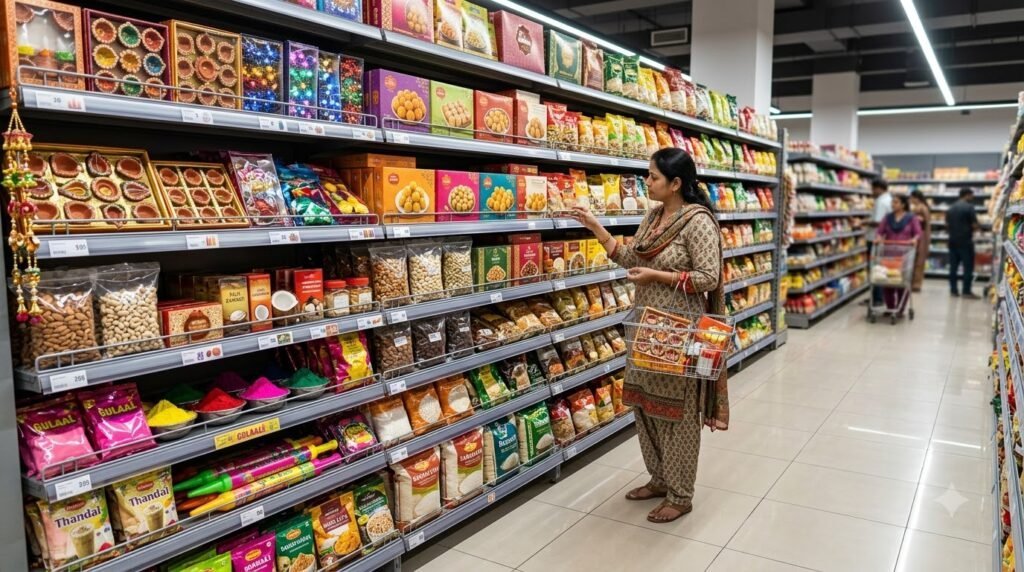
Indian festival grocery shopping rarely involves one recipe.
Families may be preparing:
- A special meal
- Sweets and snacks
- Prasad or ceremonial food
- Tea for visitors
- Gifts for friends and relatives
- Fasting meals
- Food for several days
- Backup snacks for unexpected guests
That makes festival shopping different from an ordinary weekly grocery run.
A useful Indian festival grocery checklist should separate items into three groups:
- Staples that work across several festivals
- Ingredients specific to the celebration
- Fresh foods that should be purchased closer to the event
This approach helps families avoid buying dairy too early, forgetting small but essential ingredients or making several last-minute trips for items already hiding somewhere behind the atta.
Subzi Mandi’s official website lists fresh produce, Indian spices, rice, pulses, ready-to-cook foods, sweets, chutneys and frozen products among its grocery categories. It also publishes rotating weekly and seasonal specials.
Use the checklist below as a starting point, then adjust it according to your family’s regional recipes, religious practices, dietary needs and guest count.
What Belongs on an Indian Festival Grocery List?
Start with these categories:
- Rice and grains
- Atta and specialty flours
- Dal and beans
- Cooking oils and ghee
- Ground and whole spices
- Dairy
- Fresh vegetables and herbs
- Fruits
- Dry fruits and nuts
- Sweets
- Namkeen and snacks
- Frozen or ready-to-cook foods
- Tea and cold drinks
- Ritual or puja supplies, when required
- Serving and food-storage supplies
Then add festival-specific items:
| Festival | Important additions |
| Diwali | Mithai, dry fruits, ghee, besan, festive snacks and puja supplies |
| Holi | Thandai ingredients, chaat items, gujiya, yogurt and easy-to-serve snacks |
| Navratri | Sabudana, sama rice, vrat flours, sendha namak, fruits, dairy and makhana |
| Eid | Dates, vermicelli, basmati rice, whole spices, dry fruits and main-dish ingredients |
The Master Festival Pantry Checklist
Buy these items according to the dishes you intend to prepare. Not every family needs every product.
Rice, grains and flours
- Basmati rice
- Sona masoori or preferred everyday rice
- Poha
- Sooji
- Vermicelli
- Atta
- Besan
- Maida
- Rice flour
- Corn flour
- Kuttu atta
- Singhara atta
- Rajgira flour
Regular grains and vrat ingredients should be stored separately when family fasting practices require it.
Lentils, beans and proteins
- Toor dal
- Moong dal
- Chana dal
- Urad dal
- Masoor dal
- Rajma
- Chickpeas
- Paneer
- Tofu
- Meat or poultry, when part of the menu
- Frozen kebabs or vegetarian alternatives
Oils, ghee and sweeteners
- Ghee
- Neutral frying oil
- Mustard oil
- Coconut oil
- Butter
- Sugar
- Jaggery
- Mishri
- Condensed milk
Check the quantity already at home. Festival recipes can use considerably more ghee, oil and sugar than regular meals.
Everyday spices
- Turmeric
- Cumin
- Coriander powder
- Red chili powder
- Garam masala
- Chaat masala
- Hing
- Amchur
- Black salt
- Sendha namak
- Biryani masala
- Preferred regional spice blends
Whole spices
- Green cardamom
- Black cardamom
- Cloves
- Cinnamon
- Bay leaves
- Black pepper
- Cumin seeds
- Fennel seeds
- Mustard seeds
- Saffron, when required
Dairy and refrigerated foods
- Milk
- Yogurt
- Paneer
- Cream
- Butter
- Buttermilk
- Lassi
- Khoya or mawa, when available
- Cheese for children or guest snacks
Purchase perishable dairy close enough to the event that it remains fresh through the planned cooking days.
Dry fruits and nuts
- Almonds
- Cashews
- Pistachios
- Raisins
- Dates
- Peanuts
- Walnuts
- Makhana
- Dried coconut
Dry fruits can support mithai, gifting, thandai, sheer khurma and guest-serving trays, making them useful across several celebrations.
Diwali Grocery Checklist
Diwali shopping often combines puja preparation, mithai, namkeen, gifting and a larger family meal.
Add these cooking ingredients
- Besan
- Sooji
- Khoya
- Condensed milk
- Coconut
- Ghee
- Sugar or jaggery
- Cardamom
- Saffron
- Dry fruits
- Paneer
- Rice
- Dal
- Vegetables for the main meal
Sweets and snacks
Choose a practical mix of homemade and purchased items:
- Ladoo
- Barfi
- Kaju katli
- Peda
- Gulab jamun
- Rasmalai
- Chakli
- Sev
- Chivda
- Mathri
- Namak para
- Samosas
- Frozen appetizers
Do not purchase more varieties than the household can serve or store safely. Two reliable sweets may be more useful than seven half-finished boxes quietly ageing in the refrigerator.
Puja and presentation items
Depending on family practice:
- Diyas
- Cotton wicks
- Ghee or oil for lamps
- Incense
- Camphor
- Kumkum
- Rice
- Coconut
- Fruits
- Flowers
- Prasad ingredients
- Gift boxes
- Food containers
Availability of ceremonial products may vary by store and season, so confirm before making a special trip.
Diwali shopping strategy
Purchase early:
- Dry fruits
- Flour
- Rice
- Dal
- Spices
- Packaged snacks
- Gift containers
- Puja basics
Purchase later:
- Fresh mithai
- Paneer
- Milk
- Yogurt
- Produce
- Herbs
- Flowers
Holi Grocery Checklist
Holi menus often work best when food is easy to serve, carry and eat between activities.
Drinks
- Milk
- Thandai mix
- Almonds
- Fennel seeds
- Cardamom
- Poppy seeds, where used
- Saffron
- Rose syrup
- Juices
- Bottled water
- Soft drinks
- Lassi ingredients
Label adult-only beverages clearly and keep them separate from drinks intended for children and other guests.
Snacks and chaat
- Gujiya
- Samosas
- Kachori
- Pakora ingredients
- Papdi
- Sev
- Chickpeas
- Potatoes
- Yogurt
- Tamarind chutney
- Green chutney
- Chaat masala
- Namkeen
- Frozen appetizers
Fresh ingredients
- Mint
- Coriander
- Green chilies
- Lemons
- Onions
- Potatoes
- Yogurt
- Paneer
Hosting supplies
- Cups
- Plates
- Napkins
- Serving spoons
- Food-safe storage containers
- Trash bags
- Towels
Choose food that can be replenished in batches. A Holi host should not spend the entire celebration guarding one delicate plated dish from wind, color and enthusiastic guests.
Navratri Grocery Checklist
Navratri food practices differ by household and region.
Some families avoid:
- Regular grains
- Onion
- Garlic
- Table salt
- Certain lentils or spices
Others follow different rules or do not fast. Confirm the household’s practices before shopping.
Common vrat staples
- Sabudana
- Sama rice
- Kuttu atta
- Singhara atta
- Rajgira
- Sendha namak
- Makhana
- Peanuts
- Coconut
- Potatoes
- Sweet potatoes
Fruits and vegetables
- Bananas
- Apples
- Papaya
- Grapes
- Pomegranate
- Cucumber
- Pumpkin
- Potatoes
- Sweet potatoes
- Lemons
Dairy and snacks
- Milk
- Yogurt
- Paneer
- Ghee
- Lassi
- Roasted makhana
- Nuts
- Vrat-labelled packaged snacks
Do not assume that a snack is vrat-friendly because it contains potatoes. Check its salt, flour, seasoning and production information according to your household’s standards.
Prevent ingredient mix-ups
Store fasting items in a separate basket or shelf.
Label:
- Sendha namak
- Vrat flours
- Approved spice blends
- Packaged snacks
- Dedicated cooking oil, if used
This is especially useful in kitchens where regular and fasting meals are being prepared at the same time.
Eid Grocery Checklist
Eid menus vary across Indian, Pakistani, Bangladeshi and regional family traditions. Build the list around the dishes actually being prepared.
Dates and breakfast items
- Dates
- Stuffed dates
- Tea
- Milk
- Biscuits
- Fruit
- Bread or paratha ingredients
Sheer khurma or seviyan
- Fine vermicelli
- Milk
- Sugar
- Ghee
- Cardamom
- Saffron
- Dates
- Almonds
- Cashews
- Pistachios
- Raisins
Biryani, pulao or main dishes
- Basmati rice
- Meat, poultry, paneer or vegetables
- Yogurt
- Fried onions
- Ginger
- Garlic
- Green chilies
- Mint
- Coriander
- Lemons
- Biryani masala
- Whole spices
- Saffron
- Ghee or cooking oil
Snacks and guest foods
- Samosas
- Kebabs
- Pakoras
- Chaat items
- Namkeen
- Biscuits
- Mithai
- Juices
- Rose-flavored drinks
- Tea and coffee
Eid shopping strategy
Purchase early:
- Rice
- Vermicelli
- Dates
- Dry fruits
- Whole spices
- Packaged snacks
- Serving supplies
Purchase closer to Eid:
- Meat or poultry
- Paneer
- Milk
- Yogurt
- Fresh herbs
- Produce
- Fresh sweets
Follow safe refrigeration and storage practices for fresh meat, dairy and prepared foods.
Fresh Produce for Festival Cooking
Create the produce list from the final menu rather than buying every familiar Indian vegetable.
Commonly useful items include:
- Potatoes
- Onions
- Tomatoes
- Okra
- Eggplant
- Lauki
- Karela
- Methi
- Spinach
- Green chilies
- Coriander
- Mint
- Curry leaves
- Ginger
- Garlic
- Lemons
- Coconut
- Seasonal fruits
Subzi Mandi’s official website highlights Indian fruits, vegetables and herbs, including specialty produce such as amla and drumsticks.
Inspect produce before buying and plan how much can realistically be washed, prepared and stored before the celebration.
Guest-Hosting Essentials
Festival guests do not always arrive according to a spreadsheet.
Keep a modest backup supply of:
Quick food
- Namkeen
- Biscuits
- Frozen samosas
- Frozen parathas
- Ready-to-cook appetizers
- Instant mixes
- Tea
- Coffee
- Juice
- Bottled water
Subzi Mandi’s website lists specialty and frozen products such as sweets, chutneys, samosas and parathas among its available grocery categories. Product availability may vary by location.
Serving and storage
- Plates
- Bowls
- Cups
- Napkins
- Foil
- Food-storage containers
- Serving trays
- Labels
- Take-home containers
- Trash bags
Buy these according to the actual event style. A family dinner using regular dishes does not need a wholesale shipment of disposable plates.
The Three-Trip Festival Shopping Plan
One enormous shopping trip can create storage problems and forgotten perishables.
Use three smaller stages.
Seven to fourteen days before
Buy:
- Rice
- Atta and flours
- Dal
- Spices
- Oils and ghee
- Dry fruits
- Packaged snacks
- Frozen foods
- Drinks
- Serving supplies
- Non-perishable ritual items
Three to seven days before
Buy:
- Packaged sweets
- Paneer with a suitable use-by date
- Yogurt
- Butter
- Condensed milk
- Gift foods
- Additional frozen products
- Long-lasting vegetables
One to two days before
Buy:
- Fresh herbs
- Delicate produce
- Milk
- Fresh sweets
- Flowers
- Meat or poultry
- Fresh paneer, when needed
- Ice
- Last-minute fruits
Adjust this timeline according to product dates, storage space and the number of cooking days.
Festival Shopping Tips for New Jersey Families
Check the store location before travelling
Subzi Mandi’s current contact page lists New Jersey stores in:
- Iselin
- Cherry Hill
- East Windsor
- Hamilton Township
- Parsippany
- Piscataway
Product selection and promotions may differ by location.
Review current weekly offers
Subzi Mandi publishes rotating weekend specials covering everyday essentials, traditional Indian ingredients and specialty groceries. Its current specials page specifically references Iselin, Cherry Hill, Hamilton Township and East Windsor for the featured offers, so verify whether a promotion applies to the store you intend to visit.
Organize the list by store section
Instead of listing recipes, arrange the shopping list as:
- Produce
- Dairy
- Rice and flour
- Dal and beans
- Spices
- Frozen foods
- Sweets and snacks
- Drinks
- Puja or hosting supplies
This reduces backtracking through a busy store.
Check storage before buying
Before purchasing a festival-sized basket, check:
- Refrigerator space
- Freezer space
- Pantry containers
- Shelf life
- Cooking schedule
- Number of expected guests
The shopping cart should match the kitchen, not temporarily annex it.
Common Festival Shopping Mistakes
Buying everything on the final day
Popular products may be harder to find, and a crowded store makes it easier to forget small items.
Better approach: Purchase dry goods and supplies early.
Repeating the same ingredient under several recipes
Biryani, dessert and tea may all require cardamom, but the household only needs one combined quantity.
Better approach: Convert recipe lists into one master grocery list.
Forgetting basics
Commonly missed items include:
- Salt
- Sugar
- Milk
- Oil
- Tea
- Lemons
- Coriander
- Foil
- Storage containers
Overbuying sweets
Too much mithai can create waste, particularly when guests also bring sweets.
Better approach: Choose a few varieties and leave room for gifted boxes.
Mixing vrat and regular groceries
Better approach: Use separate baskets, labels and storage areas.
Assuming every item is available at every location
Better approach: Contact the intended store when a specialty item is essential.
Frequently Asked Questions
What should an Indian festival grocery checklist include?
It should include pantry staples, fresh produce, dairy, spices, sweets, snacks, dry fruits, drinks, festival-specific ingredients and guest-serving supplies.
What should I buy early for an Indian festival?
Buy rice, flour, dal, spices, oil, ghee, dry fruits, packaged snacks, frozen foods and serving supplies before the final festival rush.
What should be purchased closer to the celebration?
Fresh herbs, dairy, paneer, meat, produce, flowers and freshly prepared sweets should generally be purchased closer to the planned use date.
What groceries are commonly needed for Diwali?
Common items include mithai, dry fruits, ghee, besan, sooji, festive snacks, fruits, dinner ingredients and household-specific puja supplies.
What should I buy for Holi?
A Holi list may include thandai ingredients, gujiya, chaat supplies, yogurt, chutneys, easy snacks, drinks and disposable serving items.
Which groceries are commonly used during Navratri fasting?
Depending on household rules, common items include sabudana, sama rice, kuttu atta, singhara atta, sendha namak, fruits, dairy, potatoes, makhana and nuts.
What should I buy for Eid?
Common items include dates, vermicelli, milk, dry fruits, basmati rice, whole spices, main-dish ingredients, sweets, snacks and drinks.
Does Subzi Mandi offer weekly specials?
Yes. Its official website publishes changing weekend and weekly offers. Applicable stores and current products should be checked before shopping.
Where does Subzi Mandi have stores in New Jersey?
Its current contact page lists locations in Iselin, Cherry Hill, East Windsor, Hamilton Township, Parsippany and Piscataway.
Final Takeaway
Festival shopping becomes easier when one long list is divided into:
- Shared pantry staples
- Festival-specific additions
- Fresh products
- Guest-hosting backups
- Serving and storage supplies
Buy stable products early. Purchase perishable items according to the cooking schedule. Separate vrat foods when necessary, and plan quantities around realistic guest numbers and storage space.
Subzi Mandi offers multiple New Jersey locations and lists fresh produce, spices, rice, pulses, ready-to-cook foods, sweets and frozen groceries among its South Asian product categories.
The objective is not to fill the cart with every festive item in sight.
It is to arrive at the celebration with the ingredients your family actually needs.
Plan Your Festival Shopping at Subzi Mandi
Before visiting, prepare:
- Festival menu
- Guest estimate
- Master ingredient list
- Fresh-item shopping date
- Required ritual items
- Storage plan
- Preferred Subzi Mandi location
Review the current weekly specials and contact the selected store when a hard-to-find ingredient is essential.
A well-planned grocery list leaves more time for cooking, guests and celebration, and less time for discovering at 8:47 p.m. that the cardamom container is decorative rather than occupied.