
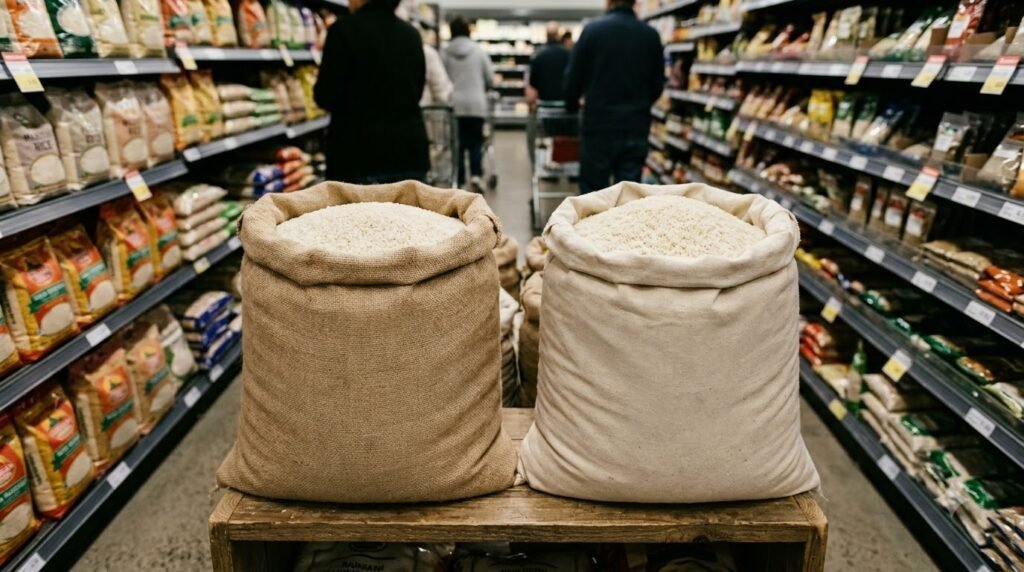
Choosing between Sona Masoori and Basmati rice becomes easier when you match the rice with the dish you prepare most often.
Choose aged Basmati rice for biryani, pulao and aromatic rice dishes where long grains and fragrance matter. Choose Sona Masoori rice for daily meals like dal-chawal, sambar rice and curd rice where a softer texture works better. For dosa and idli batter, idli rice is usually the preferred choice because it is designed for soaking, grinding and fermentation.
The right rice is not always the most expensive option. It is the one that gives the texture, flavor and cooking result your recipe needs.
Quick Comparison: Which Rice Should You Buy?
| Your Cooking Need | Best Choice | Why |
| Biryani | Aged Basmati | Long grains, aroma and separation |
| Pulao | Basmati | Fluffy texture and fragrance |
| Dal-chawal | Sona Masoori | Soft grains that mix well with dal |
| Curd rice | Sona Masoori | Comfortable soft texture |
| Sambar/Rasam rice | Sona Masoori | Absorbs flavors easily |
| Dosa/Idli batter | Idli rice | Better suited for fermentation |
Sona Masoori vs Basmati Rice: Main Differences
| Feature | Basmati Rice | Sona Masoori Rice |
| Grain shape | Long and slender | Medium-sized and softer |
| Aroma | Strong fragrance | Mild aroma |
| Cooked texture | Separate and fluffy | Soft and easy to mix |
| Best suited for | Biryani, pulao, jeera rice | Daily meals and mixed rice dishes |
| Cooking style | Dishes where rice stands out | Dishes where rice blends with other ingredients |
| Common use | Special occasions and aromatic meals | Everyday household cooking |
What Is Basmati Rice?
Basmati is an aromatic long-grain rice variety known for its fragrance, length and ability to remain separate after cooking.
Its biggest advantage is texture. When cooked correctly, the grains become fluffy and elongated instead of sticking together. This makes it a popular choice for dishes where rice presentation matters.
Why Is Basmati Preferred for Biryani?
Biryani depends heavily on rice texture. Aged basmati is commonly preferred because:
- The grains remain separate after cooking
- Aroma combines well with spices
- The final dish has a premium appearance
Different types of basmati, such as raw and parboiled varieties, may require different cooking methods, so choosing the right type according to your recipe is important.
Best Uses of Basmati Rice
1. Biryani
For traditional biryani styles, aged basmati is often selected because it maintains long grains during cooking.
It works especially well when you want:
- Visible individual grains
- Fragrant rice
- Restaurant-style presentation
2. Pulao and Jeera Rice
Basmati is a strong choice for pulao and jeera rice because the aroma of the rice becomes part of the dish.
Choose basmati when you want:
- Light fragrance
- Fluffy grains
- A more premium rice experience
3. Rice Served With Rich Curries
Basmati pairs well with dishes where separate grains complement flavorful gravies.
What Is Sona Masoori Rice?
Sona Masoori is a popular non-basmati rice variety widely used for everyday cooking.
Unlike basmati, its main strength is not fragrance or grain separation. It is valued because it cooks into a softer texture and blends easily with other ingredients.
This makes it suitable for meals where rice is eaten together with dal, vegetables, yogurt or liquid-based dishes.
Best Uses of Sona Masoori Rice
1. Dal-Chawal
Sona Masoori is commonly chosen for dal-chawal because:
- It becomes tender after cooking
- It mixes comfortably with dal
- Its mild flavor allows spices and lentils to stand out
For everyday lunch and dinner meals, it is a practical household choice.
2. Curd Rice
Curd rice works best with rice that has a soft texture.
Sona Masoori blends easily with yogurt and creates the creamy consistency expected from this dish.
3. Sambar and Rasam Rice
For South Indian meals, soft rice helps absorb the flavors of sambar and rasam.
Sona Masoori provides the texture needed for these combinations.
Is Sona Masoori Good for Biryani?
Yes, Sona Masoori can be used for certain regional and home-style biryanis. However, the final result will be different from a traditional basmati biryani.
When using Sona Masoori:
- The grains will be shorter
- The texture will be softer
- The aroma will be milder compared with basmati
Sona Masoori works well when you prefer a softer, more integrated biryani texture rather than long separated grains.
For a classic biryani where rice appearance, fragrance and grain separation are important, aged basmati remains the more common choice.
Which Rice Is Better for Dosa and Idli?
For dosa and idli batter, idli rice is generally the preferred option because it is selected for soaking, grinding and fermentation.
Good fermented batter depends on several factors:
- Rice quality
- Urad dal quality
- Soaking duration
- Grinding consistency
- Fermentation temperature
The rice used for batter affects the final texture, but it is only one part of the process.
Can You Use Sona Masoori for Dosa?
Yes, some recipes use Sona Masoori as part of the batter mixture. However, the result depends on the recipe and fermentation process.
Can You Use Basmati for Dosa?
Technically, basmati can be ground, but it is not usually the first choice because its aroma and long-grain characteristics provide little advantage after grinding.
How To Choose the Right Rice Before Buying
Choosing rice is not only about the variety name. The right option depends on your cooking habits.
1. Think About Your Regular Meals
Before buying, consider what you prepare most often:
If you mostly cook:
- Biryani
- Pulao
- Jeera rice
- Rice-based special dishes
Basmati is likely the better fit.
If you mostly cook:
- Dal-chawal
- Sambar rice
- Rasam rice
- Curd rice
- Khichdi
Sona Masoori is usually more practical.
If you regularly make:
- Idli
- Dosa
- Uttapam
- Fermented breakfast dishes
Idli rice is the better choice.
2. Check the Rice Processing Type
The same rice variety can behave differently depending on how it is processed.
Common labels include:
Raw Rice
Raw rice generally has a softer cooking process and is used in many everyday recipes.
Parboiled Rice
Parboiled rice is partially processed before milling, which can affect texture and cooking time.
Sela Rice
Sela rice is commonly used in some biryani preparations because it tends to hold its structure during cooking.
Brown Rice
Brown rice retains more of the outer grain layers and usually requires different cooking methods.
Always check the package instructions because water requirements and cooking times vary.
3. Choose the Right Pack Size
If you are trying a new rice variety or brand, start with a smaller pack.
A rice that looks suitable may not match your preferred:
- Texture
- Cooking method
- Family preference
- Recipe style
Once you find a variety that works well, buying larger quantities can make shopping easier.
Rice Buying Guide: Which Rice Should You Keep at Home?
If your household prepares different types of Indian meals, keeping multiple rice varieties can be useful.
Keep Basmati Rice If You Regularly Make:
✅ Biryani
✅ Pulao
✅ Jeera rice
✅ Aromatic rice dishes
✅ Rice served with rich curries
Basmati adds fragrance and keeps grains separate, making it suitable for dishes where rice is a major part of the experience.
Keep Sona Masoori Rice If You Regularly Make:
✅ Dal-chawal
✅ Sambar rice
✅ Rasam rice
✅ Curd rice
✅ Khichdi
✅ Everyday steamed rice
Sona Masoori is versatile because it blends easily with other ingredients and works well for regular meals.
Keep Idli Rice If You Regularly Make:
✅ Idli
✅ Dosa
✅ Uttapam
✅ Paniyaram
Idli rice is mainly selected for fermented batter preparation rather than regular steamed rice.
Can You Keep Only One Type of Rice at Home?
Yes. The best single rice option depends on your family’s cooking style.
For Everyday Indian Meals
Sona Masoori is a practical choice because it works with many common dishes.
For Special Rice Dishes
Basmati is more suitable if biryani and pulao are frequent meals.
For South Indian Breakfast Preparation
Idli rice is useful if homemade dosa and idli are part of your routine.
There is no single rice variety that works perfectly for every dish. Each type has its own purpose.
Cooking Tips for Better Rice Results
Cooking Basmati Rice
To maintain separate grains:
- Follow the recommended soaking time
- Use the correct water ratio
- Avoid overcooking
- Match the cooking method with the rice type
Aged basmati may require slightly different preparation compared with regular basmati.
Cooking Sona Masoori Rice
For softer everyday rice:
- Follow the package water instructions
- Adjust cooking time based on desired softness
- Consider the dish you are preparing before deciding the texture
Softer rice works well for dal, yogurt-based dishes and liquid curries.
How To Store Rice Properly
Proper storage helps maintain rice quality.
Follow these steps:
- Store rice in an airtight container
- Keep it away from moisture
- Store it in a cool, dry place
- Label containers if you keep different varieties
If you try different rice types, noting the cooking method that works best can make future preparation easier.
Health and Nutrition Considerations
Different rice varieties provide different textures, flavors and cooking experiences.
Instead of choosing rice only based on popularity, consider your overall meal pattern.
Important factors include:
- Portion size
- Vegetables included in meals
- Protein sources
- Cooking method
- Overall dietary balance
The best rice choice depends on how it fits into your regular meals.
Frequently Asked Questions
Is Basmati Rice Better Than Sona Masoori Rice?
Neither rice is better for every situation. The right choice depends on the dish you are preparing.
Choose Basmati when you want:
- Long separated grains
- Strong aroma
- A premium texture for biryani and pulao
Choose Sona Masoori when you want:
- Softer cooked rice
- Easy mixing with dal, curry or yogurt
- A practical option for everyday meals
The better rice is the one that matches your cooking style.
Which Rice Is Better for Daily Cooking?
For most everyday Indian meals, Sona Masoori is a practical choice because it works well with:
- Dal-chawal
- Sambar rice
- Rasam rice
- Curd rice
- Vegetable rice
However, if your household frequently prepares biryani, pulao or aromatic rice dishes, keeping Basmati may make more sense.
Which Rice Is Better for Biryani: Sona Masoori or Basmati?
For traditional biryani, aged Basmati is generally preferred because it provides:
- Longer grains
- Better aroma
- More separation after cooking
Sona Masoori can work for home-style or regional biryanis where a softer texture is preferred.
Can I Use Basmati Rice for Curd Rice?
Yes, Basmati can be used for curd rice, but the texture will be different.
Curd rice is usually preferred with softer grains that blend easily with yogurt, which is why Sona Masoori is commonly chosen.
If using Basmati:
- Cook it slightly softer
- Allow it to cool before mixing with yogurt
- Adjust consistency according to preference
Can I Mix Sona Masoori and Basmati Rice?
Yes, some households mix rice varieties based on their preferred texture.
A combination may create a balance between:
- Aroma from Basmati
- Softer texture from Sona Masoori
However, cooking time and water requirements may vary between varieties, so testing a small batch is recommended.
Which Rice Is Better for Pressure Cooker Cooking?
Both can be cooked in a pressure cooker, but the result will depend on:
- Rice type
- Water ratio
- Cooking time
- Desired softness
Sona Masoori is often preferred for softer everyday pressure cooker meals, while Basmati is chosen when maintaining grain separation is important.
Which Rice Stays Better After Cooking?
The result depends on storage and preparation.
Basmati generally maintains its separated grain structure, while Sona Masoori remains softer and may work better in dishes where rice is mixed with other ingredients.
For leftovers, proper cooling and storage are important regardless of the variety.
Find the Right Rice for Your Kitchen at Subzi Mandi
Choosing the right rice becomes easier when you shop according to your cooking habits.
At Subzi Mandi, you can explore different grocery essentials and rice varieties suited for everyday meals, traditional recipes and special occasions.
Before purchasing, consider:
- The dishes you cook most often
- The texture your family prefers
- The quantity you regularly use
- The type of recipes you prepare
Whether you need Basmati for biryani, Sona Masoori for daily meals or rice for fermented recipes, selecting the right variety can improve your cooking results.
Final Verdict: Sona Masoori vs Basmati Rice
There is no single winner between Sona Masoori and Basmati rice. Each variety is designed for a different cooking purpose.
Choose Aged Basmati Rice For:
✅ Biryani
✅ Pulao
✅ Jeera rice
✅ Aromatic rice dishes
✅ Recipes where separate grains matter
Choose Sona Masoori Rice For:
✅ Dal-chawal
✅ Curd rice
✅ Sambar rice
✅ Rasam rice
✅ Everyday steamed rice
✅ Soft mixed rice dishes
Choose Idli Rice For:
✅ Idli batter
✅ Dosa batter
✅ Uttapam
✅ Other fermented recipes
The best rice for your home is the one that fits your regular meals. Instead of choosing based only on popularity, choose the variety that gives you the taste, texture and cooking experience your family enjoys.