
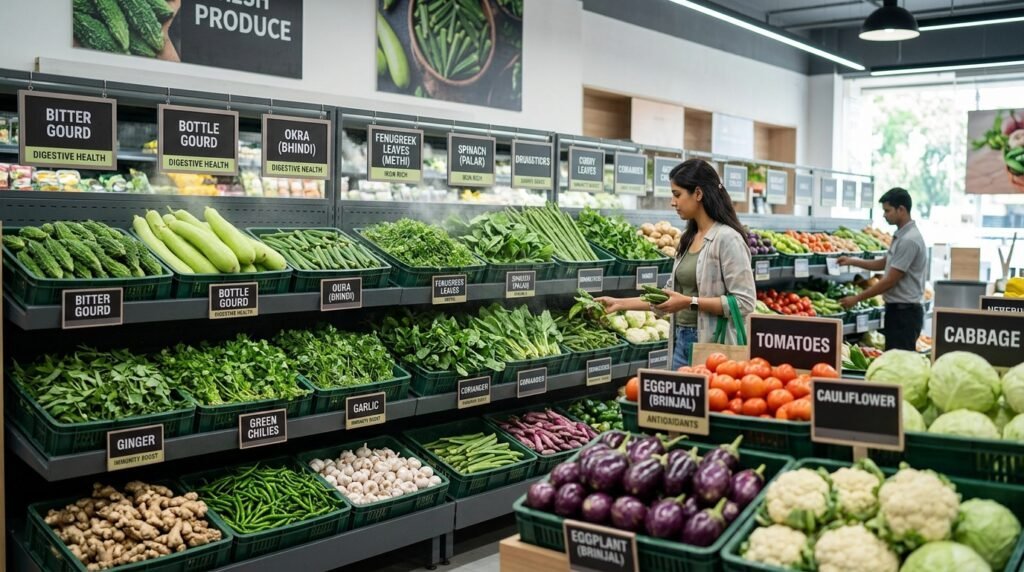
Fresh vegetables are the foundation of authentic Indian cooking.
From comforting dals and hearty curries to vibrant stir-fries and wholesome soups, vegetables bring color, texture, nutrition, and unmistakable flavor to countless Indian recipes. While spices often receive most of the attention, it’s the wide variety of fresh produce that gives Indian cuisine its remarkable versatility.
Many traditional Indian vegetables are naturally rich in dietary fiber, vitamins, minerals, antioxidants, and beneficial plant compounds that support overall wellness. They help create balanced meals, encourage greater vegetable intake, and make it easy to prepare nutritious dishes throughout the week.
Whether you’re an experienced home cook or just beginning to explore Indian cuisine, stocking your kitchen with a selection of essential Indian vegetables allows you to prepare authentic recipes while enjoying a diverse range of nutritional benefits.
In this guide, you’ll discover fifteen of the most valuable Indian vegetables, their health benefits, popular culinary uses, and practical tips for making them part of your weekly meal planning.
Indian vegetables such as okra, spinach, bottle gourd, bitter gourd, drumsticks, fenugreek leaves, eggplant, cabbage, cauliflower, and ridge gourd are packed with vitamins, minerals, antioxidants, and dietary fiber. Including a variety of these vegetables in your meals supports digestion, heart health, immune function, and balanced nutrition while adding authentic flavor to Indian cooking.
Why Indian Vegetables Deserve a Place in Every Kitchen
Indian cuisine celebrates seasonal produce more than almost any other culinary tradition.
Instead of relying on one or two vegetables repeatedly, Indian cooking encourages variety, allowing families to enjoy a broad range of nutrients while creating meals with unique textures and flavors.
Regularly including different vegetables in your cooking offers several benefits:
- Supports a balanced diet
- Increases dietary fiber intake
- Provides essential vitamins and minerals
- Adds natural color and flavor
- Encourages seasonal eating
- Makes meal planning more diverse
- Helps reduce reliance on processed foods
A well-stocked vegetable drawer opens the door to dozens of traditional recipes, from simple weekday sabzis to elaborate festive meals.
What Makes Indian Vegetables So Nutritious?
Many Indian vegetables are naturally low in calories while being rich in nutrients that support everyday health.
Common nutritional advantages include:
- High fiber for digestive health
- Antioxidants that help protect cells from oxidative stress
- Vitamin C to support immune function
- Vitamin A for eye health
- Iron and folate for healthy blood formation
- Calcium for bone health
- Potassium for normal muscle and nerve function
Because different vegetables provide different nutrients, eating a variety throughout the week helps create a more balanced eating pattern.
1. Okra (Bhindi)
Okra remains one of the most loved vegetables in Indian households thanks to its versatility and impressive nutritional profile.
Its tender pods absorb spices beautifully, making them ideal for dry sabzis, stuffed recipes, and curries.
Health Benefits
- Rich in dietary fiber
- Supports digestive health
- Provides vitamins C and K
- Contains beneficial antioxidants
- Contributes to heart-friendly eating patterns
Popular Indian Dishes
- Bhindi Masala
- Stuffed Bhindi
- Crispy Okra Fry
- Bhindi Curry
Expert Tip
Cook okra over medium-high heat and avoid overcrowding the pan to reduce stickiness while preserving its texture.
2. Eggplant (Baingan)
Eggplant is one of the most versatile vegetables in Indian cuisine and appears in regional dishes across the country.
Its creamy texture makes it ideal for roasting, grilling, frying, or simmering in rich gravies.
Health Benefits
- Naturally low in calories
- Good source of dietary fiber
- Rich in antioxidants, including nasunin
- Supports balanced nutrition
- Fits well into heart-conscious meal plans
Popular Indian Dishes
- Baingan Bharta
- Baingan Curry
- Stuffed Baingan
- Baingan Aloo
Expert Tip
Choose eggplants with smooth, glossy skin and firm flesh for the best flavor and texture.
3. Bitter Gourd (Karela)
Although its bold flavor can be an acquired taste, bitter gourd has long been valued in Indian kitchens for both its culinary and traditional wellness applications.
Health Benefits
- Rich in antioxidants
- Source of vitamins A and C
- Supports digestive wellness
- Naturally low in calories
- Frequently included in balanced meal plans
Popular Indian Dishes
- Stuffed Karela
- Karela Fry
- Karela Curry
- Karela with Onions
Expert Tip
Lightly salting sliced bitter gourd before cooking can help mellow its bitterness while preserving its unique character.
4. Bottle Gourd (Lauki)
Bottle gourd is one of the lightest and most versatile vegetables used in Indian households. Its mild flavor makes it ideal for absorbing spices while remaining easy to digest.
Because of its high water content, lauki is especially popular during warmer months when lighter meals are preferred.
Health Benefits
- Naturally low in calories
- High water content supports hydration
- Good source of dietary fiber
- Contains vitamin C and potassium
- Supports balanced meal planning
Popular Indian Dishes
- Lauki Sabzi
- Lauki Kofta
- Lauki Dal
- Lauki Soup
- Lauki Halwa
Expert Tip
Choose bottle gourds that feel firm, smooth, and light green with tender skin. Avoid vegetables with soft spots or wrinkled surfaces.
5. Ridge Gourd (Turai)
Ridge gourd is appreciated for its delicate flavor and soft texture. It cooks quickly, making it a convenient choice for healthy weekday meals.
Health Benefits
- Rich in dietary fiber
- Naturally low in calories
- Contains vitamin C
- Supports digestive wellness
- Contributes to hydration
Popular Indian Dishes
- Turai Sabzi
- Ridge Gourd Curry
- Turai Dal
- Stir-Fried Ridge Gourd
Expert Tip
Fresh ridge gourds should have bright green skin and firm ridges. Younger gourds are generally more tender.
6. Drumsticks (Moringa Pods)
Often called one of nature’s most nutrient-rich vegetables, drumsticks are widely used throughout South Indian cuisine.
Their unique flavor enriches curries, lentils, and soups while contributing impressive nutritional value.
Health Benefits
- Rich in vitamin C
- Excellent source of calcium
- Contains iron
- Provides antioxidants
- Supports bone and immune health
Popular Indian Dishes
- Sambar
- Drumstick Curry
- Vegetable Stew
- Lentil Soup
Expert Tip
Cut drumsticks into manageable pieces before cooking. Their tender flesh is easily enjoyed after simmering.
7. Ivy Gourd (Tindora)
Tindora is a small green vegetable with a mild flavor and crisp texture that pairs well with Indian spices.
Health Benefits
- High in fiber
- Low in calories
- Contains vitamins A and C
- Supports digestive health
- Fits well into balanced diets
Popular Indian Dishes
- Tindora Fry
- Tindora Masala
- Tindora with Peanuts
- Mixed Vegetable Curry
Expert Tip
Choose tindora that are firm, bright green, and evenly sized for consistent cooking.
8. Spinach (Palak)
Spinach remains one of the most nutrient-dense vegetables used in Indian cooking.
Its versatility allows it to be incorporated into curries, breads, soups, dals, and rice dishes.
Health Benefits
- Rich in iron
- High in folate
- Excellent source of vitamin K
- Contains antioxidants
- Supports overall wellness
Popular Indian Dishes
- Palak Paneer
- Spinach Dal
- Palak Soup
- Palak Paratha
- Saag
Expert Tip
Cook spinach only until wilted to preserve its vibrant color and delicate flavor.
9. Fenugreek Leaves (Methi)
Fresh methi leaves provide a pleasantly earthy flavor that adds remarkable depth to many Indian recipes.
Health Benefits
- Rich in iron
- Source of dietary fiber
- Contains antioxidants
- Supports digestive wellness
- Fits naturally into nutrient-rich meals
Popular Indian Dishes
- Methi Paratha
- Methi Paneer
- Aloo Methi
- Methi Dal
Expert Tip
Lightly sauté fresh methi to soften its naturally bitter notes while retaining its distinctive aroma.
10. Amaranth Leaves (Chaulai)
Although less familiar outside Indian cuisine, amaranth leaves are exceptionally nutritious and deserve greater attention.
Health Benefits
- Excellent source of calcium
- Rich in iron
- High in antioxidants
- Supports bone health
- Provides dietary fiber
Popular Indian Dishes
- Chaulai Bhaji
- Amaranth Dal
- Stir-Fried Greens
- Vegetable Soups
Expert Tip
Tender young leaves cook quickly and develop a pleasantly mild flavor.
11. Green Peas (Matar)
Green peas are among the most versatile vegetables in Indian cooking.
Their natural sweetness balances bold spices while adding protein and fiber to countless dishes.
Health Benefits
- Rich in plant-based protein
- High in fiber
- Source of vitamins A, C, and K
- Supports digestive health
- Provides lasting energy
Popular Indian Dishes
- Matar Paneer
- Vegetable Pulao
- Mixed Vegetable Curry
- Matar Kachori
- Peas Paratha
Expert Tip
Frozen peas retain much of their nutritional value and are an excellent year-round alternative when fresh peas aren’t available.
12. Cauliflower (Gobhi)
Cauliflower adapts beautifully to traditional and modern Indian cooking alike.
Health Benefits
- Rich in vitamin C
- Contains antioxidants
- Good source of fiber
- Naturally low in calories
- Supports healthy eating habits
Popular Indian Dishes
- Aloo Gobhi
- Gobhi Paratha
- Gobhi Manchurian
- Cauliflower Curry
Expert Tip
Soak cauliflower florets briefly in salted water before cooking to help remove hidden insects and debris.
13. Cabbage (Patta Gobhi)
Cabbage is affordable, widely available, and remarkably versatile.
Health Benefits
- Rich in fiber
- Supports digestive health
- Contains antioxidants
- Source of vitamin C
- Fits easily into balanced meals
Popular Indian Dishes
- Patta Gobhi Sabzi
- Cabbage Stir-Fry
- Cabbage Pakora
- Mixed Vegetable Curry
Expert Tip
Shred cabbage just before cooking to preserve freshness and texture.
14. Cluster Beans (Gawar)
Cluster beans are valued in Indian kitchens for their distinctive flavor and nutritional profile.
Health Benefits
- High in dietary fiber
- Contains essential minerals
- Supports digestive wellness
- Naturally low in calories
- Fits heart-conscious meal plans
Popular Indian Dishes
- Gawar Sabzi
- Gawar with Potatoes
- Gujarati Gawar Curry
Expert Tip
Trim both ends before cooking and avoid overcooking to preserve texture.
15. Snake Gourd (Chichinda)
Snake gourd is commonly used in regional Indian cooking and offers a refreshing, mild flavor.
Health Benefits
- High water content
- Low in calories
- Supports hydration
- Rich in vitamins and minerals
- Suitable for balanced meal planning
Popular Indian Dishes
- Snake Gourd Curry
- Snake Gourd Dal
- Stir-Fried Snake Gourd
Expert Tip
Young snake gourds have the best flavor and most tender texture.
Seasonal Indian Vegetables Guide
Choosing seasonal produce improves freshness, flavor, and nutritional value.
| Vegetable | Peak Season |
|---|---|
| Okra | Summer |
| Bottle Gourd | Summer |
| Ridge Gourd | Summer |
| Bitter Gourd | Summer |
| Drumsticks | Spring & Summer |
| Spinach | Winter |
| Fenugreek | Winter |
| Cauliflower | Winter |
| Cabbage | Winter |
| Green Peas | Winter |
| Eggplant | Nearly Year-Round |
Seasonal vegetables are often more flavorful, affordable, and readily available at Indian grocery stores.
How to Choose the Freshest Indian Vegetables
Before your next shopping trip, review our guide to identifying fresh vegetables in Iselin for practical tips on checking color, firmness, stems, leaves, and overall quality.
Shopping wisely makes every recipe taste better.
Look for:
✅ Bright natural color
✅ Firm texture
✅ Fresh stems
✅ Smooth skin
✅ Crisp leaves
Avoid vegetables with:
❌ Soft spots
❌ Mold
❌ Wrinkled skin
❌ Yellowing leaves
❌ Strong unpleasant odors
❌ Excessive bruising
Fresh produce not only tastes better but also lasts longer in your refrigerator.
Featured Snippet
What Are the Healthiest Indian Vegetables?
Some of the healthiest Indian vegetables include spinach, drumsticks (moringa), bitter gourd, bottle gourd, fenugreek leaves, okra, cabbage, cauliflower, and amaranth leaves. These vegetables are naturally rich in fiber, vitamins, minerals, antioxidants, and beneficial plant compounds that support balanced nutrition, digestion, heart health, and overall wellness.
Expert Insight
One of the greatest strengths of Indian cuisine is its diversity of vegetables. Instead of relying on the same produce every week, rotating seasonal vegetables introduces a broader range of nutrients, textures, and flavors into your meals. This variety not only keeps cooking exciting but also helps create a more balanced and nourishing diet.
How to Store Indian Vegetables Properly
Buying fresh vegetables is only the first step.
Proper storage helps preserve flavor, texture, nutritional value, and freshness while reducing unnecessary food waste. Since different vegetables have different storage needs, understanding how to store them correctly allows you to enjoy better-tasting meals throughout the week.
Whether you shop once a week or make frequent trips to your local Indian grocery store, these simple techniques will help your vegetables stay fresher for longer.
Storage Guide for Common Indian Vegetables
| Vegetable | Best Storage Method | Average Shelf Life |
|---|---|---|
| Okra (Bhindi) | Refrigerate in a paper bag or breathable produce bag | 4–6 days |
| Eggplant (Baingan) | Store in a cool place or refrigerate if using later | 5–7 days |
| Bitter Gourd (Karela) | Refrigerate in the vegetable drawer | 5–7 days |
| Bottle Gourd (Lauki) | Refrigerate unwashed | 7–10 days |
| Ridge Gourd (Turai) | Refrigerate in a breathable bag | 5–7 days |
| Drumsticks | Refrigerate or freeze for long-term storage | 5–7 days |
| Ivy Gourd (Tindora) | Refrigerate in produce drawer | 7–10 days |
| Spinach (Palak) | Refrigerate wrapped in paper towels | 4–6 days |
| Fenugreek Leaves (Methi) | Refrigerate in airtight container with paper towel | 3–5 days |
| Amaranth Leaves | Refrigerate immediately | 3–5 days |
| Green Peas | Refrigerate or freeze | 5–7 days (fresh) |
| Cauliflower | Refrigerate whole | 7–10 days |
| Cabbage | Refrigerate whole | 2–3 weeks |
| Cluster Beans | Refrigerate | 5–7 days |
| Snake Gourd | Refrigerate | 7–10 days |
Refrigeration Tips for Leafy Greens
Leafy vegetables are among the most delicate ingredients in Indian cooking.
To keep them crisp:
- Remove damaged leaves.
- Avoid washing until you’re ready to cook, or dry thoroughly if washed.
- Wrap in dry paper towels.
- Store inside airtight containers or reusable produce bags.
- Keep them in the refrigerator’s crisper drawer.
These simple steps reduce excess moisture, one of the main causes of spoilage.
Best Storage Tips for Gourds
Vegetables such as:
- Bottle gourd (Lauki)
- Ridge gourd (Turai)
- Bitter gourd (Karela)
- Snake gourd (Chichinda)
should be stored whole rather than cut whenever possible.
Avoid sealing them in completely airtight plastic bags, as trapped moisture can speed up spoilage.
How to Store Root and Dense Vegetables
Vegetables like cabbage and cauliflower naturally have a longer shelf life.
For best results:
- Keep them whole until needed.
- Refrigerate in breathable produce bags.
- Remove outer leaves only before cooking.
- Avoid cutting them in advance unless necessary.
Can You Freeze Indian Vegetables?
Yes.
Many Indian vegetables freeze surprisingly well when prepared correctly.
Excellent vegetables for freezing include:
- Green Peas
- Drumsticks
- Spinach
- Fenugreek Leaves
- Cauliflower
- Bottle Gourd (after blanching)
Blanching vegetables briefly before freezing helps preserve:
- Color
- Texture
- Nutritional quality
- Flavor
Frozen vegetables are ideal for soups, curries, dals, and stir-fries.
Common Vegetable Storage Mistakes
Many vegetables spoil earlier than necessary because of a few simple mistakes.
Avoid the following:
Washing Everything Immediately
Excess moisture encourages mold and bacterial growth.
Unless you’ll use vegetables within a day or two, it’s often better to wash them just before cooking.
Mixing Ethylene-Producing Fruits With Vegetables
Apples, bananas, avocados, and tomatoes release ethylene gas, which can speed up ripening and spoilage.
Store these fruits separately from leafy greens and gourds.
Overcrowding the Refrigerator
Good airflow helps vegetables stay fresh.
Overfilled drawers trap moisture and can lead to bruising and faster deterioration.
Ignoring Damaged Produce
One spoiled vegetable can quickly affect nearby produce.
Inspect your vegetables every few days and remove anything that’s beginning to decay.
Weekly Meal Planning With Indian Vegetables
One of the easiest ways to eat healthier is to plan meals around seasonal vegetables.
A balanced weekly shopping basket might include:
Leafy Greens
- Spinach
- Fenugreek
- Amaranth
Gourds
- Bottle Gourd
- Ridge Gourd
- Bitter Gourd
Fiber-Rich Vegetables
- Okra
- Cluster Beans
- Cabbage
Versatile Staples
- Eggplant
- Cauliflower
- Green Peas
This combination allows you to prepare dozens of authentic Indian recipes throughout the week without feeling repetitive.
Easy Ways to Reduce Vegetable Waste
Making the most of every grocery trip benefits both your budget and the environment.
Practical tips include:
- Plan meals before shopping.
- Buy only what you’ll use within a week.
- Store vegetables correctly immediately after returning home.
- Freeze extra produce before it spoils.
- Use leftover vegetables in soups, curries, fried rice, stuffed parathas, or mixed vegetable sabzis.
- Rotate older vegetables to the front of the refrigerator.
Small habits like these can significantly reduce food waste over time.
Why Seasonal Indian Vegetables Taste Better
Seasonal produce isn’t just more affordable. It’s often fresher, more flavorful, and more nutritious.
Benefits of buying seasonal vegetables include:
- Better taste
- Improved texture
- Higher nutritional value
- Greater freshness
- Lower environmental impact
- Better value for money
Shopping seasonally also supports local farmers and helps you enjoy ingredients at their peak quality.
Quick Summary
Indian vegetables are much more than ingredients. They are the foundation of nutritious, flavorful home cooking.
Keeping a variety of fresh vegetables on hand allows you to:
- Prepare authentic Indian meals
- Increase vegetable intake
- Enjoy diverse nutrients
- Reduce reliance on processed foods
- Support balanced eating habits
- Create flavorful dishes every day
Proper storage and thoughtful meal planning ensure you get the most from every purchase.
Conclusion
Indian vegetables bring together exceptional flavor, remarkable versatility, and outstanding nutritional value.
From fiber-rich okra and leafy spinach to nutrient-dense drumsticks, bottle gourd, and fenugreek leaves, each vegetable contributes something unique to your meals. Incorporating a wide variety into your weekly cooking not only creates more authentic Indian dishes but also supports a balanced, wholesome diet.
By selecting fresh produce, storing it properly, and planning meals around seasonal ingredients, you can reduce food waste, save money, and enjoy healthier home-cooked meals every day.
Whether you’re preparing comforting dals, flavorful curries, hearty sabzis, or modern fusion recipes, these fifteen vegetables provide a strong foundation for delicious, nourishing cooking.
Frequently Asked Questions
Which Indian vegetables are the healthiest?
Some of the most nutrient-dense Indian vegetables include spinach, drumsticks (moringa), fenugreek leaves, bottle gourd, bitter gourd, amaranth leaves, and okra because they are rich in vitamins, minerals, fiber, and antioxidants.
Which Indian vegetables are good for digestion?
Bottle gourd, ridge gourd, cabbage, okra, and cluster beans are naturally high in dietary fiber and can support healthy digestion as part of a balanced diet.
Are Indian vegetables good for weight management?
Yes. Many Indian vegetables are naturally low in calories while being rich in fiber and water, making them filling additions to balanced meals.
Where can I buy authentic Indian vegetables?
Fresh Indian vegetables are commonly available at Indian grocery stores, South Asian supermarkets, farmers’ markets in some regions, and specialty produce stores.
How often should vegetables be included in meals?
Health professionals generally recommend eating a variety of vegetables every day to support overall nutrition and help meet daily vitamin, mineral, and fiber needs.
Which Indian vegetables freeze well?
Green peas, spinach, drumsticks, cauliflower, and blanched bottle gourd freeze well and can be used later in curries, soups, and stir-fries.
Discover Fresh Indian Vegetables for Authentic Home Cooking
The best Indian meals begin with fresh, high-quality ingredients. Whether you’re preparing everyday family dinners or festive traditional recipes, keeping a variety of authentic Indian vegetables in your kitchen makes healthy cooking easier and more enjoyable.
Visit your trusted Indian grocery store to explore fresh seasonal produce, leafy greens, gourds, legumes, herbs, and pantry essentials that help you create nutritious, flavorful Indian dishes at home while celebrating the rich diversity of Indian cuisine.