
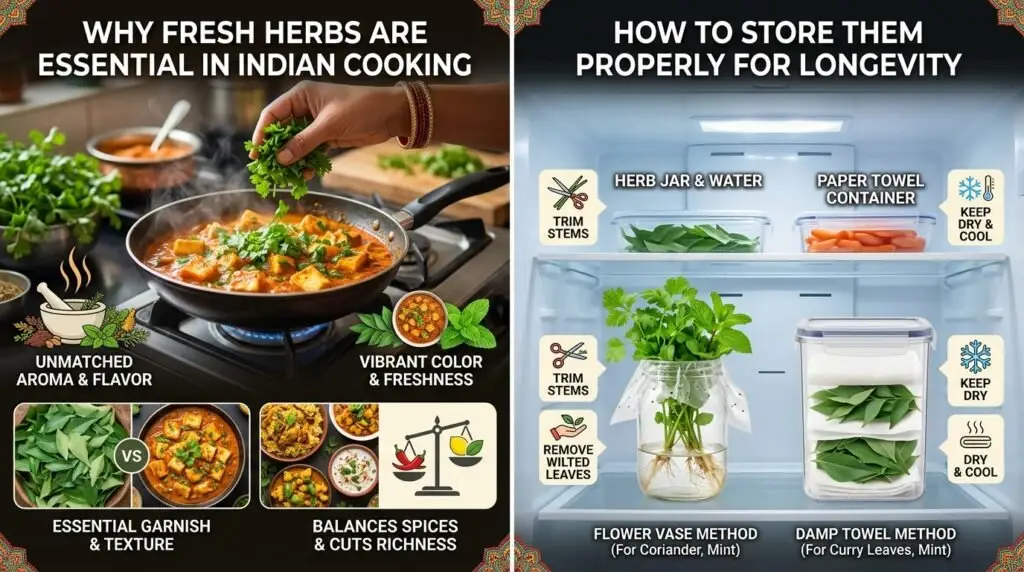
Walk into any Indian kitchen, and you’ll quickly notice that fresh herbs are just as important as spices.
While turmeric, cumin, coriander, and garam masala often receive the spotlight, herbs like cilantro, mint, curry leaves, fenugreek, and tulsi bring the freshness, aroma, and finishing touches that transform everyday meals into authentic Indian dishes.
A handful of freshly chopped cilantro can brighten a rich curry. A few curry leaves crackling in hot oil can completely change the aroma of a tempering. Fresh mint can turn a simple yogurt dip into a refreshing accompaniment for biryani or kebabs.
These herbs don’t simply garnish food. They help define the character of Indian cuisine.
Beyond flavor, fresh herbs contribute valuable nutrients, natural antioxidants, and traditional wellness benefits that have been appreciated for generations. Many also play an important role in Ayurvedic cooking, where ingredients are selected not only for taste but also for their balance and functional properties.
The challenge, however, is that fresh herbs are highly perishable.
Without proper storage, cilantro wilts, mint blackens, curry leaves dry out, and delicate herbs quickly lose the vibrant flavor that makes them so valuable.
Learning how to select, store, and preserve herbs correctly allows you to reduce waste, save money, and always have fresh ingredients available whenever inspiration strikes in the kitchen.
In this complete guide, you’ll discover why fresh herbs are essential in Indian cooking, which herbs every home cook should keep on hand, how they enhance traditional recipes, and the best techniques for keeping them fresh for days or even weeks.
Fresh herbs are essential in Indian cooking because they add vibrant flavor, aroma, texture, color, and nutritional value that dried herbs cannot fully replicate. Popular herbs such as cilantro, mint, curry leaves, fenugreek, dill, and tulsi enhance curries, dals, biryanis, chutneys, and snacks while also providing antioxidants, vitamins, and traditional wellness benefits. Proper storage helps preserve their freshness, flavor, and shelf life.
Why Fresh Herbs Are the Heart of Authentic Indian Cooking
Indian cuisine is celebrated for its complexity.
Every dish is carefully balanced through layers of flavor created by spices, herbs, aromatics, and cooking techniques that have evolved over centuries.
Fresh herbs provide something spices alone cannot:
- Brightness
- Freshness
- Natural aroma
- Visual appeal
- Texture
- Balance
They soften the richness of butter, cream, coconut milk, and ghee while complementing the warmth of spices like cumin, turmeric, coriander, cardamom, and cloves.
Without fresh herbs, many traditional recipes lose the finishing layer that makes them feel complete.
Fresh Herbs vs. Dried Herbs
Many home cooks wonder whether dried herbs can replace fresh ones.
While dried herbs have their place, they serve a different purpose.
| Fresh Herbs | Dried Herbs |
|---|---|
| Bright flavor | Concentrated flavor |
| Vibrant aroma | Earthier aroma |
| Best for garnishing | Best during cooking |
| Higher moisture | Longer shelf life |
| Better visual appeal | Convenient pantry staple |
For many Indian recipes, fresh herbs are irreplaceable because they provide freshness and fragrance that dried versions cannot match.
How Fresh Herbs Transform Indian Dishes
Fresh herbs influence far more than taste alone.
They Brighten Rich Curries
Creamy curries often rely on fresh cilantro or mint to balance heavier ingredients.
They Elevate Chutneys
Green chutneys depend almost entirely on fresh herbs for their vibrant flavor and color.
Without fresh cilantro or mint, these classic condiments simply aren’t the same.
They Complete Tempering (Tadka)
Fresh curry leaves added to hot oil release aromatic compounds that define countless South Indian dishes.
They Improve Presentation
Bright green herbs immediately make food look fresher, more colorful, and more appetizing.
This visual appeal enhances the overall dining experience before the first bite.
They Add Nutritional Value
Fresh herbs contribute vitamins, minerals, antioxidants, and beneficial plant compounds while adding very few calories.
Why Every Indian Kitchen Should Keep Fresh Herbs on Hand
Whether you’re preparing a simple dal on a busy weeknight or an elaborate feast for family and friends, fresh herbs allow you to finish dishes with authentic flavor and aroma.
Keeping a regular supply of herbs in your refrigerator or freezer means you’re always ready to prepare:
- Fresh chutneys
- Flavorful curries
- Homemade biryanis
- Vegetable stir-fries
- Soups
- Lentil dishes
- Rice recipes
- Snacks
- Marinades
- Refreshing beverages
Along with fresh herbs, explore these healthy Indian vegetables to build more nutritious curries, dals, soups, and everyday meals.
The small effort required to store herbs properly pays off through better-tasting meals, reduced waste, and more enjoyable cooking every day.
The Most Important Fresh Herbs Used in Indian Cooking
Every region of India has its own culinary traditions, but one thing remains consistent: fresh herbs play a vital role in building authentic flavor.
Each herb contributes a unique aroma, texture, and nutritional profile that can’t easily be replaced. Understanding when and how to use them helps elevate everyday meals into restaurant-quality dishes.
1. Cilantro (Fresh Coriander Leaves)
Cilantro is the most commonly used fresh herb in Indian cuisine.
From North Indian curries to South Indian rice dishes, it’s used as both a cooking ingredient and a finishing garnish.
Why It’s Essential
Fresh cilantro adds a clean, citrusy flavor that balances rich spices and creamy sauces while making dishes look vibrant and inviting.
Nutritional Benefits
Cilantro naturally contains:
- Vitamin A
- Vitamin C
- Vitamin K
- Potassium
- Folate
- Antioxidants
It has traditionally been associated with digestive support and overall wellness.
Best Indian Dishes for Cilantro
- Dal Tadka
- Butter Chicken
- Chole
- Rajma
- Biryani
- Vegetable Pulao
- Paneer Curry
- Green Chutney
- Chaat
- Samosas
Expert Tip
Always add chopped cilantro just before serving to preserve its fresh aroma and vibrant color.
2. Mint Leaves (Pudina)
Mint brings cooling freshness that beautifully complements India’s bold spices.
It’s especially popular during warmer months and is widely used in beverages, chutneys, marinades, and rice dishes.
Why It’s Essential
Mint provides a refreshing contrast to spicy foods while adding depth without overpowering other ingredients.
Nutritional Benefits
Fresh mint is a good source of:
- Vitamin A
- Antioxidants
- Menthol compounds
- Dietary fiber
It has long been valued for promoting digestive comfort and fresh breath.
Popular Indian Dishes
- Pudina Chutney
- Mint Raita
- Veg Biryani
- Chicken Biryani
- Kebabs
- Mint Lemonade
- Masala Chaas
Expert Tip
Fresh mint leaves should be added near the end of cooking or used raw to retain their cooling flavor.
3. Curry Leaves (Kadi Patta)
Few ingredients are as instantly recognizable as curry leaves.
When added to hot oil during tempering (tadka), they release an unmistakable aroma that defines countless South Indian recipes.
Why They’re Essential
Curry leaves create a savory, slightly citrusy fragrance that cannot be replicated by dried substitutes.
Nutritional Benefits
Curry leaves naturally provide:
- Iron
- Calcium
- Vitamin A
- Antioxidants
- Plant compounds associated with digestive health
Popular Indian Dishes
- Sambar
- Rasam
- Lemon Rice
- Coconut Chutney
- Upma
- Poha
- South Indian Dal
- Vegetable Stir-Fries
Expert Tip
Always fry curry leaves briefly in hot oil to unlock their essential oils before combining them with other ingredients.
4. Fenugreek Leaves (Methi)
Fenugreek leaves offer a slightly earthy, mildly bitter flavor that adds remarkable complexity to Indian cooking.
Unlike fenugreek seeds, the fresh leaves provide a delicate herbal note that pairs especially well with breads and creamy curries.
Why They’re Essential
Methi balances richer ingredients while creating layers of flavor that deepen as dishes cook.
Nutritional Benefits
Fenugreek leaves contain:
- Iron
- Calcium
- Fiber
- Vitamin C
- Antioxidants
They’re commonly associated with balanced nutrition and digestive wellness.
Popular Indian Dishes
- Methi Paratha
- Methi Aloo
- Methi Paneer
- Dal Methi
- Thepla
- Mixed Vegetable Curry
Expert Tip
Lightly sauté fresh methi before adding it to curries to soften its natural bitterness.
5. Dill Leaves (Suva Bhaji)
Although less common than cilantro or mint, dill plays an important role in several regional Indian cuisines, particularly in Maharashtra, Gujarat, and Karnataka.
Why It’s Essential
Its delicate, earthy flavor pairs exceptionally well with vegetables and lentils.
Nutritional Benefits
Dill provides:
- Vitamin C
- Calcium
- Iron
- Manganese
- Antioxidants
Popular Indian Dishes
- Suva Bhaji
- Dill Potato Curry
- Moong Dal with Dill
- Vegetable Stir-Fries
- Lentil Preparations
Expert Tip
Because dill has a naturally bold flavor, use it thoughtfully so it complements rather than dominates the dish.
6. Holy Basil (Tulsi)
Tulsi holds a special place in Indian households, valued not only for its culinary applications but also for its cultural and traditional wellness significance.
Why It’s Essential
Tulsi contributes a subtle peppery aroma while being widely appreciated in herbal beverages and traditional home remedies.
Nutritional Benefits
Tulsi contains:
- Antioxidants
- Vitamin C
- Essential oils
- Plant compounds traditionally associated with immune support
Popular Uses
- Herbal Tea
- Tulsi Water
- Ayurvedic Preparations
- Infused Beverages
Expert Tip
Tulsi is generally used fresh in teas and herbal preparations rather than heavily cooked dishes.
Fresh Herbs vs. Frozen Herbs
Many home cooks wonder whether freezing herbs affects their quality.
The answer depends on how you plan to use them.
| Fresh Herbs | Frozen Herbs |
|---|---|
| Bright color | Slightly darker after thawing |
| Crisp texture | Softer texture |
| Best for garnishing | Best for cooking |
| Maximum aroma | Excellent for curries and soups |
| Short shelf life | Lasts several months |
Frozen herbs remain an excellent option when used in cooked dishes, especially curry leaves, cilantro, and mint.
Choosing the Freshest Herbs at an Indian Grocery Store
The quality of your herbs begins before they reach your refrigerator.
Selecting fresh, healthy herbs extends shelf life and improves the flavor of every recipe.
Look for:
✅ Bright green leaves
✅ Firm stems
✅ Fresh, clean aroma
✅ Crisp texture
✅ Even color
Avoid Herbs That Show:
❌ Yellow leaves
❌ Brown edges
❌ Slimy stems
❌ Mold
❌ Strong unpleasant odor
❌ Excessive wilting
Spending a few extra moments choosing high-quality herbs can significantly reduce food waste later.
Seasonal Availability of Popular Indian Herbs
Understanding seasonal patterns helps you purchase herbs when they’re at their freshest and most flavorful.
| Herb | Peak Availability |
|---|---|
| Cilantro | Year-round |
| Mint | Spring through early fall |
| Curry Leaves | Year-round in most Indian grocery stores |
| Fenugreek Leaves | Cooler months |
| Dill | Winter and spring |
| Tulsi | Warm seasons |
Even when certain herbs are out of season locally, many Indian grocery stores continue to stock them year-round due to consistent demand.
Check Subzi Mandi’s weekly specials before shopping for fresh produce, herbs, and everyday Indian grocery essentials.
Best Herb Pairings for Popular Indian Dishes
Using the right herb with the right dish enhances authenticity and flavor.
| Dish | Best Fresh Herb |
|---|---|
| Butter Chicken | Cilantro |
| Dal Tadka | Cilantro |
| Paneer Butter Masala | Cilantro |
| Chole | Cilantro |
| Sambar | Curry Leaves |
| Rasam | Curry Leaves |
| Coconut Chutney | Curry Leaves |
| Veg Biryani | Mint + Cilantro |
| Chicken Biryani | Mint + Cilantro |
| Raita | Mint |
| Green Chutney | Mint + Cilantro |
| Methi Paratha | Fenugreek |
| Herbal Tea | Tulsi |
These pairings reflect traditional Indian cooking practices while helping home cooks achieve authentic results.
Featured Snippet
Which Fresh Herbs Are Most Commonly Used in Indian Cooking?
The most common fresh herbs used in Indian cooking are cilantro (coriander leaves), mint (pudina), curry leaves (kadi patta), fenugreek leaves (methi), dill (suva bhaji), and holy basil (tulsi). These herbs add freshness, aroma, nutritional value, and authentic flavor to curries, dals, biryanis, chutneys, rice dishes, and traditional beverages.
Expert Insight
Fresh herbs are often the final layer that completes an Indian dish. While spices create depth and warmth, herbs introduce brightness, aroma, and freshness that elevate the entire meal. Choosing high-quality herbs and using them at the right stage of cooking can make a noticeable difference in both flavor and presentation.
How to Store Fresh Herbs Properly
Buying high-quality herbs is only half the battle.
Proper storage helps preserve their flavor, aroma, texture, and nutritional value while reducing unnecessary food waste. Every herb has slightly different storage needs, but a few simple techniques can dramatically extend freshness.
Whether you cook Indian food every day or only a few times each week, learning these storage methods will help ensure fresh herbs are always ready when you need them.
How to Store Cilantro (Coriander Leaves)
Cilantro is one of the quickest herbs to wilt because its tender leaves lose moisture rapidly.
Best Method: Glass Jar Storage
- Trim about ½ inch from the stems.
- Fill a clean glass jar with 1 to 2 inches of fresh water.
- Place the stems in the water like a bouquet.
- Loosely cover the leaves with a reusable produce bag or plastic bag.
- Store the jar in the refrigerator.
- Replace the water every two to three days.
Shelf Life: 10 to 14 days
Alternative Method: Paper Towel Storage
If refrigerator space is limited:
- Wash cilantro thoroughly.
- Dry completely using a salad spinner or paper towels.
- Wrap loosely in a dry paper towel.
- Store inside an airtight container or zip-top bag.
This method helps absorb excess moisture while preventing wilting.
How to Store Mint Leaves
Mint stays fresh longest when it receives both moisture and airflow.
Recommended Storage
- Remove damaged leaves.
- Trim stems slightly.
- Place stems in a glass containing fresh water.
- Cover loosely.
- Refrigerate.
Alternatively:
- Wrap clean leaves in a slightly damp paper towel.
- Place inside an airtight container.
Shelf Life: 7 to 10 days
How to Store Curry Leaves
Curry leaves are more durable than many herbs but still lose aroma if exposed to moisture or air for long periods.
Refrigerator Method
- Wash only if necessary.
- Dry every leaf thoroughly.
- Place paper towels inside an airtight container.
- Store the leaves in a single layer.
- Refrigerate immediately.
Shelf Life: 2 to 3 weeks
Freezer Method
Curry leaves freeze exceptionally well.
Simply:
- Wash and dry thoroughly.
- Transfer to freezer-safe bags.
- Remove excess air.
- Freeze.
Frozen curry leaves can be added directly to hot oil during tempering without thawing.
How to Store Fenugreek Leaves (Methi)
Fresh methi requires careful handling because its leaves bruise easily.
Best Storage Method
- Remove roots.
- Wash thoroughly.
- Dry completely.
- Wrap loosely in dry paper towels.
- Place inside an airtight container.
Shelf Life: Approximately one week
How to Store Dill Leaves
Dill loses freshness quickly if exposed to excessive moisture.
For best results:
- Wrap gently in paper towels.
- Store inside a breathable produce bag or airtight container.
- Refrigerate immediately.
Avoid crushing the delicate leaves.
How to Store Tulsi (Holy Basil)
Tulsi differs slightly from culinary basil.
To maximize freshness:
- Keep stems in a small glass of water.
- Avoid prolonged exposure to cold temperatures if possible.
- Use within several days for the strongest aroma.
Many people also grow Tulsi plants at home, allowing fresh leaves to be harvested as needed.
Should You Wash Herbs Before Storing?
This is one of the most common questions home cooks ask.
The Answer:
Yes, but only if you dry them completely.
Excess moisture encourages:
- Mold
- Slimy leaves
- Faster spoilage
- Bacterial growth
A salad spinner followed by paper towels works exceptionally well.
If you won’t be using herbs immediately, many cooks prefer washing them just before cooking.
Common Herb Storage Mistakes
Many herbs spoil long before their natural shelf life because of avoidable mistakes.
Avoid these common problems:
Leaving Herbs in Plastic Grocery Bags
Plastic traps moisture, encouraging mold and wilting.
Storing Wet Herbs
Even small amounts of water left on leaves can significantly reduce freshness.
Forgetting to Remove Damaged Leaves
One spoiled leaf can quickly affect the rest of the bunch.
Inspect herbs regularly and remove:
- Yellow leaves
- Brown leaves
- Wilted stems
Keeping Herbs Near Ethylene-Producing Fruits
Apples, bananas, avocados, and tomatoes release ethylene gas, which speeds up the aging process of nearby herbs.
Store herbs separately whenever possible.
Overcrowding Containers
Compressed herbs bruise more easily and lose freshness faster.
Give delicate leaves enough room for airflow.
Fresh Herbs vs. Dried Herbs vs. Frozen Herbs
Each option has advantages depending on the recipe.
| Feature | Fresh Herbs | Frozen Herbs | Dried Herbs |
|---|---|---|---|
| Flavor | Excellent | Very Good | Moderate |
| Aroma | Excellent | Good | Mild |
| Garnishing | Best | Not Recommended | Not Suitable |
| Cooking | Excellent | Excellent | Good |
| Shelf Life | 1 to 2 Weeks | Several Months | 1 Year+ |
| Nutritional Value | Highest | High | Moderate |
For authentic Indian cooking, fresh herbs remain the preferred choice whenever possible.
Frozen herbs provide an excellent backup for cooked dishes.
Best Containers for Storing Fresh Herbs
Choosing the right container can make a noticeable difference.
Recommended options include:
- Glass jars
- Airtight food storage containers
- Produce storage containers
- Reusable silicone bags
- Zip-top freezer bags
- Glass meal-prep containers
Using paper towels inside containers helps absorb excess moisture and extends freshness.
How to Freeze Fresh Herbs
If you’ve purchased herbs in bulk, freezing is one of the easiest ways to prevent waste.
Method 1: Whole Leaves
- Wash thoroughly.
- Dry completely.
- Transfer to freezer bags.
- Remove excess air.
- Freeze.
Method 2: Herb Ice Cubes
- Finely chop herbs.
- Fill ice cube trays.
- Add water or olive oil.
- Freeze.
- Transfer cubes to freezer bags.
These cubes can be dropped directly into:
- Curries
- Soups
- Lentils
- Sauces
- Vegetable dishes
Signs Your Herbs Have Gone Bad
Fresh herbs should smell bright and feel crisp.
Discard them if you notice:
- Slimy texture
- Sour or unpleasant odor
- Mold
- Excessive yellowing
- Black spots
- Complete wilting
- Sticky leaves
Using herbs past their prime affects both flavor and food quality.
Reduce Waste With Smart Herb Planning
A little planning helps you get the most from every bunch.
Simple habits include:
- Buy only what you’ll use within one to two weeks.
- Freeze extras before they spoil.
- Rotate older herbs to the front of your refrigerator.
- Incorporate herbs into soups, salads, smoothies, marinades, and chutneys.
- Store herbs immediately after returning from the grocery store.
These practices save money while ensuring fresh ingredients are always available.
Quick Summary
Fresh herbs are essential to authentic Indian cooking because they provide:
- Bright flavor
- Fresh aroma
- Vibrant color
- Better texture
- Valuable nutrients
- Traditional authenticity
Proper storage methods such as glass jars, airtight containers, paper towels, and freezing help extend freshness while reducing food waste and preserving quality.
Conclusion
Fresh herbs are among the most valuable ingredients in Indian cooking. They don’t simply decorate a finished dish. They create the freshness, aroma, balance, and authenticity that define countless traditional recipes.
Whether you’re preparing dal, biryani, curry, chutney, or a simple vegetable stir-fry, herbs such as cilantro, mint, curry leaves, fenugreek, dill, and tulsi contribute flavors and fragrances that dried alternatives simply cannot duplicate.
Learning how to select, store, and preserve these herbs allows you to cook with confidence while minimizing waste and maximizing flavor.
By keeping your kitchen stocked with properly stored fresh herbs, you’ll always be ready to prepare healthier, more vibrant, and more authentic Indian meals for your family.
Frequently Asked Questions
Which fresh herb is used most in Indian cooking?
Cilantro (fresh coriander leaves) is the most widely used herb in Indian cuisine. It is commonly added to curries, dals, rice dishes, chaats, chutneys, and salads for freshness and aroma.
How long do fresh herbs last in the refrigerator?
Most herbs stay fresh for one to two weeks when stored properly using glass jars, paper towels, or airtight containers. Curry leaves may last even longer with proper refrigeration.
Can curry leaves be frozen?
Yes. Curry leaves freeze exceptionally well and retain much of their flavor for several months. They can be added directly to hot oil without thawing.
Should herbs be washed before storing?
You can wash herbs before storing them, but they must be dried completely to prevent mold, sliminess, and early spoilage.
Are fresh herbs healthier than dried herbs?
Fresh herbs generally contain more moisture and may retain higher levels of certain vitamins. They also provide brighter flavor and aroma, although both fresh and dried herbs contribute beneficial plant compounds.
Which herbs should every Indian kitchen keep?
Most Indian kitchens regularly use cilantro, mint, curry leaves, fenugreek leaves, dill, and tulsi. Together, these herbs support a wide range of authentic recipes across different regional cuisines.
Bring Home the Freshest Ingredients for Authentic Indian Cooking
The secret to unforgettable Indian meals often begins long before the cooking starts. Fresh herbs can elevate even the simplest recipes with vibrant flavor, irresistible aroma, and authentic character.
Whether you’re preparing a comforting dal, a festive biryani, refreshing chutneys, or everyday vegetable dishes, choosing high-quality herbs and storing them properly helps you enjoy better flavor while reducing waste.
Visit your trusted Indian grocery store to find fresh cilantro, mint, curry leaves, fenugreek, dill, tulsi, and other authentic ingredients that make every homemade Indian meal taste its very best.