
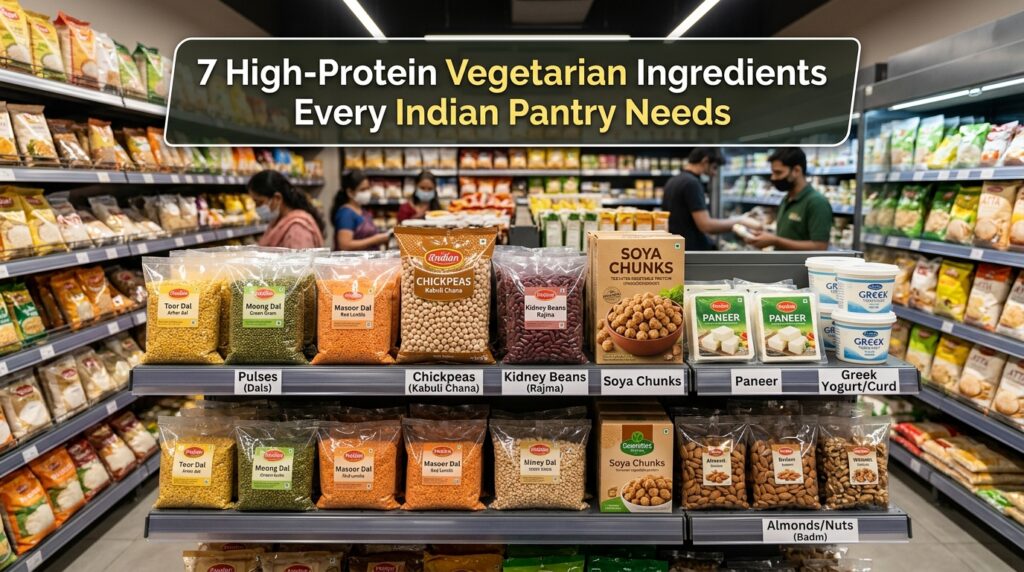
Protein is an essential nutrient that supports muscle growth, tissue repair, immune function, and overall health. While many people associate protein with meat and seafood, Indian cuisine offers an impressive variety of plant-based and vegetarian protein sources that can easily meet daily nutritional needs.
Whether you’re a vegetarian, trying to reduce meat consumption, or simply looking for healthier meal options, stocking your kitchen with the right vegetarian protein Indian ingredients can help you prepare delicious and nutritious meals every day.
The best part? Many of these ingredients are already staples in Indian households. From dals and legumes to dairy-based proteins, these pantry essentials can be transformed into countless traditional and modern recipes.
In this guide, we’ll explore seven of the best high-protein vegetarian ingredients every Indian pantry should have and how to use them in everyday cooking.
Why Protein Is Important in a Vegetarian Diet
Protein is made up of amino acids, which are often referred to as the building blocks of the body. Adequate protein intake helps:
● Build and maintain muscle mass
● Support healthy bones
● Improve satiety and appetite control
● Aid recovery after exercise
● Strengthen immunity
● Promote healthy skin and hair
For vegetarians, consuming a variety of protein sources throughout the day helps ensure a balanced intake of essential amino acids.
Fortunately, Indian cuisine naturally includes many excellent protein-rich foods.
1. Moong Dal (Green Gram)
Moong dal is one of the most versatile and nutritious protein-rich lentils found in Indian kitchens.
Protein Content
Approximately 24 grams of protein per 100 grams (dry weight).
Nutritional Benefits
Moong dal is rich in:
● Protein
● Fiber
● Iron
● Magnesium
● Potassium
● Folate
It is also easy to digest, making it an excellent choice for children, seniors, and people recovering from illness.
How to Use It
Popular dishes include:
● Moong dal curry
● Khichdi
● Sprouted moong salad
● Moong chilla
● Dal soup
Sprouting moong beans can further improve nutrient availability and digestibility.
2. Chickpeas (Chana)
When discussing chickpeas nutrition, it’s impossible to overlook their role as one of the most powerful vegetarian protein sources.
Protein Content
Approximately 19 grams of protein per 100 grams (dry weight).
Nutritional Benefits
Chickpeas provide:
● Protein
● Dietary fiber
● Iron
● Zinc
● B vitamins
● Complex carbohydrates
They also help maintain steady energy levels and support digestive health.
How to Use Chickpeas
Popular Indian recipes include:
● Chole
● Chana masala
● Chana salad
● Hummus
● Roasted chickpea snacks
Chickpeas are affordable, filling, and highly versatile.
3. Paneer
No list of high protein Indian foods would be complete without paneer.
Protein Content
Approximately 18–21 grams of protein per 100 grams.
Nutritional Benefits
The nutritional value of paneer protein includes:
● Complete protein
● Calcium
● Phosphorus
● Vitamin B12
● Healthy fats
Because paneer contains all essential amino acids, it is considered a high-quality protein source.
How to Use Paneer
Popular dishes include:
● Paneer tikka
● Palak paneer
● Paneer bhurji
● Kadai paneer
● Grilled paneer salads
Paneer is especially popular among vegetarians who are focused on muscle building and fitness goals.
4. Toor Dal (Arhar Dal)
Toor dal remains one of the most commonly consumed lentils across India.
Protein Content
Approximately 22 grams of protein per 100 grams (dry weight).
Nutritional Benefits
Toor dal contains:
● Protein
● Fiber
● Iron
● Potassium
● Folate
Its mild flavor makes it suitable for daily meals.
How to Use Toor Dal
Common preparations include:
● Dal tadka
● Sambar
● Gujarati dal
● Dal khichdi
Regular consumption contributes significantly to daily protein intake.
5. Soy Chunks
Soy chunks are among the highest-protein vegetarian foods available.
Protein Content
Approximately 50–52 grams of protein per 100 grams.
Nutritional Benefits
Soy chunks provide:
● Complete protein
● Iron
● Calcium
● Fiber
● Essential amino acids
Because of their impressive protein content, they are often recommended for athletes, fitness enthusiasts, and growing children.
How to Use Soy Chunks
Popular recipes include:
● Soy chunk curry
● Soy pulao
● Soy keema
● Stir-fries
● Protein-rich salads
They readily absorb spices and flavors, making them easy to incorporate into Indian meals.
6. Rajma (Kidney Beans)
Rajma is not only delicious but also one of the most satisfying vegetarian protein sources.
Protein Content
Approximately 24 grams of protein per 100 grams (dry weight).
Nutritional Benefits
Rajma offers:
● Protein
● Fiber
● Iron
● Magnesium
● Potassium
● Antioxidants
The combination of protein and fiber helps promote fullness and sustained energy.
How to Use Rajma
Popular dishes include:
● Rajma masala
● Rajma chawal
● Bean salads
● Burrito bowls
● Protein wraps
Pairing rajma with rice helps create a more complete amino acid profile.
7. Peanuts
Many people overlook peanuts when considering vegetarian protein Indian ingredients, but they are an excellent pantry staple.
Protein Content
Approximately 25–26 grams of protein per 100 grams.
Nutritional Benefits
Peanuts contain:
● Protein
● Healthy fats
● Vitamin E
● Magnesium
● Niacin
● Antioxidants
They are also budget-friendly and easy to store.
How to Use Peanuts
Popular options include:
● Peanut chutney
● Roasted snacks
● Poha
● Chikki
● Peanut butter
● Salads
Peanuts add flavor, texture, and nutritional value to many dishes.
Tips for Maximizing Protein Intake on a Vegetarian Diet
Simply adding high-protein foods to your pantry isn’t enough. Combining ingredients strategically can improve overall protein quality.
Combine Cereals and Legumes
Examples include:
● Dal and rice
● Khichdi
● Rajma and rice
● Chole with roti
These combinations help provide a more complete amino acid profile.
Include Protein in Every Meal
Try to add at least one protein source to:
● Breakfast
● Lunch
● Dinner
● Snacks
Examples:
● Moong chilla for breakfast
● Dal with lunch
● Paneer curry for dinner
● Roasted chana as a snack
Choose Whole Foods
Whole foods provide additional nutrients such as:
● Fiber
● Vitamins
● Minerals
● Antioxidants
This makes them more beneficial than relying solely on processed protein products.
Sample High-Protein Indian Meal Plan
Breakfast
● Moong dal chilla
● Mint chutney
● Glass of milk
Protein Boost:
Moong dal + dairy protein
Mid-Morning Snack
● Roasted chickpeas
● Handful of peanuts
Protein Boost:
Legume and nut protein
Lunch
● Rajma curry
● Brown rice
● Salad
Protein Boost:
Rajma protein plus complementary grains
Evening Snack
● Paneer cubes
● Green tea
Protein Boost:
High-quality paneer protein
Dinner
● Toor dal
● Whole wheat roti
● Mixed vegetables
Protein Boost:
Lentil-based protein source
Common Mistakes Vegetarians Make
Relying Too Heavily on Carbohydrates
Many vegetarian diets contain plenty of rice and bread but insufficient protein.
Skipping Legumes
Lentils, beans, and chickpeas should be consumed regularly.
Not Varying Protein Sources
Different foods provide different amino acid profiles and nutrients.
Ignoring Snacks
Protein-rich snacks can significantly increase total daily intake.
How to Stock a High-Protein Indian Pantry
For a well-balanced vegetarian kitchen, consider keeping:
● Moong dal
● Toor dal
● Chickpeas
● Rajma
● Soy chunks
● Paneer
● Peanuts
These staples can be combined in countless ways to create healthy, satisfying meals.
Shopping at a well-stocked Indian grocery store ensures access to fresh lentils, legumes, dairy products, spices, and other essential ingredients that support a balanced vegetarian lifestyle.
Conclusion
Building a nutritious vegetarian diet starts with choosing the right pantry staples. The best vegetarian protein Indian ingredients are affordable, versatile, and deeply rooted in traditional Indian cooking.
From protein-rich lentils like moong dal and toor dal to nutrient-dense options such as soy chunks, rajma, peanuts, and paneer protein, these foods make it easy to meet your daily nutritional needs without sacrificing flavor. Understanding chickpeas nutrition and incorporating a variety of high protein Indian foods into your meals can help support muscle health, improve satiety, and promote overall wellness.
By keeping these seven protein-packed ingredients in your pantry, you’ll always have the foundation for delicious, healthy, and nourishing Indian meals. Whether you’re cooking for your family, following a vegetarian lifestyle, or simply looking to eat healthier, these ingredients deserve a permanent place in every Indian kitchen.
FAQ’S
Q: Which vegetarian ingredient offers the highest protein content among common Indian pantry staples?
A: Soy chunks are one of the highest-protein vegetarian foods commonly found in Indian kitchens, providing approximately 50–52 grams of protein per 100 grams. Their complete amino acid profile makes them an excellent choice for vegetarians looking to support muscle growth, fitness goals, and overall nutrition through everyday meals.
Q: Why is combining rajma or dal with rice beneficial for vegetarians?
A: Pairing legumes such as rajma, chickpeas, or dals with rice helps create a more complete amino acid profile. This combination improves protein quality and allows vegetarians to obtain a broader range of essential amino acids. Including these traditional Indian food pairings regularly can help support balanced nutrition and long-term health.
Q: How can vegetarians increase protein intake without relying on supplements?
A: Vegetarians can naturally boost protein intake by including ingredients like moong dal, paneer, chickpeas, soy chunks, peanuts, and rajma throughout the day. Building meals and snacks around these protein-rich foods helps increase daily protein consumption while also providing fiber, vitamins, and minerals from whole food sources.
Q: What makes paneer a valuable protein source in an Indian vegetarian diet?
A: Paneer provides high-quality complete protein, meaning it contains all essential amino acids required by the body. In addition to protein, paneer supplies calcium, phosphorus, and vitamin B12, making it a nutritious option for vegetarians who want to support muscle maintenance, bone health, and overall wellness.