
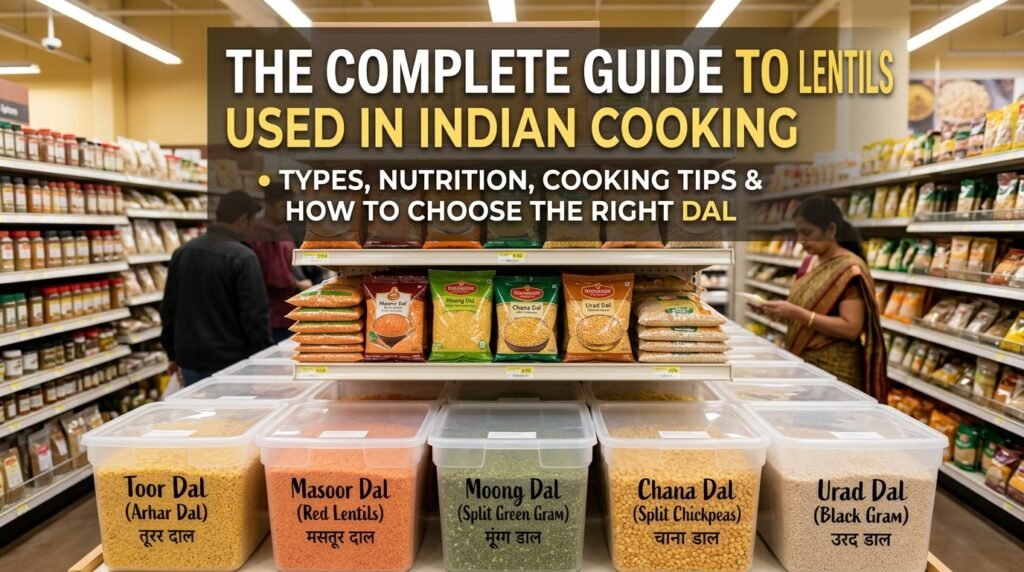
Walk into any Indian grocery store, and you’ll notice shelves lined with dozens of colorful lentils, beans, and pulses. To someone unfamiliar with Indian cuisine, they may appear similar at first glance. Yet each variety has its own flavor, texture, cooking characteristics, nutritional profile, and role in traditional recipes.
Known collectively as dal, lentils have been at the heart of Indian cooking for thousands of years. They are one of the most affordable, versatile, and nutrient-dense pantry staples found in Indian households. Whether simmered into comforting dals, blended into soups, fermented for idli and dosa batter, or transformed into festive dishes and snacks, lentils form the backbone of countless regional cuisines across India.
Their importance extends beyond tradition. Lentils are naturally rich in plant-based protein, dietary fiber, complex carbohydrates, essential minerals, and beneficial phytochemicals. Because they are inexpensive, shelf-stable, and easy to prepare, they have become a favorite ingredient for vegetarians, vegans, athletes, and families seeking wholesome everyday meals.
For beginners, however, choosing the right lentil can be confusing. What is the difference between toor dal and moong dal? When should you use masoor dal instead of urad dal? Which lentils cook the fastest? Which varieties are best for creamy curries, soups, salads, or meal prep?
This comprehensive guide answers those questions and more. You’ll learn about the most popular lentils used in Indian cooking, their nutritional strengths, cooking methods, regional importance, shopping tips, storage recommendations, and practical advice for selecting the perfect dal for every recipe.
Indian cooking commonly uses lentils such as toor dal, moong dal, masoor dal, urad dal, chana dal, kala chana, kabuli chana, horse gram, and mixed dals. Each variety differs in flavor, texture, cooking time, nutritional profile, and culinary use. Keeping several types of lentils in your pantry makes it easy to prepare authentic Indian dishes while adding plant-based protein, fiber, vitamins, and minerals to your meals.
Why Lentils Are the Heart of Indian Cooking
Few ingredients are as deeply woven into Indian food culture as lentils.
Across North, South, East, and West India, dal is far more than a side dish. It is often the centerpiece of everyday meals, served alongside rice, roti, vegetables, pickles, and yogurt to create a balanced and satisfying plate.
Their popularity comes from a unique combination of qualities:
- Affordable and accessible
- Excellent source of plant-based protein
- Naturally rich in dietary fiber
- Long shelf life
- Highly versatile across regional cuisines
- Suitable for vegetarian and vegan diets
- Easy to combine with vegetables, grains, and spices
Because different lentils offer different textures and flavors, Indian recipes carefully match each variety to specific cooking techniques, resulting in dishes that range from silky smooth soups to hearty stews and crispy snacks.
What Is the Difference Between Lentils, Pulses, and Dal?
These terms are often used interchangeably, but they are not exactly the same.
| Term | Meaning |
|---|---|
| Legumes | A broad family of plants that includes beans, peas, lentils, and chickpeas. |
| Pulses | The edible dried seeds harvested from legume plants, including lentils, chickpeas, and dried peas. |
| Dal | An Indian term that can refer to both split lentils and the cooked dishes prepared from them. |
Understanding this distinction helps shoppers identify products more confidently when browsing an Indian grocery store.
Why Lentils Are Considered a Nutritional Powerhouse
Despite their modest appearance, lentils are among the most nutrient-dense foods commonly found in the pantry.
Rich in Plant-Based Protein
Protein plays an essential role in building and repairing tissues, supporting muscle maintenance, and promoting satiety. Lentils provide an excellent protein source for vegetarian and vegan diets.
High in Dietary Fiber
Fiber contributes to digestive health, supports a healthy gut microbiome, and helps you feel fuller for longer after meals.
Excellent Source of Essential Minerals
Many varieties naturally contain:
- Iron
- Magnesium
- Potassium
- Zinc
- Phosphorus
- Folate
These nutrients support normal body functions, including energy metabolism, nerve function, and red blood cell production.
Complex Carbohydrates for Steady Energy
Unlike refined carbohydrates, lentils provide slowly digested complex carbohydrates that release energy gradually, making them a practical choice for sustained energy throughout the day.
Naturally Low in Fat
Most lentils are naturally low in fat and contain no cholesterol, making them an excellent addition to balanced eating patterns.
Why Indian Households Keep Multiple Types of Dal
One of the defining characteristics of Indian cooking is variety.
Instead of relying on a single type of lentil, many households keep several varieties because each serves a different purpose.
For example:
- Toor Dal creates smooth, comforting everyday dals.
- Moong Dal cooks quickly and is ideal for light meals.
- Masoor Dal is perfect for weeknight cooking because it softens rapidly.
- Urad Dal provides the creamy richness needed for dishes like Dal Makhani.
- Chana Dal retains its shape and texture, making it excellent for hearty curries and snacks.
Choosing the right lentil isn’t just about nutrition. It influences the texture, flavor, and overall character of the finished dish.
Expert Kitchen Insight
Experienced Indian cooks rarely choose lentils based only on nutrition. They think about the final dish first: Should it be silky and smooth, thick and hearty, or firm with distinct grains? That understanding of texture is what gives authentic Indian recipes their signature character and is one reason many kitchens keep several varieties of dal on hand.
The Most Common Types of Lentils Used in Indian Cooking
Every variety of dal has its own personality.
Some cook into silky, creamy soups, while others hold their shape for hearty curries and salads. Understanding these differences helps you choose the right lentil for every recipe while getting the best flavor, texture, and nutrition.
Quick Comparison Table: Indian Lentils at a Glance
| Lentil | Texture | Cooking Time | Best For | Protein Level |
|---|---|---|---|---|
| Toor Dal | Creamy | Medium | Sambar, Dal | ★★★★★ |
| Moong Dal | Very Soft | Fast | Khichdi, Soup | ★★★★☆ |
| Whole Green Moong | Firm | Medium | Sprouts, Curry | ★★★★★ |
| Masoor Dal | Smooth | Fast | Everyday Dal | ★★★★☆ |
| Urad Dal | Rich & Creamy | Long | Dal Makhani | ★★★★★ |
| Chana Dal | Firm | Medium | Curries, Snacks | ★★★★★ |
| Kala Chana | Dense | Long | Curry, Salad | ★★★★★ |
| Kabuli Chana | Creamy | Long | Chole, Hummus | ★★★★★ |
| Horse Gram | Dense | Long | Soups, Regional Recipes | ★★★★★ |
Expert Note: Cooking time varies depending on soaking, age of the lentils, altitude, and cooking method (pressure cooker, Instant Pot, or stovetop).
1. Toor Dal (Split Pigeon Peas)
Toor dal is one of the most widely consumed lentils across western and southern India and is often considered the foundation of everyday Indian comfort food.
Its naturally creamy texture and mild flavor make it ideal for absorbing spices while creating rich, satisfying dals.
Appearance
- Yellow split lentils
- Medium size
- Smooth surface
Flavor Profile
- Mild
- Slightly nutty
- Comforting
- Earthy
Texture After Cooking
- Smooth
- Creamy
- Velvety
Nutritional Highlights
Toor dal naturally provides:
- Plant protein
- Dietary fiber
- Iron
- Potassium
- Folate
- Complex carbohydrates
These nutrients contribute to balanced meals and sustained energy.
Popular Indian Recipes
- Sambar
- Gujarati Dal
- Maharashtrian Amti
- Dal Fry
- Everyday Yellow Dal
Best Pairings
Works beautifully with:
- Rice
- Ghee
- Lemon
- Curry Leaves
- Mustard Seeds
- Cumin
- Asafoetida
Expert Kitchen Tip
A small amount of tamarind or tomatoes balances toor dal’s natural earthiness while adding brightness to the finished dish.
2. Moong Dal (Split Yellow Mung Beans)
Moong dal is often recommended for beginners because it cooks quickly, has a mild flavor, and is widely regarded as one of the easiest lentils to digest.
Its delicate texture makes it ideal for light meals and comfort food.
Appearance
- Bright yellow
- Small split lentils
Flavor
- Mild
- Slightly sweet
- Delicate
Texture
- Soft
- Creamy
- Smooth
Nutritional Highlights
Moong dal naturally contains:
- High-quality plant protein
- Dietary fiber
- Iron
- Magnesium
- Potassium
- Antioxidants
Popular Recipes
- Moong Dal Tadka
- Khichdi
- Lentil Soup
- Moong Dal Halwa
- Dal Cheela
Why Many Families Choose Moong Dal
- Quick cooking
- Gentle flavor
- Excellent for meal prep
- Beginner-friendly
- Ideal for children and older adults due to its soft texture
Pro Cooking Tip
Avoid overcooking if using moong dal in salads or fillings where a slightly firmer texture is preferred.
3. Whole Green Moong
Whole green moong is simply the unprocessed version of moong dal.
Unlike split moong, it maintains its shape after cooking and offers a pleasantly chewy texture.
Appearance
- Small green beans
Flavor
- Earthy
- Nutty
- Fresh
Texture
- Firm
- Slightly chewy
Nutritional Highlights
Whole green moong provides:
- Plant protein
- Dietary fiber
- Folate
- Iron
- Magnesium
- Potassium
Sprouting further changes its texture and increases vitamin C content while making it popular for salads and light meals.
Popular Recipes
- Whole Moong Curry
- Sprouted Moong Salad
- Moong Chaat
- Stuffed Parathas
Shopping Tip
Choose beans with a uniform green color and avoid packages containing excessive broken pieces or dust.
4. Masoor Dal (Red Lentils)
Masoor dal has become one of the most popular lentils for busy households because it cooks rapidly without requiring soaking.
Its creamy consistency makes it perfect for smooth soups and everyday dals.
Appearance
- Orange-red when raw
- Golden after cooking
Flavor
- Mild
- Slightly earthy
Texture
- Smooth
- Creamy
- Velvety
Nutritional Highlights
Masoor dal naturally contains:
- Plant protein
- Iron
- Dietary fiber
- Folate
- Potassium
Popular Recipes
- Masoor Dal Curry
- Lentil Soup
- Mixed Dal
- Masoor Tadka
Why Beginners Love Masoor Dal
- No soaking required
- Fast cooking
- Mild flavor
- Easy seasoning
- Budget-friendly lentil options
Expert Tip
Masoor dal works exceptionally well for meal prep because it reheats beautifully without losing its creamy consistency.
5. Urad Dal (Black Gram)
Few lentils contribute as much richness and body as urad dal.
Its naturally creamy texture makes it indispensable for iconic dishes such as Dal Makhani while also serving as the foundation for fermented batters used in South Indian cuisine.
Available Forms
- Whole Black Urad
- Split Black Urad
- White Urad Dal (Skinned)
Each form serves different culinary purposes.
Flavor
- Rich
- Earthy
- Deep
- Creamy
Nutritional Highlights
Urad dal naturally provides:
- Protein
- Iron
- Calcium
- Magnesium
- Potassium
- Dietary fiber
Popular Recipes
- Dal Makhani
- Idli
- Dosa
- Medu Vada
- Punjabi Dal
Why Fermentation Matters
When combined with rice for idli and dosa batter, urad dal creates natural fermentation that contributes to the light, airy texture these dishes are known for.
Professional Chef Tip
Slow cooking whole urad dal develops remarkable creaminess without relying on excessive cream or butter.
Protein Comparison Table
| Lentil | Plant Protein | Fiber | Best Use |
|---|---|---|---|
| Toor Dal | High | High | Everyday Dal |
| Moong Dal | High | Moderate | Khichdi |
| Whole Green Moong | Very High | High | Sprouts |
| Masoor Dal | High | High | Soups |
| Urad Dal | Very High | High | Dal Makhani |
| Chana Dal | Very High | High | Curries |
Nutrition Insight: While all lentils are excellent plant-based protein sources, combining lentils with grains such as rice or whole wheat creates a more balanced amino acid profile, which is one reason dal and rice has remained a staple meal in Indian households for generations.
Featured Snippet
Which Lentil Is Best for Beginners?
Moong dal and masoor dal are generally considered the best lentils for beginners because they cook quickly, require little or no soaking, have a mild flavor, and adapt well to soups, curries, and one-pot meals. Their creamy texture and simple preparation make them excellent choices for anyone learning Indian cooking.
Expert Kitchen Insight
One of the biggest mistakes beginners make is trying to use one type of dal for every recipe. Authentic Indian cooking pairs each lentil with dishes that highlight its natural texture. Creamy lentils like urad create rich, slow-cooked meals, while lighter lentils like moong produce delicate, comforting dishes. Choosing the right lentil is just as important as selecting the right spices.
6. Chana Dal (Split Bengal Gram)
Chana dal is made by splitting and polishing black chickpeas (desi chana). Unlike softer lentils, it retains a pleasant bite even after cooking, making it ideal for dishes where texture matters.
Its mildly sweet, nutty flavor pairs exceptionally well with aromatic spices, vegetables, and coconut-based recipes.
Pair chana dal and other lentils with healthy Indian vegetables to create more varied curries, soups, and everyday meals.
Appearance
- Bright golden-yellow
- Larger than most split lentils
- Round and firm
Flavor Profile
- Nutty
- Slightly sweet
- Rich
- Earthy
Texture After Cooking
- Firm
- Slightly chewy
- Holds its shape well
Nutritional Highlights
Chana dal naturally provides:
- Plant-based protein
- Dietary fiber
- Iron
- Magnesium
- Phosphorus
- Folate
Because of its combination of protein and fiber, it is often included in balanced meals that help promote satiety.
Popular Indian Recipes
- Chana Dal Fry
- Lauki Chana Dal
- Chana Dal Khichdi
- Bengali Cholar Dal
- Dal Pakwan
- Sweet Chana Dal Desserts
Best Pairings
- Coconut
- Spinach
- Bottle Gourd
- Tomatoes
- Curry Leaves
- Cumin
- Garlic
Expert Kitchen Tip
Soaking chana dal for 2–4 hours helps reduce cooking time while improving texture.
7. Kala Chana (Black Chickpeas)
Although technically a chickpea rather than a lentil, kala chana is commonly grouped with dals in Indian grocery stores because of its widespread use in traditional Indian cooking.
Its robust flavor and dense texture make it one of the most satisfying legumes.
Appearance
- Dark brown to black
- Small round beans
Flavor
- Rich
- Earthy
- Nutty
Texture
- Firm
- Meaty
- Chewy
Nutritional Highlights
Kala chana is naturally rich in:
- Protein
- Dietary fiber
- Iron
- Zinc
- Folate
- Complex carbohydrates
Popular Recipes
- Kala Chana Curry
- Chana Chaat
- Sundal
- Dry Masala Chana
- Protein Bowls
Why Health-Conscious Cooks Love Kala Chana
Because it holds its texture well and is rich in fiber, kala chana works beautifully for:
- Meal prep
- Salads
- Protein-rich lunches
- Vegetarian meal bowls
Shopping Tip
Choose chickpeas with a consistent size and color. Avoid bags containing cracked beans or excessive dust.
8. Kabuli Chana (White Chickpeas)
Kabuli chana is larger, creamier, and milder than kala chana.
Its versatility makes it popular not only in Indian cuisine but also throughout the Mediterranean and Middle East.
Appearance
- Beige
- Large
- Round
Flavor
- Mild
- Nutty
- Creamy
Texture
- Soft
- Creamy
- Smooth
Nutritional Highlights
Kabuli chana naturally contains:
- Plant protein
- Dietary fiber
- Folate
- Iron
- Potassium
Popular Recipes
- Chole
- Chickpea Salad
- Hummus
- Chickpea Curry
- Roasted Chickpeas
Pro Tip
For restaurant-style chole, soak chickpeas overnight and cook until tender before adding spices.
9. Horse Gram (Kulthi Dal)
Horse gram is one of India’s oldest cultivated legumes, yet it remains one of the least recognized outside the country.
Despite its modest popularity internationally, it is highly valued in many regional Indian cuisines.
Appearance
- Small
- Oval
- Brown
Flavor
- Earthy
- Robust
- Bold
Texture
- Dense
- Firm
Nutritional Highlights
Horse gram naturally provides:
- Protein
- Fiber
- Iron
- Calcium
- Polyphenols
Popular Recipes
- Horse Gram Soup
- Rasam
- South Indian Curry
- Kulthi Dal
Regional Importance
Horse gram remains especially popular in:
- Karnataka
- Tamil Nadu
- Andhra Pradesh
10. Mixed Dal (Panchmel Dal)
One of the smartest ways to enjoy lentils is by combining multiple varieties.
Mixed dal creates richer flavor, better texture, and greater nutritional diversity than relying on a single type.
Common Combinations
- Toor + Moong
- Toor + Masoor
- Moong + Urad
- Panchmel Dal (Five Lentils)
Benefits
✔ Balanced flavor
✔ Creamier consistency
✔ Diverse nutrients
✔ Better texture
✔ More satisfying meals
Popular Recipes
- Panchmel Dal
- Mixed Dal Fry
- Restaurant Dal
- Festival Dal
Whole vs Split vs Skinned Lentils
Many shoppers wonder why the same lentil appears in multiple forms.
| Type | Description | Best For |
|---|---|---|
| Whole | Complete seed with skin | Curries, salads, sprouts |
| Split | Cut into halves | Everyday dal, soups |
| Skinned | Outer skin removed | Smooth, creamy dishes |
Which Should You Buy?
Choose whole lentils if:
- You enjoy hearty textures.
- You want to sprout legumes.
- You’re making salads or dry curries.
Choose split lentils if:
- You cook dal frequently.
- You prefer shorter cooking times.
- You want smoother consistency.
Choose skinned lentils if:
- You enjoy creamy soups.
- You’re cooking for children or older adults.
- You prefer delicate flavors.
Cooking Time Comparison
| Lentil | Stovetop | Pressure Cooker | Instant Pot |
|---|---|---|---|
| Toor Dal | 35–45 min | 8–10 min | 10–12 min |
| Moong Dal | 20–25 min | 5–6 min | 6–8 min |
| Masoor Dal | 20–25 min | 5–6 min | 6–8 min |
| Urad Dal | 60–90 min | 20–25 min | 25–30 min |
| Chana Dal | 45–60 min | 12–15 min | 14–18 min |
| Kala Chana | 90–120 min* | 30–35 min | 35–40 min |
| Kabuli Chana | 90–120 min* | 35–40 min | 40–45 min |
*After overnight soaking.
Soaking Guide
| Lentil | Soaking Recommended? |
|---|---|
| Moong Dal | No |
| Masoor Dal | No |
| Toor Dal | Optional (30 min) |
| Chana Dal | Yes (2–4 hrs) |
| Urad Dal | Yes (4–6 hrs) |
| Kala Chana | Yes (8–12 hrs) |
| Kabuli Chana | Yes (8–12 hrs) |
| Horse Gram | Yes (8 hrs) |
Soaking can:
- Reduce cooking time
- Improve texture
- Help legumes cook more evenly
Pressure Cooker vs Instant Pot vs Stovetop
| Method | Best For | Advantage |
|---|---|---|
| Stovetop | Traditional cooking | Greater control over texture |
| Pressure Cooker | Everyday meals | Fast and efficient |
| Instant Pot | Meal prep | Consistent results with minimal supervision |
Regional Dal Guide
North India
Popular dals:
- Urad Dal
- Chana Dal
- Masoor Dal
Famous dishes:
- Dal Makhani
- Dal Tadka
- Chole
South India
Popular dals:
- Toor Dal
- Urad Dal
- Moong Dal
Famous dishes:
- Sambar
- Rasam
- Idli
- Dosa
West India
Popular dals:
- Toor Dal
- Moong Dal
- Chana Dal
Famous dishes:
- Gujarati Dal
- Khichdi
- Dal Dhokli
East India
Popular dals:
- Masoor Dal
- Moong Dal
Famous dishes:
- Bengali Bhaja Moong Dal
- Masoor Dal Tadka
Common Mistakes When Cooking Lentils
Avoid these common errors:
❌ Skipping rinsing before cooking.
❌ Using very old lentils, which may stay hard even after long cooking.
❌ Adding acidic ingredients like tomatoes or tamarind too early for recipes where tenderness is important.
❌ Overcooking delicate lentils until they lose all texture.
❌ Using too much water without adjusting seasoning.
❌ Forgetting the tadka (tempering), which adds depth, aroma, and complexity to the finished dish.
Myth vs Fact
Myth:
All lentils taste the same.
Fact:
Each variety has its own flavor, texture, cooking time, and ideal culinary use.
Myth:
Every lentil must be soaked overnight.
Fact:
Several varieties, including moong dal and masoor dal, cook well without soaking.
Myth:
One type of dal is enough for every recipe.
Fact:
Traditional Indian cooking uses different lentils to achieve specific textures, flavors, and regional specialties.
Expert Nutrition Insight
No single lentil is “the healthiest.” Each variety offers a unique nutritional profile. Rotating different dals throughout the week provides a broader range of proteins, minerals, fiber, and beneficial plant compounds while keeping meals interesting and nutritionally diverse.
Quick Summary
If you’re building an Indian pantry, stocking a variety of lentils rather than relying on just one type gives you greater flexibility in the kitchen. From creamy dals and hearty curries to protein-rich salads and comforting soups, each lentil offers a unique texture, flavor, and culinary purpose. Understanding when to use each variety helps you prepare more authentic meals while adding nutritious plant-based ingredients to your everyday cooking.
Key Takeaways
✔ Indian cooking uses multiple types of lentils because each variety serves a different culinary purpose.
✔ Toor dal is ideal for everyday dals and sambar.
✔ Moong dal and masoor dal are excellent beginner-friendly options due to their quick cooking times.
✔ Urad dal creates rich, creamy dishes like Dal Makhani and fermented batters for idli and dosa.
✔ Chana dal, kala chana, and kabuli chana provide firmer textures suitable for curries, salads, and snacks.
✔ Rotating different lentils throughout the week increases dietary variety and broadens your intake of plant-based nutrients.
✔ Proper soaking, storage, and cooking techniques improve texture, flavor, and overall cooking success.
Before restocking your dal collection, check Subzi Mandi’s weekly specials for current savings on lentils, rice, spices, and other Indian grocery essentials.
Frequently Asked Questions
1. What are the most common lentils used in Indian cooking?
The most common varieties include toor dal, moong dal, masoor dal, urad dal, chana dal, kala chana, kabuli chana, and horse gram. Each has a distinct texture, cooking time, and best use in Indian cuisine.
2. Which lentil is best for beginners?
Moong dal and masoor dal are excellent beginner-friendly choices because they cook quickly, have a mild flavor, and require little or no soaking.
3. Which dal cooks the fastest?
Split yellow moong dal and masoor dal are among the quickest-cooking lentils, making them ideal for busy weeknight meals.
4. Which lentils are highest in plant protein?
Most Indian lentils provide substantial plant-based protein. Urad dal, chana dal, kala chana, kabuli chana, and whole green moong are especially valued for their protein content as part of a balanced diet.
5. Which dal is commonly used for sambar?
Traditional South Indian sambar is most often prepared with toor dal because of its creamy texture and ability to absorb spices.
6. What is the difference between toor dal and moong dal?
Toor dal has a richer flavor and creamier consistency, while moong dal cooks faster, has a lighter taste, and produces a softer texture.
7. Do all lentils need to be soaked?
No. Moong dal and masoor dal generally cook well without soaking. Larger legumes such as kabuli chana and kala chana benefit from overnight soaking to reduce cooking time.
8. Can lentils be cooked in an Instant Pot?
Yes. Most Indian lentils cook efficiently in an Instant Pot, often reducing cooking time while delivering consistent results.
9. Are lentils naturally gluten-free?
Yes. Plain dried lentils are naturally gluten-free. If you have celiac disease or gluten sensitivity, check packaging for potential cross-contamination during processing.
10. How should lentils be stored?
Store dried lentils in airtight containers in a cool, dry place away from moisture, heat, and direct sunlight to help preserve freshness.
11. How long do dried lentils last?
When stored properly, dried lentils often maintain good quality for one to two years, although older lentils may require longer cooking times.
12. Can cooked lentils be frozen?
Yes. Cooked lentils freeze well for convenient meal preparation. Cool them completely, portion them into freezer-safe containers, and thaw in the refrigerator before reheating.
13. What is the difference between whole, split, and skinned lentils?
Whole lentils retain their outer skin, split lentils are cut into halves, and skinned lentils have the outer husk removed. Each form offers different textures and cooking characteristics.
14. Which lentils work best for meal prep?
Masoor dal, moong dal, kala chana, and kabuli chana are popular meal-prep choices because they reheat well and can be used in soups, curries, grain bowls, and salads.
15. What spices pair well with lentils?
Common pairings include cumin, turmeric, coriander, mustard seeds, ginger, garlic, curry leaves, asafoetida, black pepper, and garam masala.
16. Which lentil is commonly used for Dal Makhani?
Whole black urad dal is the primary ingredient in traditional Dal Makhani, often combined with kidney beans for added texture.
17. Which lentils are used to make idli and dosa?
Skinned urad dal is traditionally combined with rice to prepare fermented batters for idli and dosa.
18. Why are lentils an important part of Indian cuisine?
Lentils are affordable, versatile, shelf-stable, and naturally rich in plant-based protein, dietary fiber, and essential nutrients, making them a staple in Indian households.
19. Are lentils suitable for vegetarian and vegan diets?
Yes. Lentils are one of the most important plant-based protein sources in vegetarian and vegan meal planning.
20. How do you know if dried lentils are still fresh?
Fresh lentils have consistent color, a clean appearance, and cook evenly. Extremely old lentils may take much longer to soften during cooking.
Visit Subzi Mandi to shop for toor dal, moong dal, masoor dal, urad dal, chickpeas, rice, spices, and other essential South Asian groceries.