
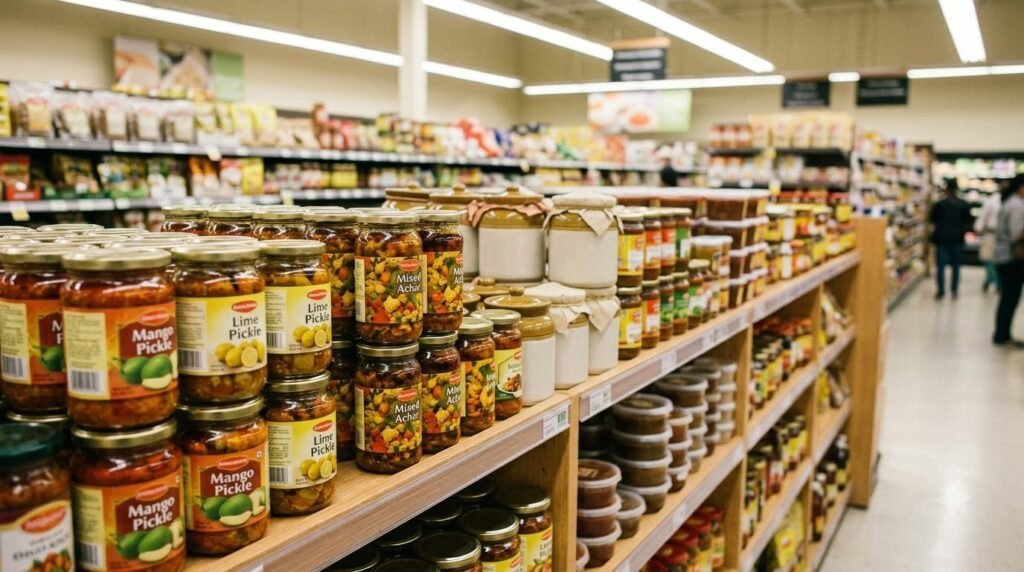
Indian pickles, also known as achar, come in many varieties with different flavors, textures and spice levels. The easiest way to choose the right pickle is to understand the main ingredient, oil type, sweetness and how it pairs with your meals.
For a quick choice:
- Mango pickle → classic sour flavor with firm fruit pieces
- Lime or lemon pickle → sharp citrus taste with softer texture
- Mixed achar → multiple vegetables and layered flavors
- Chili pickle → stronger heat and spice
- Sweet mango pickle or chunda → sweet and tangy flavor
The best pickle depends on the meals you enjoy, your spice preference and the type of flavor you want to add.
Indian Pickle Types at a Glance
| Pickle Type | Flavor & Texture | Best With |
|---|---|---|
| Mango pickle | Sour, spicy and firm fruit pieces | Dal-rice, paratha, khichdi |
| Lime/Lemon pickle | Citrus, tangy and softer texture | Curd rice, thepla, mild meals |
| Mixed achar | Multiple vegetables and flavors | Thali, rice, paratha |
| Chili pickle | Strong heat with tangy taste | Roti, stuffed paratha |
| Garlic pickle | Savory, pungent and spicy | Dal, rice, flatbreads |
| Sweet mango pickle/chunda | Sweet, tangy and mildly spicy | Thepla, puri, snacks |
Pickle recipes vary by brand and region, so always check the ingredient list if you prefer a specific flavor or avoid certain ingredients.
What Does Achar Mean?
Achar is a preserved fruit or vegetable condiment prepared using ingredients such as:
- Salt
- Oil
- Spices
- Acidic ingredients
- Sugar or jaggery in some varieties
The word “achar” does not represent one fixed recipe. Different regions and brands create different versions using local ingredients and preparation styles.
That is why two jars labeled as achar can have completely different:
- Taste
- Spice level
- Texture
- Oil content
What Are The Main Types of Indian Pickles?
Mango Pickle
Mango pickle is one of the most popular Indian pickle varieties.
It is usually made with raw green mangoes, spices and oil, creating a combination of:
- Sourness
- Saltiness
- Spice
- Firm texture
The mango pieces can be:
- Large chunks
- Small cuts
- Grated pieces
Larger pieces provide a stronger fruit bite, while smaller pieces distribute the masala more evenly.
Best Pairings:
Mango pickle works well with:
- Dal-chawal
- Paratha
- Khichdi
- Simple rice meals
Choose mango pickle if you enjoy a traditional, bold and tangy flavor.
Lime or Lemon Pickle
Lime and lemon pickles are known for their sharp citrus flavor.
During preparation, the rind softens while developing a combination of:
- Sourness
- Saltiness
- Spice
- Slight bitterness
Different versions can vary significantly. Some are:
- Extremely tangy
- Chili-heavy
- Mild and slightly sweet
Best Pairings:
Lime pickle is commonly enjoyed with:
- Curd rice
- Thepla
- Mild dal
- Rice dishes
Choose lime pickle if you prefer a fresh citrus kick.
Mixed Achar
Mixed achar combines different fruits and vegetables to create multiple flavors in one jar.
Depending on the recipe, it may include ingredients such as:
- Mango
- Lime
- Carrot
- Chili
- Cauliflower
- Other vegetables
The biggest advantage of mixed achar is variety.
It works well for households that want different textures and flavors without buying multiple pickle jars.
Best Pairings:
- Indian thali
- Paratha
- Rice meals
- Everyday lunches
Chili, Garlic and Sweet Pickles
Chili Pickle
Chili pickle is chosen mainly for heat.
Its intensity depends on:
- Chili variety
- Oil
- Salt
- Spices
It is a good option for people who enjoy spicy food.
Garlic Pickle
Garlic pickle has a strong savory flavor with a noticeable garlic taste.
It pairs well with:
- Dal
- Rice
- Rotis
- Flatbreads
Sweet Mango Pickle and Chunda
Sweet pickles combine mango with sugar or jaggery.
They provide:
- Sweetness
- Tanginess
- Mild spice
They are commonly enjoyed with:
- Thepla
- Puri
- Snacks
How Does Oil Affect Different Indian Pickle Types?
Oil plays an important role in pickle because it affects:
- Flavor
- Aroma
- Mouthfeel
- Overall eating experience
However, you should not judge the oil type only by the appearance of the pickle. Always check the ingredient list on the jar.
Different oils create different flavor profiles.
Mustard Oil Pickles
Mustard oil is commonly used in many North Indian pickle styles.
It gives pickle:
- Sharp aroma
- Strong flavor
- Slight pungency
Mustard oil-based pickles often feel more intense because the oil itself adds another layer of flavor along with spices.
Best For:
- Mango pickle
- Mixed achar
- Traditional spicy pickles
Choose mustard oil pickle if you enjoy bold, traditional flavors.
Sesame or Gingelly Oil Pickles
Sesame oil, also called gingelly or til oil, is commonly associated with several South Indian pickle varieties.
It provides:
- Nutty flavor
- Rich aroma
- Smooth texture
Sesame oil works especially well with pickles where the oil flavor is meant to complement the main ingredient.
Best For:
- South Indian-style pickles
- Mango pickle variations
- Lemon pickle varieties
Neutral Vegetable Oil Pickles
Some pickles use milder oils such as:
- Sunflower oil
- Canola oil
- Soybean oil
- Other vegetable oil blends
These oils usually allow the main ingredient and spices to stand out more clearly.
Best For people who prefer:
- Less intense oil flavor
- Balanced spice taste
- Mild pickle aroma
How To Choose Indian Pickles While Shopping?
Choosing the right pickle is easier when you look beyond the front label.
Words like:
- Traditional
- Homemade style
- Hot
- Mixed
- Special
can describe the product, but the ingredient list tells you what is actually inside.
1. Check The Main Ingredient
First identify what you are buying. For example:
- Mango pickle → Check mango type and cut
- Lime pickle → Check whether it uses lime or lemon
- Mixed achar → Check the vegetable combination
The main ingredient decides the primary taste and texture.
2. Check The Texture
The cut size affects how the pickle feels while eating.
| Pickle Form | Texture |
|---|---|
| Large mango pieces | Strong fruit bite |
| Small cuts | More evenly coated with masala |
| Grated pickle | Masala distributed throughout |
| Whole citrus pieces | More noticeable rind texture |
Choose according to your preference.
3. Consider Spice Level
Not every spicy-looking pickle has the same heat level.
Spice depends on:
- Chili variety
- Amount of chili used
- Other spices
- Sweeteners
If you prefer mild flavors, check product descriptions and ingredients before buying.
4. Check Sweetness
Some pickles contain:
- Sugar
- Jaggery
- Sweet fruit preparation
Sweet pickles are different from traditional salty-spicy achar.
Choose sweet mango pickle or chunda if you enjoy a balance of sweetness, tanginess and mild spice.
5. Review Allergens and Ingredients
Always check the label if you avoid certain ingredients.
Depending on the recipe, pickles may contain:
- Sesame
- Peanuts
- Mustard
- Other ingredients
Do not assume every brand uses the same recipe.
6. Compare Nutrition Information
When comparing two pickle jars, look at:
- Serving size
- Sodium
- Total fat
- Added sugar (if listed)
A smaller serving size can make products appear different, so compare similar quantities.
A Simple Pickle Buying Guide
If you are confused between different jars, use this quick guide:
| Your Preference | Pickle To Try |
|---|---|
| Classic sour and spicy taste | Mango pickle |
| Citrus and tangy flavor | Lime/lemon pickle |
| Variety in one jar | Mixed achar |
| Maximum spice | Chili pickle |
| Strong savory taste | Garlic pickle |
| Sweet and tangy flavor | Sweet mango pickle/chunda |
Best Indian Pickle Types For Different Meals
With Dal-Chawal
✅ Mango pickle
✅ Garlic pickle
✅ Mixed achar
These add strong flavors to simple rice meals.
With Paratha
✅ Mango pickle
✅ Mixed achar
✅ Chili pickle
The oil and spices complement stuffed parathas well.
With Curd Rice
✅ Lime pickle
✅ Lemon pickle
✅ Mild mango pickle
Citrus flavors balance the cooling taste of curd rice.
With Thepla and Snacks
✅ Sweet mango pickle
✅ Chunda
✅ Lime pickle
Sweet and tangy varieties pair especially well with Gujarati-style snacks.
How Should Indian Pickles Be Stored After Opening?
Proper storage helps maintain the flavor, texture and quality of pickle after opening.
Different pickle brands can have different storage instructions, so always check the jar label first.
Follow these simple practices:
✅ Use a clean and completely dry spoon
✅ Avoid mixing water or leftover food into the jar
✅ Close the lid properly after every use
✅ Keep the jar away from direct heat and moisture
✅ Follow refrigeration instructions if mentioned on the package
An oil layer on top of pickle does not automatically mean the jar can be stored anywhere. Storage depends on the complete recipe, packaging and manufacturer instructions.
Does An Oil Layer Mean Pickle Can Stay Outside?
No.
Visible oil is a common feature of many Indian pickles, but it does not guarantee that an opened jar is safe at room temperature.
Always follow:
- Storage instructions on the label
- Manufacturer recommendations
- Refrigeration directions if provided
Avoid adding water, fresh ingredients or extra homemade mixtures into a commercial pickle jar because it can affect quality and shelf life.
How Long Does Indian Pickle Last After Opening?
There is no single time period that applies to every pickle.
Shelf life after opening depends on:
- Recipe
- Oil content
- Ingredients
- Storage method
- Brand instructions
For the best quality, check the package directions, use clean utensils and store properly after every use.
A jar that looks normal may still have quality changes due to improper storage.
When Should You Discard A Pickle Jar?
Do not use pickle if you notice:
❌ Broken safety seal before opening
❌ Leaking or damaged packaging
❌ Mold growth
❌ Unusual smell
❌ Unexpected foam or liquid changes
❌ Bulging lid or container damage
Some normal changes include:
- Oil separation
- Spice settling
- Color variation between batches
These do not always mean the pickle is spoiled.
Buying Indian Pickles at Subzi Mandi
When choosing between multiple pickle jars, avoid selecting only based on jar size, color or brand popularity. Instead, compare:
- Flavor profile: sour, spicy, sweet or mixed
- Meal pairing: daily rice meals, family thalis, spicy food or snacks
- Ingredients: main ingredient, oil type, spice level and allergens
Subzi Mandi has New Jersey stores in Iselin, Cherry Hill, East Windsor, Hamilton Township, Parsippany and Piscataway. Check the weekly specials before you shop, and ask your nearest store about current pickle brands and varieties.
Frequently Asked Questions
What is the most popular Indian pickle type?
Mango pickle is one of the most widely recognized Indian pickle varieties because of its traditional sour, spicy flavor and compatibility with many meals. However, preference depends on region, cuisine and personal taste.
Which pickle is best for beginners?
Mango pickle and mixed achar are usually good starting options because they pair well with many everyday meals. If you prefer tangy flavors, try lime pickle. For variety, try mixed achar. For a sweet taste, try sweet mango pickle.
Which pickle goes best with dal rice?
Mango pickle, garlic pickle and mixed achar are popular choices with dal-rice because their strong flavors balance simple meals.
Which Indian pickle is less spicy?
Spice level depends on the recipe and brand. Generally, sweet mango pickle may be milder, some lime pickles may have less chili, and mild versions of mango and mixed achar are also available. Always check the product description or ingredient list.
Is homemade pickle different from packaged pickle?
Yes. Homemade and packaged pickles can differ in ingredients, oil quantity, spice level, preservation method and storage instructions. Packaged pickles offer convenience and consistency, while homemade versions may vary depending on the recipe.
Can I store different pickles together?
It is better to keep different pickle jars separate. Mixing them can change flavor, texture and shelf life. Keep each jar clean and properly closed.
Final Verdict: Choosing The Right Indian Pickle
Choosing between Indian pickle types becomes simple when you focus on what you enjoy most.
- Mango pickle → Best for classic sour and spicy flavor
- Lime pickle → Best for citrus lovers
- Mixed achar → Best for variety and different textures
- Chili pickle → Best for spice lovers
- Sweet mango pickle/chunda → Best for sweet and tangy taste
The right pickle is the one that matches your meals, flavor preference and storage needs.
Before buying, compare the ingredient list, oil type and flavor profile instead of choosing only by appearance. At Subzi Mandi, exploring different pickle varieties can help you find the jar that fits your everyday meals best.