
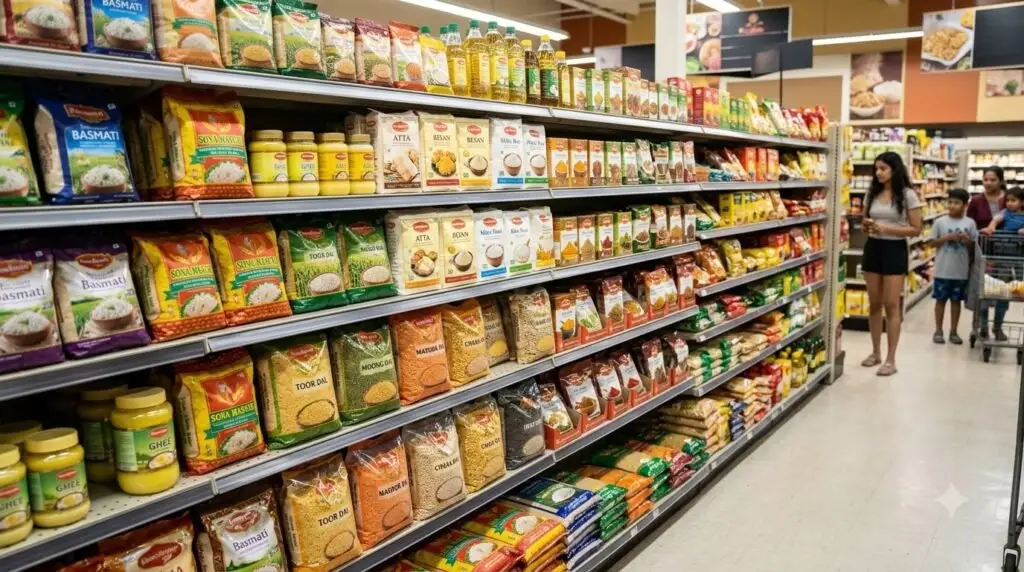
Setting up an Indian kitchen from scratch can feel more complicated than cooking the first meal.
A new student may have one cabinet, limited freezer space and no desire to buy twelve kinds of dal. A family moving into a new home may need enough rice, atta, spices, breakfast foods and backup meals to handle school mornings, weeknight dinners and unexpected guests.
The solution is not to buy every Indian ingredient at once.
A practical Indian pantry staples checklist should help you prepare the meals your household actually eats while staying within your budget, storage space and cooking schedule.
Start with ingredients that can produce several dependable meals:
- Rice
- Atta
- Two or three dals
- One or two beans
- Everyday spices
- Cooking oil
- Ghee
- Tea
- Basic condiments
- Weekly fresh ingredients
- A few frozen or ready-to-cook foods
Subzi Mandi’s official website lists South Asian grocery categories that include spices, masalas, rice, pulses, ready-to-cook foods, fresh produce, sweets, chutneys and frozen products such as samosas and parathas.
The objective is not to recreate a fully stocked family kitchen in one heroic shopping trip.
It is to make breakfast, dal, rice, roti, sabzi and emergency dinner possible without discovering a new missing ingredient every evening.
What Are the Most Important Indian Pantry Staples?
A basic starter pantry should include:
Dry essentials
- Everyday rice
- Atta
- Poha or sooji
- Moong dal
- Masoor or toor dal
- Rajma or chickpeas
- Salt
- Sugar
- Tea
- Cooking oil
- Ghee
Core spices
- Turmeric
- Cumin seeds
- Coriander powder
- Red chili powder
- Garam masala
- Mustard seeds or hing, depending on your cooking style
Fresh weekly basics
- Onions
- Tomatoes
- Potatoes
- Ginger
- Garlic
- Green chilies
- Coriander
- Milk
- Yogurt
Useful backup foods
- Frozen parathas
- Frozen vegetables
- Ready-to-cook meals
- Pickle
- Chutney
- Papad
- Namkeen or biscuits
This compact setup can support dal chawal, khichdi, poha, upma, roti, paratha, basic sabzi, rajma or chole, tea and quick backup meals.
Build the Pantry Around Meals, Not Categories
A pantry becomes useful when its ingredients work together.
Before shopping, choose six to eight meals that you expect to cook regularly.
For example:
| Meal | Ingredients required |
| Dal chawal | Rice, dal, turmeric, cumin, oil or ghee |
| Khichdi | Rice, moong dal, turmeric, cumin |
| Basic sabzi and roti | Atta, vegetables, oil, turmeric, cumin, coriander powder |
| Poha | Poha, mustard seeds, peanuts, onions, chilies |
| Rajma chawal | Rajma, rice, onions, tomatoes, ginger, garlic, masala |
| Chole | Chickpeas, onions, tomatoes, ginger, garlic, chole masala |
| Paratha and yogurt | Atta, oil or ghee, yogurt |
| Emergency dinner | Frozen paratha, ready curry, pickle or yogurt |
This approach prevents a common mistake: buying several attractive masalas but forgetting the rice, onions or oil needed to turn them into food.
The Essential Rice, Grain and Flour List
Do not buy every grain on the first trip.
Choose products according to the meals your household actually prepares.
Start with one everyday rice
Choose one:
- Basmati rice
- Sona masoori rice
- Another preferred regional rice
Basmati works well for pulao, biryani and many North Indian meals. Sona masoori is commonly used for everyday rice dishes and South Indian meals.
A family that frequently prepares both everyday rice and pulao may eventually keep two varieties. A student with limited storage can begin with one medium-sized bag.
Choose one primary flour
For households that make roti or paratha:
- Atta
Add later when recipes require them:
- Besan
- Sooji
- Rice flour
- Maida
- Ragi or millet flour
Besan supports chilla, kadhi and pakora. Sooji works for upma, halwa and several quick breakfasts.
Buying specialty flour without a recipe plan often produces a cabinet of unopened intentions.
Add one quick breakfast grain
Choose according to preference:
- Poha
- Sooji
- Vermicelli
- Oats
- Idli or dosa mix
Students may benefit from poha or an instant breakfast mix because these require less storage and preparation than a large regional pantry.
Which Dals and Beans Should You Buy First?
A starter kitchen does not need every dal variety.
Recommended first dals
Moong dal
Useful for:
- Khichdi
- Light dal
- Chilla
- Simple weekday meals
Masoor dal
Useful for:
- Fast-cooking dal
- Soups
- One-pot meals
Toor dal
Useful for:
- Everyday dal
- Sambar
- Regional preparations
A student can begin with moong and masoor or toor.
A family may add:
- Chana dal
- Urad dal
- Whole moong
Choose one or two beans
Useful options include:
- Rajma
- Chickpeas
- Black chickpeas
- Whole moong
Buy dry beans when you cook them regularly and have time to soak them. Canned beans can be useful when speed matters, provided the label and sodium level fit your needs.
Subzi Mandi’s official content lists varieties such as toor dal, moong dal and chana dal along with rice, flour and other pantry staples.
The Minimum Indian Spice Box
A useful starter spice box should be compact.
Begin with:
- Turmeric
- Cumin seeds
- Coriander powder
- Red chili powder
- Garam masala
- Salt
Then add according to regional cooking:
- Mustard seeds
- Hing
- Ajwain
- Black pepper
- Kasuri methi
- Chaat masala
- Cardamom
- Cinnamon
- Cloves
- Bay leaves
Do not buy every prepared masala at once
Choose two or three based on regular meals:
- Chole masala
- Rajma masala
- Sambar powder
- Biryani masala
- Pav bhaji masala
- Tea masala
For example, someone who regularly makes chole and rajma may buy those blends first. A South Indian household may prioritize mustard seeds, curry leaves, hing and sambar powder.
Subzi Mandi states that its grocery assortment includes Indian spices, masalas, rice, pulses and ready-to-cook options.
Oils, Ghee and Everyday Condiments
A new kitchen usually needs:
- One neutral cooking oil
- Ghee
- Salt
- Sugar or jaggery
- Tea or coffee
Add regional cooking oils only when required:
- Mustard oil
- Coconut oil
- Sesame oil
Condiments that make simple meals easier
Choose one or two:
- Pickle
- Green chutney
- Tamarind chutney
- Papad
- Plain yogurt
- Roasted snacks
Dal, rice, yogurt and pickle may not be an elaborate dinner, but it is more useful on a busy Tuesday than an unopened jar of highly specialized marinade.
Fresh Ingredients to Buy Weekly
Fresh foods should not be treated as permanent pantry inventory.
Purchase them according to the week’s meal plan.
High-use basics
- Onions
- Tomatoes
- Potatoes
- Ginger
- Garlic
- Green chilies
- Coriander
- Lemons
Dairy
- Milk
- Yogurt
- Paneer
- Butter
Recipe-specific produce
Buy only what you expect to cook:
- Okra
- Lauki
- Karela
- Methi
- Spinach
- Eggplant
- Cauliflower
- Cabbage
- Curry leaves
- Drumsticks
Subzi Mandi advertises fresh fruits, vegetables and herbs alongside its pantry and frozen-food selection.
Students should generally buy smaller quantities of herbs, dairy and produce. Families can purchase more, but the quantity should still match a written meal plan.
Starter Pantry for a Student
A student pantry should be compact, affordable and difficult to waste.
First shopping list
Base foods
- One bag of rice
- Small bag of atta
- Poha or sooji
- Moong dal
- Masoor or toor dal
- Rajma or chickpeas
Flavor
- Turmeric
- Cumin seeds
- Red chili powder
- Coriander powder
- Garam masala
- Salt
- Cooking oil
Fresh items
- Onions
- Potatoes
- Tomatoes
- Ginger
- Garlic
- Green chilies
- Milk
- Yogurt
Quick foods
- Frozen parathas
- One ready curry or meal
- Frozen vegetables
- Pickle
- Tea
- Biscuits or namkeen
Subzi Mandi’s website lists frozen samosas and parathas, ready-to-cook products, snacks and pantry staples among its offerings.
What a student can cook from this list
- Dal rice
- Khichdi
- Poha
- Potato sabzi
- Simple tomato-onion curry
- Rajma or chole
- Roti or paratha
- Frozen paratha with yogurt and pickle
- Tea and snacks
Student buying rule
Buy smaller packages until you understand:
- How often you cook
- How much cabinet space you have
- Whether roommates share food
- Which regional ingredients you actually use
A lower price per pound does not save money when half the product travels with you through three apartments.
Starter Pantry for a Family
A family pantry may need more quantity and variety, but it should still be based on meal frequency.
Core family stock
- Everyday rice
- Basmati rice, when used separately
- Atta
- Besan
- Sooji or poha
- Three to five dals
- Rajma
- Chickpeas
- Everyday spices
- Two or three prepared masalas
- Neutral cooking oil
- Ghee
- Tea
- Pickle
- Papad
- Frozen backup foods
Weekly family additions
- Vegetables for planned sabzis
- Onions, tomatoes and potatoes
- Herbs and green chilies
- Milk and yogurt
- Paneer
- Fruit
- Breakfast foods
- School or work snacks
Families may benefit from larger rice, atta and dal packages when they have suitable storage and use the products consistently.
Do not buy bulk quantities solely because they are discounted. Value disappears when moisture, pantry pests or expired products claim the savings.
Ready-to-Cook and Frozen Foods: What Is Worth Keeping?
Convenience foods are not a replacement for the entire pantry.
They are the backup system.
Useful options include:
- Frozen parathas
- Frozen rotis
- Frozen vegetables
- Samosas
- Idli or dosa batter
- Ready curries
- Instant poha or upma
- Frozen kebabs
- Chutneys
Keep enough for a few difficult days, not enough to open an unofficial freezer warehouse.
Subzi Mandi lists frozen classics, ready-to-cook options, sweets and chutneys among its product categories. Product and brand availability may vary by store.
What to Buy Weekly, Monthly and Occasionally
Weekly
- Fresh produce
- Milk
- Yogurt
- Paneer
- Bread
- Herbs
- Fruit
- Fresh batter or refrigerated products
Monthly or as needed
- Rice
- Atta
- Dal
- Beans
- Oil
- Ghee
- Tea
- Snacks
- Frozen foods
Occasionally
- Specialty masalas
- Festival ingredients
- Large dry-fruit packages
- Regional flours
- Sweets
- Serving supplies
The correct schedule depends on household size, package size and cooking frequency.
Review existing stock before every larger grocery trip. A pantry list should prevent duplicates, not organize them beautifully.
How to Store Indian Pantry Staples
Storage is part of pantry planning.
Dry goods
Store rice, atta, dal, beans and flour:
- In clean, food-safe containers
- Away from moisture
- Away from excessive heat
- With lids properly closed
- With purchase or opening dates when useful
Do not mix a new package into an old container without checking the remaining product for moisture, odor or pests.
Spices
Keep spices:
- Away from direct sunlight
- Away from the stove’s heat and steam
- In closed containers
- In quantities that can be used while aromatic
Buying very large spice packages may not offer good value when the household uses only a spoonful each month.
Refrigerated and frozen items
The FDA recommends keeping the refrigerator at or below 40°F and the freezer at 0°F. It also advises following package storage instructions and keeping refrigerated foods properly covered.
Keep:
- Milk
- Yogurt
- Paneer
- Opened chutneys
- Refrigerated batter
- Leftovers
according to label directions and safe refrigeration practices.
Handle flour as a raw ingredient
Flour is a raw food and may contain harmful bacteria. Do not eat uncooked atta, flour, dough or batter that is intended to be cooked. Clean hands, utensils and work surfaces after handling raw flour.
Budgeting the First Pantry Trip
Do not measure value only by package size.
A practical process is:
- Set a first-trip budget.
- List six to eight meals.
- Buy ingredients shared across those meals.
- Select package sizes that fit available storage.
- Add only two or three convenience foods.
- Leave specialty products for later trips.
Students should prioritize
- Versatile ingredients
- Quick-cooking dals
- Small spice packages
- Freezer backups
- Breakfast options
- Products that do not require many additional ingredients
Families should prioritize
- Frequently used staples
- School and work breakfasts
- Weeknight meals
- Larger packs only when consumption is predictable
- Backup meals
- Guest snacks in reasonable quantities
Subzi Mandi publishes rotating weekly specials for essential and specialty grocery categories. Its current specials page specifically identifies Iselin, Cherry Hill, Hamilton Township and East Windsor as participating stores, so shoppers should verify the applicable location and current offer before planning a bulk purchase.
Subzi Mandi Locations in New Jersey
Subzi Mandi’s current contact page lists New Jersey stores in:
- Iselin
- Cherry Hill
- East Windsor
- Hamilton Township
- Parsippany
- Piscataway
Products and promotional participation may vary by location.
Before visiting:
- Check the closest store
- Confirm current hours
- Review applicable weekly specials
- Ask about a specialty ingredient when essential
- Organize the list by store section
A simple shopping order is:
- Produce
- Dairy and refrigerated foods
- Rice and flour
- Dal and beans
- Spices and masalas
- Frozen foods
- Snacks and condiments
This reduces unnecessary tours of the same aisle while the frozen parathas slowly reconsider their frozen status.
Common Pantry Setup Mistakes
Buying too many specialty ingredients
Better approach: Begin with ingredients used in several meals.
Purchasing family-sized bags for one student
Better approach: Compare package size with storage space and cooking frequency.
Ignoring breakfast
Better approach: Add poha, sooji, tea, yogurt or frozen parathas.
Forgetting backup meals
Better approach: Keep two or three frozen or ready-to-cook options.
Buying produce without a meal plan
Better approach: Assign each delicate vegetable to a specific cooking day.
Storing spices beside heat and steam
Better approach: Use a cool, dry cabinet away from the stove.
Buying duplicates
Better approach: Check rice, dal, spices and freezer inventory before shopping.
Final Indian Pantry Staples Checklist
Start immediately
- Rice
- Atta
- Two or three dals
- One bean
- Cooking oil
- Ghee
- Salt
- Sugar
- Tea
- Turmeric
- Cumin
- Coriander powder
- Red chili powder
- Garam masala
- Onions
- Tomatoes
- Potatoes
- Ginger
- Garlic
- Green chilies
- Milk
- Yogurt
- Pickle
- One frozen meal option
Add after your routine develops
- Additional dals
- Besan
- Sooji
- Regional rice
- Prepared masalas
- Whole spices
- Paneer
- Papad
- Chutneys
- Frozen snacks
- Idli or dosa products
- Regional oils
- Specialty flours
Buy only when needed
- Festival ingredients
- Large dry-fruit packages
- Rare spice blends
- Multiple pickle varieties
- Specialty snacks
- Ingredients for recipes you have not scheduled
Frequently Asked Questions
What are the most important Indian pantry staples?
The most useful starting ingredients are rice, atta, dal, one or two beans, cooking oil, ghee, salt, tea and a small set of everyday spices. Add onions, tomatoes, potatoes, ginger, garlic, green chilies, milk and yogurt through weekly shopping.
What should an Indian student buy first?
A student can begin with rice, poha, atta, moong dal, masoor or toor dal, oil, salt, turmeric, cumin, chili powder, garam masala, onions, potatoes, yogurt and a few frozen meals.
Does a new pantry need every Indian spice?
No. Turmeric, cumin, coriander powder, red chili powder and garam masala cover many everyday dishes. Add regional spices as your cooking routine becomes clearer.
How many dals should a beginner buy?
Two or three are enough for a starter pantry. Moong dal plus masoor or toor dal provides a practical range. Add chana or urad dal when specific recipes require them.
Which Indian groceries should be purchased weekly?
Fresh vegetables, herbs, milk, yogurt, paneer and fruit should generally be purchased according to the weekly meal plan and product dates.
Are frozen Indian foods useful?
Yes. Frozen parathas, vegetables and ready meals can support busy students and families when used as backup foods rather than the entire meal plan.
How should atta and dal be stored?
Keep them in clean, tightly closed, food-safe containers in a cool, dry location. Inspect existing contents before adding a new package.
Where can I buy Indian pantry staples in New Jersey?
Subzi Mandi’s official contact page lists stores in Iselin, Cherry Hill, East Windsor, Hamilton Township, Parsippany and Piscataway.
Does Subzi Mandi offer weekly grocery specials?
Yes. Its official website publishes rotating weekly or weekend offers. The current specials page names Iselin, Cherry Hill, Hamilton Township and East Windsor, so verify participation and current products before shopping.
Final Takeaway
A useful Indian pantry is not the pantry with the most products.
It is the pantry that supports the household’s regular meals.
Start with:
- One everyday rice
- One primary flour
- Two or three dals
- One bean
- A compact spice box
- Cooking oil and ghee
- Weekly fresh basics
- A few backup meals
Students should prioritize smaller packages, quick-cooking foods and limited storage. Families can stock larger quantities when consumption is predictable and storage is suitable.
Subzi Mandi offers multiple New Jersey locations and lists rice, pulses, spices, fresh produce, ready-to-cook foods, chutneys, sweets and frozen products among its South Asian grocery categories.
Build the pantry in stages.
Dinner needs a working system, not a museum of unopened masalas.
Build Your Starter Pantry at Subzi Mandi
Before shopping, prepare:
- Six to eight regular meals
- Household size
- First-trip budget
- Available cabinet and freezer space
- Existing cookware
- Preferred Subzi Mandi location
- List of products needed immediately
- List of products that can wait
Review the current weekly specials before purchasing large packages, and confirm location-specific availability when a specialty product is essential.
The first grocery trip should not attempt to solve every future meal.
It should make tomorrow’s meal easy.