
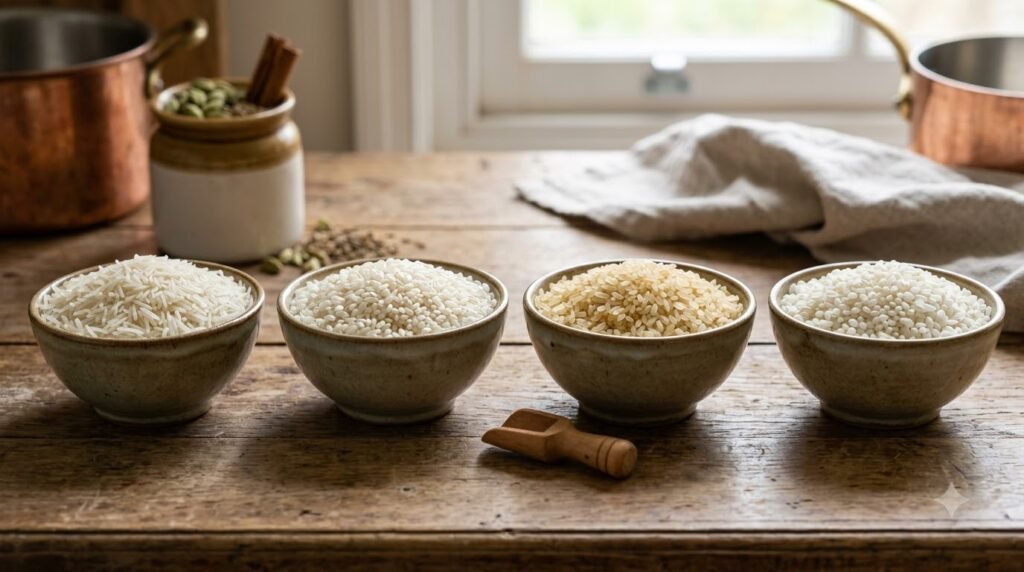
Walk into an Indian grocery store and the rice aisle can quickly become a puzzle.
Basmati. Sona Masoori. Ponni. Idli rice. Raw rice. Parboiled rice. Aged rice.
They may all belong to the same broad category, but they do not behave the same way in the kitchen.
The rice that gives biryani long, separate, aromatic grains may not give curd rice the soft texture you want. And the rice you buy specifically for idli batter serves a very different purpose from the rice you serve alongside dal or rasam.
Choosing the right rice becomes much easier when you understand how Indian grocery stores organize staples, brands, and everyday ingredients based on different cooking needs.
So, which Indian rice should you buy?
A simple starting point is:
- Choose Basmati for biryani, pulao and dishes where aroma and separate grains matter.
- Choose Sona Masoori for versatile everyday rice and many South Indian meals.
- Rice is only one part of a well-stocked Indian kitchen. Working through an Indian pantry staples checklist — dals, essential Indian spices, flour and other basics — helps families prepare everyday meals more efficiently.
- Choose Ponni when you prefer soft rice for Tamil and other South Indian meals, while paying attention to whether the package is raw or parboiled.
- Choose Idli Rice primarily for idli, dosa and other fermented batters.
The right choice depends less on which rice is “best” and more on what you plan to cook.
This guide compares Basmati vs Sona Masoori vs Ponni vs Idli Rice by grain, aroma, texture, processing and ideal use so you can choose the right bag for your kitchen.
Quick Comparison: Which Indian Rice Should You Buy?
| Rice Type | Grain & Texture | Aroma | Best Uses | Best Choice When You Want |
| Basmati | Long, slender, separate and fluffy when cooked well | Distinctly aromatic | Biryani, pulao, jeera rice, special rice dishes | Long grains and fragrance |
| Sona Masoori | Medium-grain, soft and relatively light | Mild | Daily rice, dal, sambar, lemon rice, curd rice | Versatile everyday rice |
| Ponni | Usually medium-grain with a softer cooked texture | Mild | Sambar, rasam, curd rice, everyday South Indian meals | Soft rice for gravies and home-style meals |
| Idli Rice | Selected/processed mainly for batter preparation | Mild to neutral | Idli, dosa, uttapam and fermented batters | South Indian breakfast batter |
The important detail is that variety is only part of the label.
Processing also matters. A bag labeled Ponni Raw Rice can cook differently from a parboiled Ponni product. Similarly, aged Basmati may behave differently from a newer crop.
That is why reading the complete package label matters.
What Is Basmati Rice?
Basmati is one of India’s best-known aromatic rice types.
Its defining qualities are:
- Long, slender grains
- Distinctive fragrance
- Strong grain elongation during cooking
- Separate, fluffy texture when prepared properly
These characteristics make Basmati especially valuable in dishes where the rice itself is supposed to be noticeable.
What Does Basmati Rice Taste and Feel Like?
Basmati has a noticeable aromatic character that can be described as fragrant, slightly nutty and floral.
Its texture is typically:
- Fluffy
- Separate
- Less clumped when cooked correctly
- Visually elegant
That is why it works so well in layered dishes.
Best Uses for Basmati Rice
Choose Basmati for:
- Chicken biryani
- Vegetable biryani
- Mutton biryani
- Pulao
- Jeera rice
- Pilaf-style dishes
- Festive rice dishes
Among the four rice types in this guide, Basmati is usually the strongest choice when you want long individual grains and noticeable aroma.
What Should You Look for When Buying Basmati?
Do not choose only by the word “Basmati.”
Check:
- Grain length
- Packaging condition
- Brand
- White or brown rice
- Whether it is aged
- Pack size
Does Aged Basmati Matter?
It can.
Basmati is unusual because “freshest possible” is not automatically the most desirable characteristic.
Aging can influence cooking behavior, aroma and the way grains remain separate.
If you are buying rice specifically for biryani or pulao and grain definition matters, check whether the package identifies the rice as aged.
What Is Sona Masoori Rice?
Sona Masoori is a popular medium-grain rice widely used for everyday cooking, particularly in South India.
Compared with Basmati, it generally has:
- Shorter grains
- A milder aroma
- A softer cooked texture
- Less emphasis on dramatic grain separation
Its versatility is what makes it useful in a home kitchen.
What Does Sona Masoori Rice Taste and Feel Like?
Sona Masoori has a relatively mild taste, which allows strongly flavored foods such as dal, sambar, rasam and vegetable curries to remain the focus of the meal.
Depending on how much water you use and how it is cooked, the texture can range from relatively separate to soft.
Best Uses for Sona Masoori Rice
Sona Masoori works well for:
- Everyday steamed rice
- Dal and rice
- Sambar rice
- Curd rice
- Lemon rice
- Tomato rice
- Tamarind rice
- Many home-style South Indian meals
When Should You Choose Sona Masoori Instead of Basmati?
Choose Sona Masoori when:
- Rice is part of an everyday meal rather than the centerpiece
- You prefer a softer texture
- You frequently serve rice with dal or gravies
- You do not need strong aroma or extra-long grains
- You want one versatile rice for several daily dishes
Basmati creates a more distinct aromatic rice experience.
Sona Masoori is usually the more practical everyday option.
What Is Ponni Rice?
Ponni is widely associated with South Indian cooking, particularly Tamil cuisine.
It is commonly used as an everyday table rice and works well with dishes such as:
- Sambar
- Rasam
- Vegetable curries
- Kootu
- Curd rice
Its relatively mild flavor makes it a good partner for dishes where the curry, gravy or accompaniment should provide most of the flavor.
What Does Ponni Rice Taste and Feel Like?
Depending on the specific product and processing method, Ponni rice can produce a soft, comfortable texture that works naturally with liquid-rich dishes.
This makes it particularly useful for meals where rice is mixed with:
- Sambar
- Rasam
- Yogurt
- Curry
- Gravies
Raw Ponni vs Parboiled Ponni: Why the Label Matters
This is one of the most important things to understand when shopping.
“Ponni” alone may not tell you everything about how the rice will cook.
You may encounter products labeled:
- Ponni Raw Rice
- Parboiled Ponni Rice
- Boiled Rice
Processing changes cooking behavior, texture and preparation time.
So instead of buying a bag based only on the word “Ponni,” look at the full product description.
If your family already prefers a particular style of Ponni rice, match the processing type as well as the variety.
What Is Idli Rice?
Idli rice belongs in a slightly different category from the other three.
When shoppers see Idli Rice on a grocery-store shelf, the term generally refers to rice selected or processed for preparing South Indian fermented batter rather than one single universally defined rice cultivar.
It is commonly associated with parboiled rice used for dishes such as:
- Idli
- Dosa
- Uttapam
- Other fermented rice-and-lentil batters
Why Does Idli Rice Work for Batter?
For traditional idli batter, rice is soaked and ground before being combined with ingredients such as urad dal and allowed to ferment.
The goal is not to create long, separate grains.
The goal is to help create a batter that can produce the desired texture after fermentation and cooking.
Is Idli Rice Only for Idli?
No.
It is commonly used for:
- Idli
- Dosa
- Uttapam
- Related fermented batters
Recipes differ, so some cooks use other rice combinations as well.
Can You Cook Idli Rice as Regular Rice?
Technically, rice sold as Idli Rice can be cooked.
But if your goal is fluffy everyday table rice, it usually would not be the first choice among these four.
Its primary reason for being in many kitchens is batter preparation, not grain presentation.
Basmati vs Sona Masoori vs Ponni vs Idli Rice: Full Comparison
| Feature | Basmati | Sona Masoori | Ponni | Idli Rice |
| Typical Grain Style | Long and slender | Medium | Often medium | Depends on product |
| Aroma | Distinctive | Mild | Mild | Mild/neutral |
| Cooked Texture | Fluffy and separate | Soft, versatile | Usually soft | Mainly chosen for batter |
| Primary Role | Aromatic rice dishes | Everyday meals | South Indian table rice | Fermented breakfast batter |
| Best Known For | Biryani and pulao | Daily rice | Sambar, rasam, curd rice | Idli and dosa |
| Important Label Detail | Aged/new crop, white/brown | Variety/brand | Raw vs parboiled | Processing and intended batter use |
Which Rice Is Best for Different Indian Dishes?
Instead of asking which rice is best overall, ask:
Which rice is best for this dish?
| Dish | Best Starting Choice | Why |
| Biryani | Basmati | Long, aromatic grains stay distinct |
| Pulao | Basmati | Aroma and grain separation suit the dish |
| Jeera Rice | Basmati | Long grains and fragrance work well |
| Dal Rice | Sona Masoori or Ponni | Softer everyday texture |
| Sambar Rice | Sona Masoori or Ponni | Works naturally with liquid-rich dishes |
| Rasam Rice | Ponni or Sona Masoori | Soft texture pairs well with rasam |
| Curd Rice | Sona Masoori or Ponni | Softer rice integrates well with yogurt |
| Lemon Rice | Sona Masoori | Mild flavor and practical texture |
| Idli | Idli Rice | Intended for fermented batter |
| Dosa | Idli Rice or recipe-specified rice | Suitable for batter preparation |
| Fried Rice | Basmati can work | Useful when you want long, separate grains |
These are useful starting points, not rigid rules.
Regional cooking traditions and family recipes matter too.
Basmati vs Sona Masoori: Which Should You Buy?
This is one of the most common decisions Indian grocery shoppers make.
Choose Basmati if you regularly cook:
- Biryani
- Pulao
- Jeera rice
- Aromatic rice dishes
- Special-occasion meals
Choose Sona Masoori if you regularly cook:
- Dal rice
- Sambar rice
- Lemon rice
- Curd rice
- Everyday home meals
A simple way to remember the difference:
Basmati = aroma + long grains
Sona Masoori = versatility + everyday softness
Many households benefit from keeping both instead of forcing one rice to handle every recipe.
Basmati vs Ponni: What Is the Difference?
Basmati and Ponni are designed for very different eating experiences.
Basmati
Best when you want:
- Long grains
- Grain separation
- Strong aroma
- Biryani-style presentation
Ponni
Best when you want:
- Softer rice
- Mild flavor
- Everyday meals
- Rice that works comfortably with South Indian gravies
For biryani, Basmati is usually the better fit.
For a plate of sambar, rasam and vegetables, Ponni may feel much more natural.
Sona Masoori vs Ponni: Which Is Better?
There is no universal winner.
Both work well as everyday South Indian rice choices.
Choose based on:
- Desired softness
- Family preference
- Recipe
- Processing type
- Brand
- Cooking method
Sona Masoori is a versatile medium-grain option for many everyday dishes.
Ponni is especially familiar in Tamil-style cooking and may be preferred by households that want the particular texture associated with their usual Ponni product.
If you already like one, there is little reason to switch simply because another rice is marketed as “better.”
Raw Rice vs Parboiled Rice: What Is the Difference?
This distinction is extremely useful when shopping for Indian rice.
The same broad rice type may be sold with different processing labels.
Raw Rice
In grocery labeling, raw rice generally refers to rice milled without the parboiling process used for parboiled rice.
Its texture and cooking behavior will depend on the variety.
Parboiled Rice
Parboiled rice undergoes a processing step involving the grain before final milling.
This changes:
- Grain structure
- Cooking behavior
- Texture
- Appearance
Idli rice is often sold in a parboiled form because the intended use is different from fluffy table rice.
Ponni products may also be available in raw and parboiled forms.
Why This Matters
If a recipe or your family traditionally uses a specific processing type, buying the same rice variety with different processing can give you a noticeably different result.
So read:
Variety + processing type
not just the large name printed on the front of the bag.
Is Basmati, Sona Masoori, Ponni or Idli Rice Healthier?
There is no responsible way to declare one universal winner based only on these four names.
Nutrition can vary depending on factors such as:
- White vs brown rice
- Processing method
- Parboiling
- Brand
- Serving size
- Portion frequency
- What you eat with the rice
Your overall meal matters too.
Rice eaten with lentils, vegetables and protein creates a different meal from the same rice eaten alone in a very large portion.
If you have a medical condition that requires specific carbohydrate or blood-sugar management, rice selection should be based on appropriate nutrition or medical guidance rather than simply assuming that Basmati, Sona Masoori or Ponni is automatically “healthier.”
For everyday grocery shopping, the better question is:
Which rice suits my recipe and dietary needs?
How to Choose the Best Indian Rice at the Grocery Store
Do not start with price.
Start with what you cook.
For shoppers who are new to Indian supermarkets, our beginner’s guide to Indian grocery shopping explains product sections, labels and grocery categories, which makes choosing the right ingredients much easier.
beginner’s guide to Indian grocery shopping
1. Think About Your Most Common Dishes
If your kitchen regularly makes biryani:
Buy Basmati.
If rice with dal, sambar or curry is your everyday meal:
Consider Sona Masoori or Ponni.
If homemade idli and dosa batter is part of your routine:
Keep Idli Rice.
2. Check the Full Label
Look beyond the large product name.
Check for:
- Raw
- Parboiled
- Brown
- White
- Aged
- Idli
- Grain type
These details can affect cooking more than shoppers expect.
3. Inspect the Package
Choose packaging that is:
- Properly sealed
- Undamaged
- Clearly labeled
- Free from visible moisture or contamination
If possible, look for relatively uniform grains and a product that matches the quality you normally prefer. Packaging condition usually reflects how fresh stock is maintained in store, so this quick check is worth the extra few seconds.
4. Choose Pack Size Based on Usage
If your family eats Sona Masoori every day, a larger pack may make sense.
If you cook biryani twice a month, you may not need the same quantity of Basmati. Planning purchases around a weekly grocery shopping routine makes pack size decisions much easier.
Many kitchens work better with:
- One everyday rice
- One aromatic rice
- One specialty batter rice if needed
rather than one enormous bag expected to perform every job.
Should You Keep More Than One Type of Rice at Home?
For many Indian kitchens, yes.
A practical setup could be:
Everyday Rice
Sona Masoori or Ponni
Use for:
- Dal
- Sambar
- Rasam
- Everyday curries
Special-Dish Rice
Basmati
Use for:
- Biryani
- Pulao
- Jeera rice
- Festive meals
Batter Rice
Idli Rice
Use for:
- Idli
- Dosa
- Uttapam
This setup makes more sense than using premium aromatic Basmati in every dish or trying to turn Idli Rice into biryani rice.
Can You Substitute One Indian Rice for Another?
Sometimes, but expect the result to change.
Can Sona Masoori Replace Basmati in Biryani?
Yes, you can make a rice dish with Sona Masoori.
But it will not produce the same:
- Long-grain appearance
- Fragrance
- Texture
- Grain separation
that people typically expect from Basmati-based biryani.
Can Basmati Replace Sona Masoori for Sambar Rice?
Technically, yes.
But Basmati’s long, separate grains create a different texture from the softer rice many people prefer with sambar.
Can Ponni Replace Sona Masoori?
In many everyday meals, yes.
The final texture can differ depending on the specific products and processing methods.
Can Regular Rice Replace Idli Rice?
Some idli and dosa recipes use different rice varieties or combinations.
But if a recipe specifically calls for Idli Rice, using the intended rice is the easiest starting point for consistent batter results.
Common Mistakes When Buying Indian Rice
Choosing the Most Expensive Rice for Every Dish
A premium Basmati is excellent for the recipes that benefit from it.
That does not make it the ideal rice for curd rice, idli or every everyday meal.
Ignoring Processing Labels
“Ponni” and “Ponni Raw Rice” do not necessarily tell the same cooking story as a parboiled Ponni product.
Read the entire label.
Assuming Freshest Is Always Best
This is especially misleading with Basmati, where aging can be desirable.
Judge rice according to its type and intended use rather than using one freshness rule for every variety.
Choosing Rice Only by Price
Lower cost does not automatically mean poor rice.
Higher cost does not automatically make a rice better for your recipe.
The right rice is the one that gives the texture and aroma your dish needs.
Buying a Huge Bag Before Trying the Product
If you are switching brands or varieties, consider testing a smaller quantity first when possible.
Rice texture can vary enough that family preferences matter.
Buying Indian Rice at Subzi Mandi
Subzi Mandi serves shoppers looking for Indian grocery staples, including rice for everyday cooking and traditional recipes.
When shopping, begin with the dish you plan to cook and then compare:
- Rice variety
- Processing type
- Brand
- Grain style
- Pack size
- Price
For example:
Planning biryani? Look at the Basmati selection.
Need everyday rice for dal and sambar? Compare Sona Masoori and Ponni options.
Making idli or dosa batter? Look for rice intended for that purpose.
Specific brands, varieties and pack sizes can change, so check our current weekly specials and in-store availability before you visit.
The advantage of shopping at an Indian grocery store is that you can choose rice according to the way Indian dishes are actually prepared rather than treating every bag of rice as interchangeable.
Frequently Asked Questions About Indian Rice
Is Basmati better than Sona Masoori?
Not overall.
Basmati is better suited to dishes where long grains and aroma matter, such as biryani and pulao.
Sona Masoori is often more practical for everyday rice, dal, sambar and similar meals.
Which rice is best for everyday Indian food?
Sona Masoori and Ponni are both popular everyday choices.
The better option depends on your preferred texture, regional cooking style and whether you prefer a raw or parboiled product.
Which rice is best for biryani?
Basmati is the classic starting choice when you want long, aromatic and separate grains.
An aged Basmati can be particularly useful when grain definition matters.
Can Sona Masoori be used for biryani?
Yes, but the result will have a different texture, grain length and aroma from Basmati biryani.
Is Ponni the same as Sona Masoori?
No.
They are different rice types, although both are commonly used in South Indian cooking and can fill similar everyday roles.
Is Idli Rice a specific rice variety?
Not necessarily in the same way Basmati is.
In grocery shopping, “Idli Rice” commonly identifies rice selected or processed for idli and dosa batter preparation.
Can Idli Rice be eaten as regular rice?
It can be cooked, but it is mainly purchased for batter and may not provide the texture you want for everyday steamed rice.
Is Basmati healthier than Sona Masoori?
You cannot reliably determine which rice is healthier from the variety name alone.
Processing, portion size, white vs brown rice, preparation and the rest of your meal all matter.
Should I wash rice before cooking?
Rinsing practices depend on the rice, recipe and desired result.
Many cooks rinse rice before preparation, particularly when they want to remove loose surface starch or debris. Follow the product instructions and the requirements of your recipe.
Where can I buy Indian rice in Iselin?
Indian grocery stores such as Subzi Mandi in Iselin carry rice and other staples used in Indian cooking. Check current availability for the rice variety, brand and pack size you need.
Final Decision: Which Indian Rice Should You Buy?
You do not need one rice that can do everything.
You need the right rice for the food you actually cook.
Choose Basmati when you want:
- Long grains
- Distinct aroma
- Biryani
- Pulao
- Special rice dishes
Choose Sona Masoori when you want:
- Everyday versatility
- Softer rice
- Dal and rice
- Sambar
- Lemon or curd rice
Choose Ponni when you want:
- South Indian everyday rice
- Soft texture
- Sambar or rasam meals
- Rice that works well with gravies
And choose Idli Rice when you want:
- Idli
- Dosa
- Uttapam
- Fermented rice batter
One final rule makes the entire rice aisle easier:
Choose by dish first, then variety, then processing type.
That is far more useful than assuming the most expensive, most aromatic or most familiar bag is automatically the best one.
At Subzi Mandi, you can compare Indian rice options for different regional dishes and everyday cooking needs, then choose the variety that fits how your family actually eats.
Because the right rice is not simply the one with the best label.
It is the one that behaves the way your recipe needs it to.