
You soak the rice and urad dal, grind them, mix the batter and leave it overnight.
The next morning, you expect a light, airy batter ready for crisp dosa or soft idli.
Instead, the batter looks almost exactly the same.
No noticeable rise. Few or no bubbles. Heavy texture.
If you are making dosa during the colder months in Iselin, NJ, this can happen even when a recipe that worked perfectly before suddenly seems unreliable.
The most common reason is simple:
Your batter is not warm enough for fermentation to progress at its normal pace.
Dosa and idli batter rely on natural fermentation involving microorganisms associated with the rice–black gram mixture. Research on traditional idli batter shows that fermentation produces acids and gases that change the batter’s flavor, acidity, volume and texture. Studies commonly evaluate fermentation under warm conditions around 30°C, while traditional natural fermentation can take roughly 12–15 hours under suitable ambient conditions.
A colder kitchen can slow that process significantly.
But temperature is not the only possible problem.
Poor batter aeration, the rice-to-urad ratio, grinding technique, consistency, ingredient condition and simply not giving the batter enough time can all affect the final result.
This guide will help you identify why your dosa batter is not fermenting in Iselin, NJ, how to rescue a slow batch, and how to make cold-weather fermentation more predictable.
Quick Answer: Why Is My Dosa Batter Not Fermenting?
If your dosa batter is still flat after sitting overnight, check these factors first:
- The batter is too cold.
- It has not had enough time.
- The urad dal did not grind light and fluffy.
- The batter is too thick or too watery.
- Your rice-to-urad ratio does not suit the result you want.
- The batter became too warm during grinding.
- The container does not have enough room for expansion.
- The batch needs more time in a stable, warm environment.
For Iselin winters, start with temperature before changing the recipe.
If the same recipe works in warmer months but struggles when your kitchen gets colder, the fermentation environment is the first variable to investigate.
What Actually Happens When Dosa Batter Ferments?
Dosa batter is not rising because of commercial baking yeast.
Traditional rice-and-urad batter undergoes natural microbial fermentation.
During fermentation, microorganisms use nutrients in the batter and produce acids and gases. Those changes contribute to:
- Mild sourness
- Small bubbles
- Increased volume
- Lighter batter
- Improved leavening
- Characteristic fermented aroma
Research on idli batter has identified lactic acid bacteria as important participants in fermentation, and black gram or urad dal is an important contributor to the batter’s fermenting microflora.
This is why fermentation is not simply a matter of leaving wet rice on the counter for eight hours.
You need the right combination of:
ingredients + batter structure + time + temperature
Why Iselin Cold Weather Makes Dosa Fermentation Harder
A recipe may tell you to “ferment overnight,” but overnight is a measure of time, not fermentation conditions.
The microorganisms in your batter respond strongly to temperature.
Research on traditional idli fermentation frequently uses temperatures around 30°C / 86°F, and studies show measurable fermentation changes over roughly 10–15 hours under warm conditions.
Your Iselin kitchen during winter may be much cooler than that, especially overnight.
When the batter stays cool:
- Fermentation slows
- Gas production takes longer
- Visible rise may be delayed
- Sourness develops more slowly
- An overnight ferment may still look underdeveloped in the morning
That does not automatically mean the batter has failed.
It may simply be slow.
What Should Properly Fermented Dosa Batter Look Like?
Do not rely only on whether the batter doubled in volume.
A well-fermented batch may show several signs:
- Small bubbles on the surface or along the sides
- Noticeable but not necessarily dramatic rise
- Lighter, aerated texture
- Mild fermented or pleasantly sour aroma
- Air pockets when a spoon moves through the batter
Traditional fermented idli batter develops acidity and gas as fermentation progresses, so both texture and aroma matter along with volume.
Dosa Batter Does Not Always Need to Double
Bread dough is not the right comparison.
Some batches may rise dramatically. Others show moderate expansion while still developing good acidity and aeration.
Judge the batter by the combination of rise, bubbles, aroma and texture, not one visual test.
1. Your Batter Is Too Cold
For winter fermentation in Iselin, this is the first problem to investigate.
A batter sitting on a cold countertop may simply take much longer than the recipe expects.
How to Fix It
Move the batter to a stable, gently warm environment.
The goal is warmth, not cooking heat.
Good options include:
- A switched-off oven that remains gently warm
- An appliance with a manufacturer-approved yogurt or fermentation mode
- A warm indoor cabinet away from direct heat
- A controlled warm-water setup
Avoid placing the batter directly against a heater, radiator or hot appliance surface.
Too much heat creates a different problem.
2. You Are Stopping Fermentation Too Early
“Ferment for 8 hours” is not a universal law.
Traditional fermentation studies show that time varies according to conditions, with natural idli batter fermentation commonly observed over approximately 12–15 hours at suitable ambient temperatures.
A colder kitchen can require longer.
Instead of immediately discarding a flat morning batch, ask:
- Are there small bubbles?
- Has the smell changed?
- Has the batter become lighter?
- Is there even a slight increase in volume?
If yes, fermentation may already be underway.
Give it additional warmth and time rather than restarting from scratch.
3. Your Urad Dal Did Not Grind Fluffy Enough
Urad dal does more than add protein to the recipe.
It contributes significantly to the structure and fermentation behavior of idli/dosa-type batters. Research has found black gram to be an important contributor to the microflora involved in idli fermentation.
But the physical structure also matters.
Well-ground urad dal should become relatively light and aerated.
If your urad portion remains:
- Heavy
- Dense
- Coarse
- Poorly aerated
the final batter may not hold fermentation gases as effectively.
What to Do Next Time
When grinding urad dal:
- Grind it separately when your recipe calls for it
- Add water gradually
- Aim for a smooth, airy consistency
- Avoid flooding the grinder with water immediately
- Stop periodically if the appliance or batter becomes excessively warm
The goal is not simply “smooth.”
You want smooth plus aerated.
4. Your Batter Consistency Is Off
Fermentation and final dosa consistency are related, but they are not exactly the same thing.
If the Batter Is Extremely Thick
It can be difficult to mix evenly and may show less visible expansion.
If the Batter Is Extremely Thin
It may not hold gas well, making fermentation look weak even when microbial activity is occurring.
Better Approach
Before fermentation, aim for batter that is:
- Thick but mixable
- Pourable rather than dough-like
- Not watery
- Able to hold some aeration
Do not obsess over the final dosa-spreading consistency yet.
You can make small water adjustments after fermentation before cooking.
5. Your Rice-to-Urad Ratio May Not Suit the Recipe
There is no single universal dosa ratio.
Traditional rice-to-black-gram formulas vary.
Research on idli batter has evaluated ratios such as 2:1, 3:1 and 4:1, showing that recipe composition itself is a meaningful variable.
A common household starting point for dosa might be around:
3 parts rice : 1 part urad dal
while other recipes use more rice for a thinner or crisper result.
Instead of repeatedly changing ratios every winter, use a recipe that already works for your preferred dosa or idli texture and troubleshoot temperature and grinding first.
If the recipe has never fermented successfully, then ratio becomes a more important variable.
6. Grinding May Be Heating the Batter Too Much
High-speed blenders are convenient, but long grinding cycles can warm the batter significantly.
You do not need ice-cold batter, but uncontrolled heating during grinding can change the texture and make the process harder to reproduce consistently.
If You Use a Blender or Mixer
Try:
- Smaller batches
- Shorter grinding cycles
- Pauses between cycles
- Gradual water addition
- Avoiding unnecessary continuous blending
A wet grinder and a high-speed blender do not produce identical batter structure, so you may need to adjust water and grinding time when changing equipment.
7. You May Be Over-Focusing on Washing
Your original routine should include cleaning the rice and dal appropriately before soaking.
But there is no need to deliberately leave ingredients dirty because you are afraid of “washing away the fermentation.”
Natural idli/dosa fermentation involves a complex microbial community associated with the ingredients and batter. Research identifies black gram as an important microbial contributor, but successful fermentation is not dependent on intentionally avoiding normal rinsing.
Rinse ingredients normally according to your recipe.
Focus your troubleshooting energy on:
temperature, grinding, ratio, consistency and time.
8. Soaking and Grinding Need Enough Time
Rice and urad dal need to hydrate before grinding.
Many traditional and research preparations soak rice and black gram for several hours before grinding. One published idli-batter study used a four-hour soaking period before grinding and fermentation.
Your exact soaking time can depend on:
- Rice type
- Dal type
- Water temperature
- Grinder
- Recipe
If the grains remain insufficiently hydrated, achieving a smooth, well-aerated batter becomes more difficult.
Does Methi Help Dosa Batter Ferment?
Fenugreek or methi seeds are commonly used in many household dosa recipes.
They can affect:
- Batter texture
- Flavor
- Browning
- Overall recipe behavior
But methi should be treated as a recipe component, not a magical substitute for proper fermentation temperature.
If your batter is sitting in a cold Iselin kitchen, adding more methi will not replace the need for warmth and time.
Use the amount specified by a recipe that already works for you.
Does Salt Stop Dosa Batter From Fermenting?
No.
Salt does not automatically stop dosa or idli batter fermentation.
In fact, published idli-batter research has successfully fermented rice–black gram batters with salt included before fermentation.
Household recipes differ on when salt is added:
- Before fermentation
- After grinding
- After fermentation
Rather than treating salt timing as the first culprit, troubleshoot more influential variables first:
- Temperature
- Time
- Batter structure
- Grinding
- Ingredient ratio
If your existing recipe ferments successfully in warm weather with salt already added, there is little reason to assume salt suddenly becomes the main problem in winter.
Best Ways to Ferment Dosa Batter During an Iselin Winter
The best method is the one that gives you gentle, stable warmth without overheating the batter.
Method 1: Switched-Off Oven
A switched-off oven can act as an insulated space.
If the oven light in your appliance creates mild warmth, some home cooks use that environment for fermentation.
Safer Approach
- Put the batter in a clean container with room to expand.
- Cover it without creating an overflowing setup.
- Place it in the switched-off oven.
- Keep the oven itself OFF.
- Make sure nobody accidentally turns it on with the batter inside.
Do not heat the oven aggressively and then guess whether it has cooled enough.
A thermometer is far more useful than gambling with a bowl of batter.
Method 2: Appliance Fermentation or Yogurt Setting
If your multicooker has a yogurt or fermentation program suitable for fermented foods, it can provide more consistent warmth than a winter countertop.
Because appliance temperatures and modes differ, follow your specific model’s manufacturer instructions rather than copying one universal setting.
Use a container with enough headspace because fermented batter can expand.
Method 3: Warm-Water Environment
Another option is placing the closed batter container in a larger vessel containing comfortably warm water.
The outer water can help moderate temperature.
Important:
- Keep water out of the batter
- Do not use extremely hot water
- Replace or refresh the warm water if needed
- Avoid unstable setups that can spill
This method requires more monitoring than a controlled appliance.
Method 4: Ferment During the Warmest Part of the Day
If your overnight kitchen gets particularly cool, change the schedule.
Instead of:
grind at night → ferment overnight
try:
grind in the morning → ferment through the warmer daytime hours
You are not changing the chemistry.
You are simply giving the microorganisms a friendlier environment.
My Dosa Batter Has Not Fermented. Can I Still Save It?
Often, yes.
A slow batch is different from a spoiled batch.
If the batter simply looks under-fermented and does not show signs that make you question its safety, start by correcting the environment.
Step 1: Give It Gentle Warmth
Move it to a warmer fermentation location.
Step 2: Give It More Time
Check periodically for:
- Bubbles
- Increased volume
- Lighter texture
- Mild fermented aroma
Step 3: Do Not Keep Diluting It
Adding more and more water does not solve a temperature problem.
Step 4: Avoid Random Rescue Ingredients
If every failed batch receives yogurt, yeast, baking soda, sugar and three other “hacks,” you will never discover what the original problem was.
Correct temperature and time first.
Should You Add Old Fermented Batter as a Starter?
Some home cooks use a small amount of successfully fermented batter to inoculate a new batch.
That can introduce an established microbial community, but traditional idli fermentation can also proceed naturally without back-slopping. Research describes idli batter as a naturally fermented cereal–pulse system.
For troubleshooting, a starter can be an optional technique, but it should not hide recurring problems with:
- Cold temperature
- Poor grinding
- Bad consistency
Your basic batter should be able to ferment under suitable conditions.
Should You Add Yogurt?
Some household recipes use yogurt as a fermentation aid.
But traditional rice–urad dosa batter does not require yogurt in order to ferment.
If you use it, understand that you are modifying the fermentation system and potentially the final flavor.
For a batter that worked previously, first restore the correct environment before introducing new ingredients.
Should You Add Yeast?
Traditional dosa batter does not require commercial baker’s yeast.
If your goal is traditional fermented flavor and texture, focus first on:
- Rice
- Urad dal
- Proper grinding
- Warmth
- Time
Commercial yeast can create gas, but “more rise” is not automatically the same as traditional dosa fermentation.
Under-Fermented vs Properly Fermented vs Over-Fermented Batter
Learning to recognize the stages will save you from unnecessary troubleshooting.
Under-Fermented Batter
You may notice:
- Little rise
- Few bubbles
- Dense texture
- Very mild or raw aroma
What to do: Give it more warmth and time.
Properly Fermented Batter
Look for:
- Bubbles
- Some expansion
- Airy texture
- Pleasant mild sourness
- Lighter feel when stirred
What to do: Refrigerate when the fermentation level suits your recipe, then adjust consistency before cooking.
Over-Fermented Batter
Depending on the recipe and conditions, batter that continues fermenting too long can become:
- Very sour
- Weaker in structure
- Collapsed after an earlier rise
- More separated
Research on fermented idli batter documents increased acidity during fermentation and notes that batter structure can eventually collapse during extended storage.
Cold-weather troubleshooting does not mean leaving the batter warm indefinitely.
Once it is ready, move on to cooking or refrigeration according to your recipe.
Dosa Batter vs Idli Batter: Why the Same Batch Can Behave Differently
Idli and dosa can share a rice–urad fermentation base, but the final texture requirements are different.
Research describes idli as a fermented rice-and-black-gram product in which gas and batter structure contribute to its soft, spongy texture.
Idli Needs More Visible Aeration
For soft idli, you depend heavily on:
- Well-aerated urad dal
- Good fermentation
- Batter structure
- Controlled consistency
Under-fermented batter often produces dense idlis.
Dosa Gives You More Flexibility
Dosa batter is spread thinly on a hot cooking surface.
Depending on the style, you may prefer:
- Thin and crisp dosa
- Softer dosa
- Thicker set dosa
- Uttapam-like texture
That means a batter that is slightly disappointing for fluffy idli may still produce usable dosa after appropriate adjustment.
Choosing Rice for Homemade Dosa Batter
The rice you choose affects texture more than many beginners realize. If you are unsure which variety suits your batter, our guide to Basmati, Sona Masoori, Ponni and Idli Rice breaks down how each one behaves.
Common options include:
Idli Rice
A practical choice for fermented South Indian batters, especially idli and dosa applications.
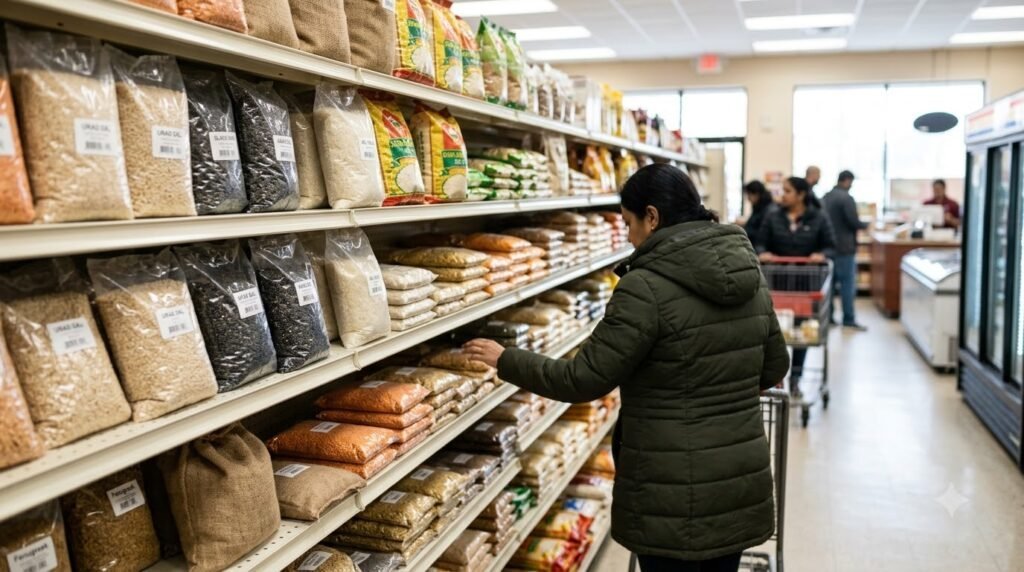
At Subzi Mandi in Iselin, Idli Rice is stocked alongside other South Indian cooking staples.
Sona Masoori
Sona Masoori also appears in South Indian kitchens and is stocked alongside urad dal and other pantry staples.
Whether it is right for your dosa depends on the specific recipe and texture you want.
Parboiled Rice
Traditional idli research frequently uses parboiled rice with dehulled black gram.
If your family recipe specifies a certain rice, use that as the starting point instead of constantly switching rice varieties when the true issue may simply be winter temperature.
Choosing Urad Dal for Dosa Batter
For fermentation-focused recipes, urad dal is not an ingredient you want to treat as an afterthought.
Look for a product appropriate to your recipe and inspect the package for:
- Good condition
- Clean appearance
- Proper seal
- Product date information where provided
- No obvious moisture or damage
Urad dal sits among the core lentils on any Indian pantry staples checklist, and it is stocked at our Iselin store.
When troubleshooting, use a consistent brand or product for several batches before changing multiple variables at once.
That makes it easier to identify whether the real problem is:
ingredient → grinder → water → temperature → time
Finding Dosa and Idli Ingredients in Iselin, NJ
One advantage of making South Indian food in Iselin is access to specialty Indian grocery ingredients.
If you are new to the store layout, our guide to shopping at an Indian grocery store in Iselin covers where to find these sections. Products relevant to dosa and idli preparation include:
- Idli Rice
- Sona Masoori
- Urad dal
- Ready idli/dosa batter and other South Indian grocery products
If you are rebuilding your batter recipe, start with the core ingredients rather than collecting every possible fermentation “booster.”
For a traditional rice–urad batter, your shopping list can remain simple:
- Rice appropriate to your recipe
- Urad dal
- Methi if your recipe uses it
- Salt
- Oil for cooking
- Ingredients for chutney or sambar
For the chutney and sambar side of the meal, keep the essential Indian spices stocked so you are not making a second trip mid-recipe.
Current brands, pack sizes and product availability can change, so check the current weekly specials and plan your visit to one of our store locations.
Cold-Weather Dosa Batter Troubleshooting Table
| What You See | Most Likely Issue | What to Try |
| No bubbles, no rise | Batter too cold or too early | Move warmer and allow more time |
| A few bubbles but little rise | Slow fermentation | Continue in a stable warm environment |
| Sour smell but dense batter | Fermentation occurred but structure is weak | Review urad grinding and consistency next batch |
| Batter very watery | Too much water / poor gas retention | Avoid further dilution; correct water earlier next batch |
| Batter extremely thick | Poor mixing/expansion | Adjust recipe consistency carefully |
| Batter worked in summer but not winter | Temperature difference | Improve winter fermentation environment |
| Idli dense but dosa usable | Insufficient aeration for idli | Improve urad grinding and fermentation |
| Batter rose and then collapsed | Fermentation progressed too far or structure weakened | Refrigerate earlier next batch |
Frequently Asked Questions About Dosa Batter Fermentation in Iselin, NJ
Why is my dosa batter not fermenting overnight?
The most common winter reason is insufficient warmth.
Natural rice–urad fermentation continues more slowly at lower temperatures, so an overnight schedule that works in summer may not be enough in winter. Research commonly evaluates traditional idli fermentation under warm conditions near 30°C.
How long should dosa batter ferment in Iselin during winter?
There is no single guaranteed number of hours.
Traditional studies report roughly 12–15 hours for natural idli fermentation under suitable ambient conditions, but a colder home may require longer.
Watch the batter rather than the clock.
What temperature is good for dosa batter fermentation?
Research on related idli batter frequently uses conditions around 30°C / 86°F.
At home, the goal is a consistently warm environment without exposing the batter to cooking temperatures.
Can I ferment dosa batter in an oven?
A switched-off oven can provide an insulated environment, particularly if your oven light creates gentle warmth.
Keep the oven itself off and make sure the batter cannot accidentally be heated.
Can I use an Instant Pot?
If your model has a yogurt or fermentation program intended for this type of use, it can provide a more controlled environment.
Follow the instructions for your exact appliance instead of assuming every model uses the same temperature or timing.
Does salt stop dosa batter fermentation?
No.
Research has successfully fermented traditional rice–black-gram batter with salt included.
Salt timing varies between recipes, so it should not automatically be blamed for a winter fermentation failure.
Why is my batter sour but not fluffy?
Fermentation can create acidity even when the batter does not trap gas particularly well.
If the batter becomes sour but remains dense, review:
- Urad dal grinding
- Batter aeration
- Consistency
- Ratio
Can I use Sona Masoori for dosa?
Yes, some recipes use Sona Masoori or similar rice.
The final texture will depend on the complete recipe, including urad ratio, soaking, grinding and fermentation.
Is Idli Rice better for dosa batter?
Idli Rice is commonly used for fermented South Indian batters and can work well for dosa.
But there is no need to switch rice if your current recipe already works in warm weather. In that case, winter temperature is the more obvious variable to fix first.
Why is my idli batter not rising but dosa batter works?
Idli depends more heavily on trapped gas and a well-aerated batter structure to produce a soft, spongy result.
A batch with modest fermentation can sometimes still produce acceptable dosa while giving dense idli. Research describes fermented idli batter as a foam-like system in which gas retention contributes to texture.
Can I buy ready-made dosa batter instead?
Yes.
Ready idli and dosa batter is stocked at Subzi Mandi in Iselin as a convenient alternative.
That can be useful when you do not have time for soaking, grinding and fermentation.
Final Cold-Weather Dosa Batter Checklist
Before blaming the recipe, check these in order:
Ingredients
- Rice matches your recipe
- Urad dal is in good condition
- Methi added if your recipe calls for it
Preparation
- Rice and urad soaked adequately
- Urad dal ground smooth and aerated
- Batter is not extremely thick or watery
- Grinder did not overheat the mixture
Fermentation
- Container has room for expansion
- Batter is kept in a stable warm environment
- You are judging bubbles, aroma and texture, not only doubling
- You have allowed more time during cold weather
After Fermentation
- Refrigerate once the batter reaches the fermentation level you want
- Adjust final dosa consistency before cooking
- Note what worked so the next winter batch is easier
Final Takeaway: Fix the Environment Before You Rewrite the Recipe
If your dosa batter refuses to ferment during an Iselin winter, you do not necessarily need a new family recipe.
Start with the simplest explanation:
The batter may be too cold.
Then troubleshoot systematically:
Temperature → time → urad aeration → consistency → ratio → grinding
That order matters.
Changing the rice, adding yogurt, adding yeast, changing the salt, increasing methi and buying a new blender all at once only creates a new mystery.
A controlled process gives you repeatable dosa.
Research on traditional rice–black gram fermentation confirms that successful batter develops through microbial production of acid and gas, and warm conditions are commonly used to support that process.
And if you need to restock the basics, Idli Rice, Sona Masoori, urad dal and ready dosa/idli batter are all available at our Iselin store.
So when the Iselin temperature drops and your batter suddenly becomes stubborn, remember:
Do not troubleshoot winter batter with summer timing.
Give the right ingredients the right environment, and let fermentation do the rest.