
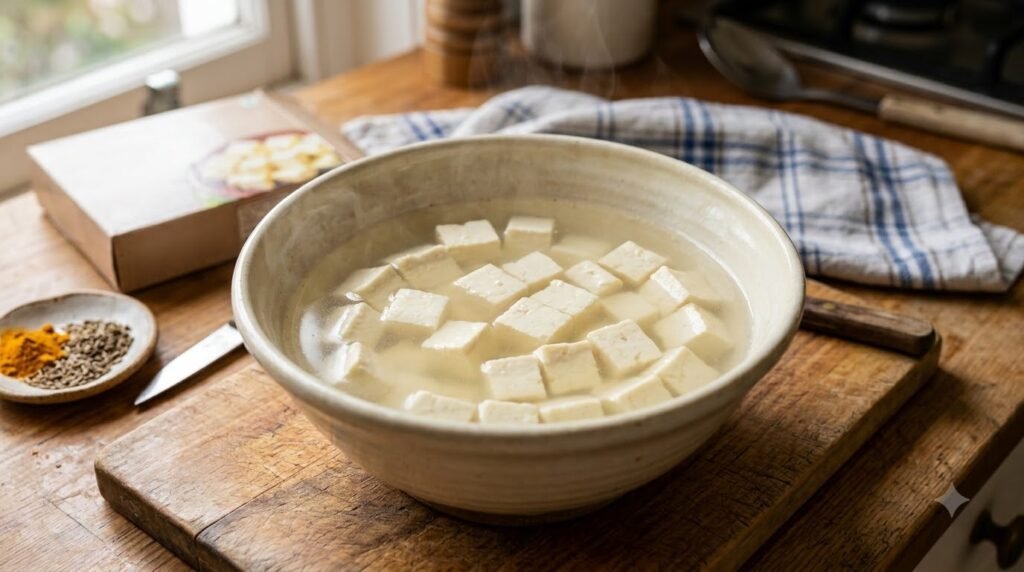
Store-bought paneer can sometimes become firm, dry, or rubbery because of refrigeration, moisture loss, manufacturing methods, or overcooking. The easiest way to soften paneer is to soak cut cubes in warm water for 15–20 minutes before adding them to your dish.
For paneer that feels unusually dense, lightly frying the cubes and soaking them afterward can improve the texture while adding a slightly richer flavor.
The right method depends on how you are using the paneer. Soft paneer works well for gravies, bhurji, and stuffed dishes, while firmer paneer is better for tikka and grilling recipes.
Quick Answer: How To Make Store-Bought Paneer Soft?
| Paneer Condition | Best Solution |
|---|---|
| Soft and fresh paneer | No softening needed |
| Slightly firm after refrigeration | Soak in warm water for 15–20 minutes |
| Dense or chewy paneer | Lightly fry and soak before cooking |
| Paneer for curry | Add after gravy is ready and heat gently |
| Paneer for tikka | Keep firm and avoid excessive soaking |
| Paneer for bhurji | Crumble or grate directly |
The goal is not to make every paneer extremely soft. The ideal texture depends on the recipe you are preparing.
Why Does Store-Bought Paneer Become Rubbery?
Paneer is a fresh, non-melting cheese made by curdling milk, removing whey, and pressing the curds into a block. This process gives paneer its structure and allows it to hold shape during cooking.
However, some packaged paneer can feel harder because of several factors.
Low Moisture Content
During paneer production, pressing removes excess moisture and creates a firm block.
Less moisture can make paneer:
- Easier to cut
- Better at holding shape
- Firmer when cooked
A firm paneer is not always a poor-quality paneer. In fact, a stronger texture can work well for dishes like paneer tikka where cubes need to stay intact.
Fat Content
Fat contributes to richness and mouthfeel.
When comparing similar products, full-fat paneer may feel softer than reduced-fat paneer.
However, softness depends on more than fat alone. Other factors include:
- Moisture level
- Milk quality
- Manufacturing process
- Storage conditions
A higher fat percentage does not always guarantee a softer block.
Refrigeration
Cold paneer often feels firmer because chilling affects its texture.
Allowing paneer to sit briefly after removing it from the refrigerator can help improve flexibility before cooking.
Overcooking
One of the biggest reasons paneer becomes rubbery is cooking it for too long.
Avoid:
- Boiling paneer continuously in gravy
- Cooking on high heat for extended periods
- Over-grilling
Paneer usually needs gentle heating rather than prolonged cooking.
How To Choose Softer Paneer While Shopping
Choosing a suitable paneer before cooking is easier than trying to fix the wrong texture later.
Before buying, consider:
- Paneer type
- Fat content
- Recipe requirements
- Storage condition
- Package quality
The softest paneer is not always the best choice. Different dishes require different textures.
Fresh Paneer vs Store-Bought Paneer: What Is The Difference?
Both fresh and packaged paneer can work well, but they offer different benefits.
| Fresh Paneer | Store-Bought Paneer |
|---|---|
| Usually softer because of higher moisture | Designed for convenience and longer storage |
| Best when used soon after preparation | Easier to keep available |
| Often has a delicate texture | Usually holds shape better during cooking |
| Suitable for soft-texture dishes | Useful for everyday recipes |
Fresh paneer is often preferred for:
- Paneer bhurji
- Stuffed paratha filling
- Dishes where softness is the priority
Store-bought paneer works well for:
- Paneer butter masala
- Palak paneer
- Paneer tikka
- Regular family meals
Full-Fat vs Low-Fat Paneer: Which One Should You Buy?
The fat level can influence the texture and richness of paneer.
Full-Fat Paneer
Better suited for:
- Paneer butter masala
- Creamy gravies
- Rich restaurant-style recipes
It generally provides a richer mouthfeel and softer eating experience.
Low-Fat Paneer
May be preferred when you want a lighter option.
However, lower-fat paneer can sometimes feel firmer because fat contributes to softness.
Texture also depends on:
- Moisture content
- Production method
- Storage
Recipe-Wise Paneer Buying Guide
Choosing paneer according to your recipe gives better results.
| Recipe | Best Paneer Choice | Why |
|---|---|---|
| Paneer butter masala | Full-fat soft paneer | Absorbs rich gravy while staying tender |
| Palak paneer | Soft cubes | Works well with smooth gravy |
| Paneer tikka | Firm paneer | Holds shape during grilling |
| Paneer bhurji | Fresh soft paneer | Easy to crumble |
| Stuffed paratha | Soft fresh paneer | Easy to mash and mix |
The right paneer depends on the cooking method. A very soft block is not always ideal if the recipe requires cubes to stay firm.
Method 1: Soak Paneer In Warm Water
This is the easiest and most common method for softening store-bought paneer.
Use this method when the paneer feels firm after refrigeration but still has a normal texture.
Steps:
- Cut paneer into cubes or pieces according to your recipe.
- Place the pieces in a clean bowl.
- Add warm water until the paneer is covered.
- Leave it for 15–20 minutes.
- Drain the water completely.
- Add the paneer to your prepared dish.
Always use warm water, not boiling water.
Very hot water does not guarantee softer paneer and may affect the texture.
How Long Can You Soak Paneer In Water?
For most store-bought paneer, 15–20 minutes is usually enough to improve softness and remove refrigerator firmness.
Longer soaking does not always make paneer softer because very dense paneer may not absorb much water.
For better results:
- Use warm water instead of hot water
- Drain after soaking
- Use the paneer in the same cooking session
Avoid leaving paneer soaked for unnecessarily long periods at room temperature.
What Should You Do After Soaking Paneer?
After soaking, the next step depends on your recipe.
For Curry Dishes:
- Drain the water properly.
- Add paneer after your gravy is completely prepared.
- Heat gently for a few minutes.
This helps the paneer absorb flavors without becoming tough.
For Paneer Tikka:
After soaking:
- Remove excess moisture
- Pat the cubes dry
- Continue with marination
This helps the outside develop better texture while cooking.
For Bhurji or Stuffed Paratha:
Do not soak and fry.
Instead:
- Drain properly
- Grate or crumble the paneer
- Use directly in the recipe
Soft, crumbly texture is more important for these dishes.
Method 2: Fry And Then Soak Paneer
This method works well when paneer feels unusually dense or chewy.
It is especially useful for:
- Paneer butter masala
- Palak paneer
- Matar paneer
- Other gravy-based dishes
Steps:
- Cut paneer into equal-sized cubes.
- Pat the surface dry.
- Heat a small amount of oil.
- Lightly fry the cubes until they turn pale golden.
- Transfer them into warm water.
- Soak for 10–30 minutes.
- Drain and add them to your curry.
Avoid frying until dark brown because a thick crust can become chewy after cooking.
How To Cook Paneer Without Making It Tough
Softening paneer is only one part of getting the right texture. Cooking method matters equally.
For Paneer Curry
For dishes like:
- Palak paneer
- Paneer butter masala
- Matar paneer
Follow this method:
- Prepare the gravy completely first
- Reduce the heat
- Add paneer near the end
- Cook gently for around 3–5 minutes
Avoid boiling paneer for a long time.
For Paneer Tikka
Firm paneer works better because the cubes need to hold their shape.
Tips:
- Use larger cubes
- Avoid excessive soaking
- Marinate properly
- Cook only until the outside develops color
Over-grilling can remove moisture and create a chewy texture.
For Paneer Bhurji
For bhurji, softness and crumbling ability matter more than cube shape.
Use:
- Fresh soft paneer
- Grated paneer
- Crumbled paneer
If the paneer is firm, grating it is better than trying to soften it with frying.
Common Mistakes That Make Paneer Rubbery
Boiling Paneer In Gravy For Too Long
Long cooking can make paneer tighter and drier.
Better approach: Prepare the gravy first and add paneer near the end.
Frying Until Dark Brown
Heavy frying creates a thick outer layer that can become chewy.
Light golden frying is enough.
Using Boiling Water
Hotter water does not always mean better softening.
Warm water provides gentler heating and better texture control.
Heating Paneer Repeatedly
Repeated reheating can remove moisture and make paneer firmer.
Prepare only the amount needed whenever possible.
Trying To Fix Spoiled Paneer
Softening methods only change texture. They cannot make spoiled paneer safe. See the warning signs in the “How To Know If Paneer Has Gone Bad?” section below.
How To Use Frozen Paneer Without Making It Chewy
Frozen paneer can become firmer after thawing because freezing changes its texture.
To improve frozen paneer:
- Move it from the freezer to the refrigerator.
- Allow it to thaw gradually.
- Cut into pieces after thawing.
- Soak in warm water if needed.
- Use it in your recipe.
Avoid repeated freezing and thawing because it can further affect texture.
Freezing may change paneer softness permanently, so soaking can improve it but may not completely restore the original texture.
Paneer Storage and Food Safety
Proper storage helps maintain paneer’s texture, freshness and quality.
Follow these practices:
- Keep unopened paneer refrigerated according to the package instructions.
- Store opened paneer in a clean, covered container.
- Avoid keeping paneer at room temperature for long periods.
- Always use clean utensils when handling stored paneer.
If you transfer paneer into another container, make sure it is properly sealed to reduce moisture loss and contamination risk.
How To Store Opened Paneer
After opening the package:
- Place leftover paneer in an airtight container.
- Keep it refrigerated.
- Use it within the recommended time mentioned on the package.
- Check the texture, smell and appearance before cooking.
Paneer can lose moisture during storage, which may make it firmer over time.
How To Know If Paneer Has Gone Bad?
Softening methods cannot fix spoiled paneer.
Avoid using paneer if you notice:
- Sour or unusual smell
- Slimy surface
- Mold growth
- Damaged or leaking packaging
- Strange color changes
Changes in texture alone do not always mean paneer is spoiled, but unusual smell or visible changes are warning signs.
Frequently Asked Questions
Does soaking completely remove the rubbery texture from paneer?
Not always. Warm water soaking can improve flexibility and remove refrigerator firmness, but very dense paneer may remain slightly firm because of its structure. For dense paneer, the fry-and-soak method may provide better results.
Why is my paneer still hard after soaking?
Some paneer remains firm because of lower moisture content, pressing during manufacturing, or storage conditions. Soaking can improve texture, but it cannot completely change every paneer block.
Should I fry paneer before adding it to curry?
Frying is optional. It can help when paneer feels dense, when you want a lightly browned flavor, or when the recipe works well with firmer cubes. Skip frying when you want a softer dairy flavor, a pale appearance, or paneer that can crumble easily.
Which paneer is best for paneer butter masala?
Choose paneer that is soft enough to absorb gravy but firm enough to maintain shape. Full-fat paneer is often preferred for rich and creamy curry recipes.
Which paneer is best for paneer tikka?
Paneer tikka needs a firmer block that can hold its shape during marination and grilling. Avoid overly soft paneer because cubes may break while cooking.
Can frozen paneer become soft again?
Frozen paneer can become firmer after thawing. To improve the texture, thaw slowly in the refrigerator, soak in warm water if needed, and avoid repeated freezing and thawing. The original texture may not always return completely after freezing.
Can I soak paneer overnight?
Long soaking is usually unnecessary. For most store-bought paneer, 15–20 minutes in warm water is enough. Extended soaking can affect texture and is not required for normal softening.
Find Paneer For Your Recipe at Subzi Mandi
Choosing the right paneer can make a noticeable difference in the final dish.
Whether you are preparing:
- Paneer butter masala
- Palak paneer
- Paneer tikka
- Paneer bhurji
- Stuffed parathas
selecting the right texture and format helps you achieve better cooking results.
Subzi Mandi is a South Asian grocery store with New Jersey locations in Iselin, Cherry Hill, East Windsor, Hamilton Township, Parsippany and Piscataway. Ask your nearest store about current paneer options, and check the weekly specials before planning your next paneer recipe.
Final Verdict: How To Keep Store-Bought Paneer Soft
Making store-bought paneer soft does not require complicated techniques.
Remember these key points:
✅ Use warm water soaking for normal firmness
✅ Use fry-and-soak for dense paneer
✅ Add paneer near the end of cooking
✅ Choose paneer according to your recipe
✅ Store paneer properly to maintain quality
The best paneer is not always the softest one. The right choice depends on the dish you are preparing and the texture you want in the final meal.
With the correct selection, preparation and cooking method, store-bought paneer can deliver a soft, flavorful result in everyday Indian recipes.