
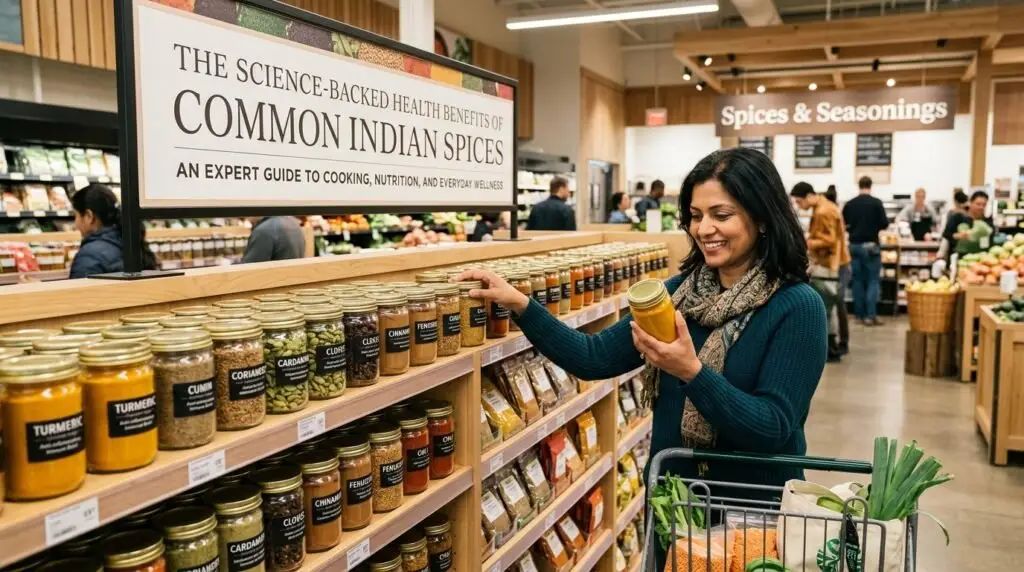
Walk into almost any Indian kitchen, and you’ll find shelves lined with colorful jars filled with aromatic spices.
Turmeric, cumin, coriander, cinnamon, ginger, black pepper, cardamom, cloves, mustard seeds, and dozens of other spices are far more than ingredients that enhance flavor. For centuries, they’ve been central to Indian cooking traditions, family recipes, and holistic wellness practices.
Long before laboratories began studying their chemical composition, these spices were valued for their ability to enrich meals while supporting overall well-being through everyday cooking.
Today, modern nutrition and food science continue to explore many of these traditional ingredients. Researchers have identified naturally occurring compounds such as curcumin, gingerol, piperine, cinnamaldehyde, and eugenol that contribute to the unique characteristics of many Indian spices. While research is ongoing and these ingredients should never be viewed as substitutes for medical treatment, studies suggest that regularly incorporating a variety of spices into a balanced diet may support digestive health, antioxidant defenses, cardiovascular wellness, and healthy inflammatory responses.
The true strength of Indian cuisine lies not in a single “super spice,” but in the thoughtful combination of multiple spices working together to create exceptional flavor and nutritional diversity.
In this comprehensive guide, you’ll discover how common Indian spices contribute to everyday cooking, what modern science says about their potential wellness benefits, how to select and store them correctly, and practical ways to make them part of your daily meals.
Indian spices such as turmeric, cumin, ginger, cinnamon, coriander, black pepper, cardamom, cloves, fennel, fenugreek, mustard seeds, and asafoetida contain naturally occurring bioactive compounds, antioxidants, and plant nutrients. When incorporated into a balanced diet, these spices may help support digestion, healthy inflammatory responses, cardiovascular wellness, immune function, and overall health while adding authentic flavor to everyday cooking.
Why Indian Spices Are More Than Flavor Enhancers
Many people think of spices simply as ingredients that make food taste better.
In reality, spices are among the most concentrated plant foods found in the kitchen.
Although they’re used in small amounts, they naturally contain a remarkable range of beneficial compounds that contribute not only to flavor but also to aroma, color, and nutritional diversity.
Different parts of plants become spices:
- Seeds (cumin, coriander, fennel)
- Bark (cinnamon)
- Roots and rhizomes (turmeric, ginger)
- Flower buds (cloves)
- Fruits (black pepper)
- Resins (asafoetida)
Each offers a distinct combination of essential oils, antioxidants, polyphenols, and naturally occurring phytochemicals.
This diversity is one reason Indian cuisine remains one of the most nutritionally complex culinary traditions in the world.
What Makes Indian Spices Unique?
Unlike artificial flavor enhancers, traditional Indian spices contribute multiple benefits at the same time.
They provide:
- Complex aroma
- Natural color
- Layered flavor
- Culinary depth
- Antioxidant compounds
- Beneficial plant chemicals
- Exceptional versatility across savory and sweet recipes
Rather than relying on excessive salt or sugar, Indian cooking builds flavor by combining carefully balanced spices that complement one another.
Fresh, Whole, or Ground Spices: Which Is Better?
Many shoppers wonder whether whole spices are healthier than ground spices.
The answer depends on how they’re stored and used.
| Whole Spices | Ground Spices |
|---|---|
| Longer shelf life | More convenient |
| Better flavor retention | Faster to use |
| Retain essential oils longer | Lose aroma more quickly |
| Best for grinding fresh | Best for everyday cooking |
| Excellent for spice blends | Ideal for quick meals |
For the richest flavor and aroma, many chefs recommend purchasing whole spices whenever practical and grinding them in small batches.
Why Scientists Continue Studying Indian Spices
Interest in Indian spices has grown significantly over the past few decades because researchers continue to investigate the naturally occurring compounds found within them.
Current scientific research explores areas such as:
- Antioxidant activity
- Healthy inflammatory responses
- Digestive support
- Cardiovascular wellness
- Glucose metabolism
- Gut microbiome interactions
- Nutrient absorption
- Plant-based dietary patterns
While results are promising in many areas, it’s important to view spices as one component of an overall healthy lifestyle rather than as standalone solutions.
Expert Kitchen Insight
One of the biggest reasons Indian cuisine has stood the test of time is its emphasis on balance.
Instead of depending on a single ingredient, traditional recipes combine multiple spices, herbs, legumes, vegetables, and healthy cooking techniques. This layered approach creates not only remarkable flavor but also greater nutritional diversity across everyday meals.
You can also review our fresh herbs guide to learn how cilantro, mint, curry leaves, fenugreek, dill, and tulsi support everyday Indian cooking.
The 12 Most Beneficial Indian Spices and What Science Says About Them
Indian cooking isn’t built around one “super spice.” Its real strength comes from combining multiple spices, each contributing unique flavors, aromas, and naturally occurring plant compounds.
Modern research has explored many of these spices for their antioxidant activity, digestive support, cardiovascular wellness, and other potential health benefits. While these ingredients are not medicines, regularly using a variety of spices as part of a balanced diet can contribute to overall wellness.
Let’s take a closer look at the most commonly used Indian spices.
1. Turmeric (Haldi)
Turmeric is often called the golden spice because of its vibrant yellow color and long history in Indian cooking.
It has become one of the most researched spices worldwide due to its primary bioactive compound: curcumin.
Key Active Compounds
- Curcumin
- Curcuminoids
- Essential oils
- Turmerones
Science-Backed Benefits
Supports a Healthy Inflammatory Response
Curcumin has been widely studied for its role in supporting the body’s normal inflammatory processes.
Powerful Antioxidant Activity
Turmeric contains compounds that help neutralize free radicals, reducing oxidative stress at the cellular level.
Supports Brain Health
Emerging research continues to investigate curcumin’s potential role in supporting healthy cognitive function and protecting brain cells from oxidative damage.
Supports Joint Comfort
Several studies have explored curcumin’s role in supporting joint mobility and comfort when included as part of an overall healthy lifestyle.
Best Culinary Uses
- Dal
- Curry
- Khichdi
- Golden Milk
- Soups
- Vegetable Dishes
Expert Cooking Tip
Turmeric is fat-soluble.
Cooking it with healthy fats like ghee or oil, combined with black pepper, may improve curcumin absorption because piperine in black pepper can enhance its bioavailability.
2. Cumin (Jeera)
Few spices are used as frequently in Indian kitchens as cumin.
Whether whole or ground, cumin forms the aromatic foundation of countless dishes.
Key Active Compounds
- Cuminaldehyde
- Terpenes
- Flavonoids
- Phenolic compounds
Science-Backed Benefits
Supports Healthy Digestion
Research suggests cumin may stimulate digestive enzyme activity and support efficient digestion.
Rich Source of Iron
Although used in small amounts, cumin naturally contains iron, an essential mineral involved in oxygen transport and energy production.
Supports Healthy Blood Sugar Metabolism
Some studies have explored cumin’s potential role in maintaining healthy glucose metabolism when combined with a balanced diet.
Antioxidant Protection
Its naturally occurring antioxidants help defend cells against oxidative stress.
Best Culinary Uses
- Tadka
- Rice
- Curry
- Roasted Vegetables
- Yogurt Dishes
- Spice Blends
Chef’s Tip
Dry roasting cumin before grinding enhances its aroma by releasing essential oils.
3. Coriander (Dhania)
Both coriander seeds and fresh coriander leaves play distinct roles in Indian cuisine.
The seeds provide warm citrus notes, while the leaves contribute freshness and brightness.
Key Active Compounds
- Linalool
- Flavonoids
- Polyphenols
Science-Backed Benefits
Supports Digestive Wellness
Traditionally used after meals, coriander continues to be studied for digestive support.
Rich in Antioxidants
Natural antioxidants help combat oxidative stress.
Supports Heart Wellness
Research has explored coriander’s relationship with healthy cholesterol metabolism.
Supports Healthy Glucose Balance
Some early studies suggest coriander may contribute to maintaining healthy blood sugar levels.
Best Uses
- Chutneys
- Curries
- Marinades
- Spice Mixes
- Soups
Shopping Tip
Whole coriander seeds retain their flavor significantly longer than pre-ground coriander powder.
4. Cinnamon (Dalchini)
Beyond its sweet aroma, cinnamon has become one of the most researched culinary spices.
Key Active Compound
Cinnamaldehyde
Science-Backed Benefits
Supports Healthy Blood Sugar Management
Numerous studies continue investigating cinnamon’s role in supporting healthy glucose metabolism.
Rich in Antioxidants
Cinnamon ranks among spices with exceptionally high antioxidant activity.
Supports Heart Health
Research suggests cinnamon may help support healthy cholesterol and triglyceride levels when consumed as part of a healthy diet.
Natural Antimicrobial Properties
Certain compounds naturally found in cinnamon have demonstrated antimicrobial activity in laboratory settings.
Best Uses
- Chai
- Oatmeal
- Desserts
- Biryani
- Rice
- Curries
Pro Tip
Use Ceylon cinnamon when available for a milder flavor, especially if consumed regularly.
5. Ginger (Adrak)
Fresh ginger adds warmth, freshness, and complexity to Indian cooking.
Its primary active compound, gingerol, has attracted significant scientific interest.
Key Active Compounds
- Gingerol
- Shogaol
- Zingerone
Science-Backed Benefits
Supports Digestive Comfort
Ginger is widely recognized for helping support healthy digestion and reducing occasional nausea.
Healthy Inflammatory Response
Gingerol contributes to ginger’s natural anti-inflammatory properties.
Supports Immune Function
Its antioxidants contribute to normal immune system function.
Cardiovascular Wellness
Ongoing research continues exploring ginger’s potential relationship with cardiovascular health.
Best Uses
- Tea
- Curry
- Soup
- Stir Fry
- Marinades
- Chutneys
Cooking Tip
Fresh ginger provides brighter flavor, while dried ginger offers a warmer, more concentrated taste suitable for baked goods and spice blends.
6. Cardamom (Elaichi)
Often called the Queen of Spices, cardamom contributes remarkable fragrance to both sweet and savory dishes.
Key Active Compounds
- Cineole
- Terpenes
- Flavonoids
Science-Backed Benefits
Rich in Antioxidants
Natural antioxidants help reduce oxidative stress.
Supports Digestive Comfort
Traditionally consumed after meals to promote digestive wellness.
Supports Fresh Breath
Cardamom’s aromatic compounds naturally freshen the mouth.
Supports Cardiovascular Wellness
Some preliminary research has examined cardamom’s relationship with healthy blood pressure.
Best Uses
- Chai
- Desserts
- Kheer
- Rice
- Curries
- Masala Blends
Kitchen Insight
Crush whole cardamom pods just before use to maximize aroma and flavor.
Comparison Table: Which Spice Supports Which Wellness Goal?
| Wellness Goal | Commonly Used Indian Spices |
|---|---|
| Digestive Support | Ginger, Cumin, Coriander, Fennel, Asafoetida |
| Healthy Inflammatory Response | Turmeric, Ginger, Cloves |
| Antioxidant Support | Turmeric, Cloves, Cinnamon, Cardamom |
| Heart Wellness | Cinnamon, Coriander, Fenugreek |
| Nutrient Absorption | Black Pepper |
| Blood Sugar Support | Cinnamon, Fenugreek, Cumin |
| Everyday Cooking | Turmeric, Cumin, Coriander |
Daily Cooking Guide
Instead of relying heavily on one spice, many nutrition professionals recommend incorporating a variety of spices throughout the week.
A balanced Indian kitchen may naturally include:
✔ Turmeric in dals
✔ Cumin in tempering
✔ Coriander in curries
✔ Ginger in tea and vegetables
✔ Cinnamon in breakfast dishes
✔ Cardamom in beverages
✔ Black pepper as a finishing spice
This variety provides broader exposure to different plant compounds while creating more balanced flavors.
Which Indian Spice Has the Most Scientific Evidence?
Turmeric is generally considered the most extensively researched Indian spice because of its active compound, curcumin. Scientific studies have explored its antioxidant activity, support for a healthy inflammatory response, joint health, cognitive function, and overall wellness. However, turmeric works best as part of a varied, balanced diet rather than as a standalone solution.
Expert Nutrition Insight
One of the biggest misconceptions is that a single spice provides all the health benefits. Traditional Indian cooking takes a different approach by combining multiple spices in small amounts. This creates a broader range of flavors and naturally occurring plant compounds while avoiding excessive reliance on any one ingredient.
7. Cloves (Laung)
Cloves are the dried flower buds of the clove tree and are among the most concentrated sources of naturally occurring antioxidants used in cooking.
Despite their small size, cloves contribute bold flavor, warm aroma, and powerful essential oils that make them indispensable in Indian spice blends.
Key Active Compound
Eugenol
Eugenol is responsible for cloves’ distinctive aroma and many of the properties researchers continue to study.
Science-Backed Benefits
Rich in Natural Antioxidants
Cloves consistently rank among the highest antioxidant spices measured by laboratory analysis.
Supports Healthy Inflammatory Response
Eugenol has been studied for its ability to support the body’s normal inflammatory processes.
Supports Oral Wellness
Traditional households have long used cloves for oral comfort, and research continues exploring their antimicrobial properties.
Digestive Support
Small amounts of cloves have traditionally been included in meals to promote digestive comfort after eating.
Best Culinary Uses
- Garam Masala
- Biryani
- Masala Chai
- Rice
- Meat Curries
- Pickles
Chef’s Tip
Use whole cloves during cooking and remove them before serving. They provide excellent aroma without overpowering the dish.
8. Black Pepper (Kali Mirch)
Often called the King of Spices, black pepper plays a much larger role than simply adding heat.
One of its greatest culinary advantages is improving the absorption of certain naturally occurring plant compounds.
Key Active Compound
Piperine
Science-Backed Benefits
Supports Nutrient Absorption
Research suggests piperine may improve the absorption of compounds such as curcumin found in turmeric.
Supports Digestion
Black pepper stimulates digestive secretions that help break down food more efficiently.
Rich in Antioxidants
Naturally occurring antioxidants help protect cells from oxidative stress.
Supports Metabolic Function
Researchers continue studying piperine’s relationship with metabolism and nutrient utilization.
Best Culinary Uses
- Soups
- Dal
- Vegetable Curries
- Egg Dishes
- Salads
- Marinades
Pro Tip
Freshly ground black pepper provides significantly more aroma than pre-ground pepper.
9. Fennel Seeds (Saunf)
Fennel seeds are widely enjoyed after meals throughout India.
Their naturally sweet flavor and refreshing aroma make them both a culinary ingredient and a traditional mouth freshener.
Key Active Compounds
- Anethole
- Flavonoids
- Essential Oils
Science-Backed Benefits
Supports Healthy Digestion
Fennel has traditionally been associated with digestive comfort after meals.
Naturally Freshens Breath
Its aromatic oils contribute to oral freshness.
Rich in Antioxidants
Natural plant compounds help support overall wellness.
Provides Essential Minerals
Fennel contains potassium, calcium, and dietary fiber.
Best Culinary Uses
- Herbal Tea
- Pickles
- Spice Mixes
- Desserts
- Mouth Fresheners
Shopping Tip
Choose fennel seeds that are bright green and fragrant. Dull-colored seeds often indicate age and reduced flavor.
10. Fenugreek Seeds (Methi)
Fenugreek seeds have a distinctive bittersweet flavor that becomes milder during cooking.
Key Active Compounds
- Galactomannan
- Saponins
- Soluble Fiber
Science-Backed Benefits
Supports Healthy Blood Sugar Management
Fenugreek has been extensively studied for its relationship with glucose metabolism.
Rich in Fiber
Its soluble fiber contributes to digestive wellness and feelings of fullness.
Supports Heart Wellness
Research has explored fenugreek’s potential role in maintaining healthy cholesterol levels.
Excellent Mineral Content
Fenugreek naturally contains:
- Iron
- Magnesium
- Manganese
Best Culinary Uses
- Pickles
- Curry Powder
- Lentils
- Vegetable Curries
- Spice Blends
Cooking Tip
Use fenugreek sparingly, as excessive amounts may introduce unwanted bitterness.
11. Mustard Seeds (Rai)
Mustard seeds are fundamental to South Indian tempering and many regional vegetable dishes.
Science-Backed Benefits
Rich in Selenium
Provides important trace minerals.
Contains Beneficial Plant Compounds
Mustard seeds naturally contain glucosinolates and antioxidants that contribute to their nutritional profile.
Supports Digestive Function
Tempering mustard seeds releases their aroma while enhancing the flavor of many dishes.
Supports Healthy Metabolism
Researchers continue investigating mustard’s naturally occurring compounds and their role in metabolic wellness.
Popular Uses
- Tempering (Tadka)
- Pickles
- Vegetable Stir-Fries
- Coconut Chutney
- Dal
Kitchen Insight
Allow mustard seeds to crackle fully in hot oil before adding other ingredients to release their full flavor.
12. Asafoetida (Hing)
Although used in very small quantities, asafoetida has a remarkably strong aroma that transforms after cooking.
It is especially valued in vegetarian cooking.
Science-Backed Benefits
Supports Digestive Comfort
Traditionally used to reduce occasional bloating and improve digestion, particularly in lentil dishes.
Contains Antioxidant Compounds
Naturally occurring plant compounds contribute to its wellness profile.
Supports Gut-Friendly Cooking
Many Indian recipes include hing when preparing legumes to improve digestibility.
Popular Uses
- Dal
- Lentils
- Vegetable Curries
- Tempering
- Bean Dishes
Expert Tip
Only a pinch is needed. Overusing asafoetida can overwhelm a dish.
Fresh Spices vs. Older Pantry Spices
Many people don’t realize that spices gradually lose their aroma and potency over time.
| Freshly Purchased Spices | Older Spices |
|---|---|
| Strong aroma | Weak aroma |
| Vibrant color | Dull appearance |
| Rich essential oils | Reduced oil content |
| Better flavor | Flat taste |
| Higher culinary quality | Lower flavor intensity |
For the best cooking experience, replace frequently used ground spices every 6 to 12 months and whole spices every 1 to 2 years, depending on storage conditions.
Whole Spices vs. Ground Spices
| Whole Spices | Ground Spices |
|---|---|
| Longer shelf life | Convenient for everyday cooking |
| Better essential oil retention | Faster flavor loss |
| Fresher taste | Easier to measure |
| Best for home grinding | Best for quick recipes |
If you cook Indian food regularly, buying whole spices and grinding small batches as needed can provide noticeably fresher flavor.
The Science Behind Indian Spice Combinations
Indian cuisine rarely relies on a single spice.
Instead, carefully balanced combinations create layered flavors while introducing a broader range of naturally occurring plant compounds.
Classic Pairings
Turmeric + Black Pepper
Piperine in black pepper may enhance curcumin absorption.
Ginger + Cinnamon
Frequently combined in herbal teas and warming beverages.
Cumin + Coriander
A classic pairing in curries that balances earthy and citrus notes.
Cardamom + Cloves
Widely used in chai, biryanis, and festive rice dishes for depth and aroma.
Mustard Seeds + Curry Leaves
A hallmark of South Indian tempering that creates a distinctive fragrance.
Common Mistakes When Buying Spices
Many shoppers unknowingly purchase spices that have already lost much of their quality.
Avoid these mistakes:
❌ Buying oversized packets that won’t be used within a reasonable time.
❌ Choosing faded or dull-colored spices.
❌ Ignoring packaging dates.
❌ Purchasing from stores with slow inventory turnover.
❌ Assuming all spice powders are equally fresh.
How to Identify High-Quality Indian Spices
Look for:
✅ Strong natural aroma
✅ Bright, vibrant color
✅ Whole seeds with uniform size
✅ Airtight packaging
✅ Minimal dust or broken pieces
✅ Recent packaging or harvest dates when available
High-quality spices not only improve flavor but also help preserve the naturally occurring compounds that make them valuable in cooking.
Which Indian Spices Should You Use Every Day?
Turmeric, cumin, coriander, black pepper, ginger, cinnamon, cardamom, and fennel are among the most versatile Indian spices for everyday cooking. Together they contribute rich flavor, natural aroma, antioxidants, and beneficial plant compounds while complementing a wide variety of Indian dishes.
Expert Kitchen Insight
One reason Indian cuisine remains so nutritionally diverse is that spices are used in moderation but consistently. Small amounts added across breakfast, lunch, dinner, beverages, and snacks create a wide spectrum of flavors and naturally occurring plant compounds without relying on any single ingredient.
Before restocking your spice box, check Subzi Mandi’s weekly specials for current offers on Indian groceries and pantry essentials.
Frequently Asked Questions
1. Which Indian spice has the most scientifically studied health benefits?
Turmeric is one of the most extensively researched Indian spices because of its active compound, curcumin. Research has explored its antioxidant activity and its role in supporting a healthy inflammatory response, joint comfort, cognitive function, and overall wellness. However, turmeric works best as part of a balanced diet rather than as a standalone solution.
2. Are Indian spices actually healthy?
Yes. Many traditional Indian spices naturally contain antioxidants, essential oils, polyphenols, and other plant compounds that contribute to overall wellness. When used regularly in balanced meals, they can add both flavor and nutritional value.
3. Which Indian spices are best for everyday cooking?
Some of the most versatile spices for daily use include:
- Turmeric
- Cumin
- Coriander
- Black Pepper
- Ginger
- Cinnamon
- Cardamom
- Mustard Seeds
- Fennel
- Cloves
These spices complement a wide variety of Indian dishes while contributing unique flavors and naturally occurring beneficial compounds.
4. Is it better to buy whole spices or ground spices?
Whole spices generally retain their flavor, aroma, and essential oils for longer periods. Grinding spices just before cooking often provides fresher taste and stronger fragrance. Ground spices remain convenient for everyday use but typically lose potency more quickly.
5. How long do Indian spices stay fresh?
Approximate shelf life:
| Spice Type | Shelf Life |
|---|---|
| Whole spices | 1–2 years |
| Ground spices | 6–12 months |
| Fresh ginger | 2–3 weeks (refrigerated) |
| Fresh turmeric | 2–3 weeks (refrigerated) |
Proper storage in airtight containers away from heat, light, and moisture helps preserve quality.
6. Which Indian spice is best for digestion?
Several Indian spices have traditionally been used to support digestion, including:
- Cumin
- Fennel
- Ginger
- Asafoetida (Hing)
- Coriander
These spices are commonly included in Indian recipes because they pair well with legumes, vegetables, and hearty meals.
7. Why is black pepper often paired with turmeric?
Black pepper contains piperine, a naturally occurring compound that research suggests may improve the absorption of curcumin, the primary active compound found in turmeric. This is one reason the combination is frequently used in traditional Indian cooking.
8. Can Indian spices replace medicine?
No. Indian spices should be viewed as flavorful ingredients that contribute to a balanced diet and overall wellness. They are not intended to diagnose, treat, cure, or prevent diseases. Anyone with a medical condition should consult a healthcare professional before making significant dietary changes.
9. What are the best Indian spices for beginners?
If you’re building your first Indian spice collection, start with:
- Turmeric
- Cumin
- Coriander
- Black Pepper
- Red Chili Powder
- Mustard Seeds
- Garam Masala
- Cinnamon
- Cardamom
- Ginger Powder
These spices cover the majority of classic Indian recipes.
10. Should Indian spices be refrigerated?
Most dried spices do not require refrigeration. Store them in airtight containers in a cool, dry, dark cabinet away from heat and direct sunlight. Fresh spices such as ginger and fresh turmeric should be refrigerated.
11. How can you tell if spices have gone stale?
Signs that spices have lost their freshness include:
- Weak aroma
- Dull color
- Flat flavor
- Clumping caused by moisture
- Lack of fragrance when rubbed between your fingers
Replacing stale spices helps maintain the authentic taste of your recipes.
12. Which Indian spices are naturally rich in antioxidants?
Several spices are known for their antioxidant content, including:
- Cloves
- Turmeric
- Cinnamon
- Ginger
- Black Pepper
- Cardamom
- Coriander
Using a variety of spices provides a broader range of naturally occurring plant compounds.
13. Can children safely eat Indian spices?
Yes, most Indian spices can be included in family meals when used in appropriate culinary amounts. Mild spices such as turmeric, cumin, coriander, and fennel are commonly introduced early, while hotter spices should be adjusted according to individual tolerance.
14. How should Indian spices be stored for maximum freshness?
For the best quality:
- Use airtight glass or stainless steel containers.
- Keep spices away from direct sunlight.
- Avoid storing them near the stove or sink.
- Use dry spoons to prevent moisture contamination.
- Label containers with purchase dates to help monitor freshness.
15. What spices should every Indian kitchen have?
A well-stocked Indian pantry typically includes:
- Turmeric
- Cumin
- Coriander
- Black Pepper
- Cinnamon
- Cardamom
- Cloves
- Mustard Seeds
- Fenugreek
- Fennel
- Asafoetida
- Garam Masala
These staples form the foundation of countless traditional Indian dishes.
Visit Subzi Mandi in Iselin to shop for whole spices, ground masalas, fresh herbs, Indian vegetables, and everyday pantry essentials.