
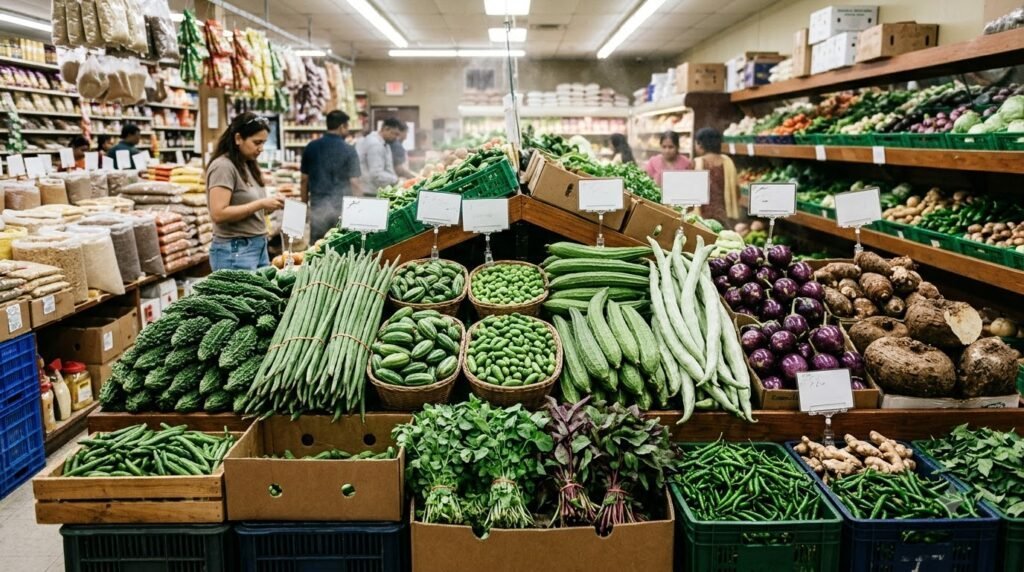
Walk through a typical American supermarket and you’ll find broccoli, zucchini, bell peppers, spinach, carrots and plenty of potatoes. Try finding fresh tindora, parwal or tinda every week, though, and the trip gets a lot harder.
For Indian families in the U.S., the right vegetable can be the difference between an approximate version of a childhood dish and the real thing. For cooks discovering Indian food, these vegetables open up dishes far beyond restaurant favorites like paneer tikka or butter chicken.
This guide covers the Indian vegetables in USA grocery stores that are hardest to find outside South Asian markets: what each one is called, how it tastes and what to cook with it.
Which Indian Vegetables Are Hard to Find in the USA? (Quick Answer)
These 10 are among the most distinctive:
- Karela (bitter gourd)
- Lauki (bottle gourd)
- Tindora (ivy gourd)
- Tinda (Indian round gourd)
- Turai (ridge gourd)
- Parwal (pointed gourd)
- Drumsticks (moringa pods)
- Methi (fresh fenugreek leaves)
- Chaulai (amaranth greens)
- Baingan (small Indian eggplant)
Some may appear in larger American supermarkets, especially in areas with big South Asian communities, but they’re far easier to find consistently at Indian grocery stores.
Indian Vegetable Names in English: Quick Identification Guide
Many of these vegetables go by several names depending on the region and language, so knowing both the Indian and English names makes shopping much easier.
| Indian Name | English Name | Other Names | Taste and Texture | Popular Dishes |
| Karela | Bitter gourd, bitter melon | — | Strongly bitter, firm | Karela sabzi, stuffed karela |
| Lauki | Bottle gourd | Doodhi, ghiya | Mild, tender | Lauki chana dal, kofta |
| Tindora | Ivy gourd | Kundru, tendli, tondli, dondakaya | Crisp, mild | Tindora fry, dry sabzi |
| Tinda | Indian round gourd, apple gourd | Indian squash | Mild, soft when cooked | Tinda masala, stuffed tinda |
| Turai | Ridge gourd | Tori, dodka | Mild, tender | Turai sabzi, dal |
| Parwal | Pointed gourd | Parval, potol | Mild, slightly firm | Aloo parwal, stuffed parwal |
| Drumsticks | Moringa pods | — | Earthy, distinctive | Sambar, curries |
| Methi | Fresh fenugreek leaves | — | Herbal, slightly bitter | Aloo methi, thepla |
| Chaulai | Amaranth greens | — | Earthy, leafy | Saag, stir-fried greens |
| Baingan | Indian eggplant, brinjal | — | Mild, creamy when cooked | Bharwa baingan, curry |
The 10 Indian Vegetables, Explained
For tips on picking the freshest produce for each, see our guide to buying fresh Indian vegetables in NJ.
1. Karela (Bitter Gourd)
Karela’s deeply ridged skin looks dramatic, and its taste lives up to the name. The bitterness isn’t a flaw. It’s the defining quality that traditional recipes are built around.
According to the University of Florida’s IFAS Extension, bitter melon comes in two main types, Chinese and Indian. The Indian type is shorter and smaller, with rough, dark green skin and pointed ridges, and it tastes more bitter than the smoother Chinese type. That’s why Indian cooks often look for it at a South Asian market even when a regular supermarket stocks bitter melon.
How it’s cooked: Recipes balance the bitterness with onion, tamarind, tomato and spices, and many cooks salt karela before cooking to soften it. Try karela sabzi, stuffed karela or dry spiced karela.
2. Lauki (Bottle Gourd)
Lauki is karela’s opposite: gentle, mild and slightly watery. Known as doodhi or ghiya in different regions, it has pale green skin and flesh that soaks up whatever it’s cooked with, which makes it one of India’s classic everyday vegetables.
How it’s cooked: It pairs well with lentils, tomatoes, ginger, cumin and coriander. Popular dishes include lauki chana dal, lauki tomato sabzi, lauki kofta and simple home-style curry. Our guide to types of lentils used in Indian cooking helps you pick the right dal to go with it.
3. Tindora (Ivy Gourd)
Tindora looks like a bunch of miniature cucumbers. You may know it as kundru, tendli, tondli or dondakaya, and its English name is ivy gourd. It’s crisp with a mild vegetable flavor, and sliced and pan-cooked, it’s ideal for dry sabzis.
How it’s cooked: Tindora fry, dry masala sabzi, coconut-based preparations and South Indian stir-fries. If a recipe calls for tindora, don’t swap in tinda just because the names sound alike. They’re completely different vegetables.
4. Tinda (Indian Round Gourd)
Tinda, also called Indian round gourd, apple gourd or Indian squash, is small and round, unlike the long, narrow tindora. It’s mild and becomes tender when cooked, so spices and aromatics do most of the flavor work.
How it’s cooked: Tinda masala, stuffed tinda, tinda with tomato and light curries. It’s closely associated with North Indian home cooking.
5. Turai (Ridge Gourd)
Turai, also called tori or dodka, gets its English name from the sharp ridges that run along its length. Once peeled and cooked, the mild flesh turns soft and absorbs spices easily. Very large, mature ridge gourds can be tougher inside, so medium-sized ones are usually the better buy.
How it’s cooked: Turai sabzi, turai with tomato, turai dal, ridge gourd curry and regional chutneys. It rarely appears on restaurant menus but shows up constantly in home kitchens.
6. Parwal (Pointed Gourd)
Parwal, also spelled parval and called potol in Bengali cooking, is small, oblong and green, often with lighter stripes. It looks a bit like tindora from a distance, but it holds its shape better during long cooking and stuffing.
How it’s cooked: Parwal sabzi, aloo parwal, stuffed parwal, Bengali potol dishes and tomato-based curries. For families from eastern and northern India, finding fresh parwal in the U.S. is a real treat.
7. Drumsticks (Moringa Pods)
In Indian produce sections, “drumsticks” means the long green pods of the moringa tree, not chicken. They’re especially important in South Indian cooking. The thick outer skin isn’t eaten the way green beans are. Instead, cooked pieces are opened or scraped so you can enjoy the soft, earthy pulp inside.
How it’s cooked: Sambar is the classic, along with dal, vegetable curries and regional South Indian dishes. If homemade sambar never tastes quite right, missing drumsticks may be why. Pair it with the right grain using our guide to basmati vs sona masoori vs ponni vs idli rice.
8. Methi (Fresh Fenugreek Leaves)
Many American supermarkets carry fenugreek seeds, but fresh methi leaves are much harder to find. The small green leaves are herbal, aromatic, earthy and slightly bitter, with a flavor strong enough to stay noticeable after cooking.
How it’s cooked: Aloo methi, methi paratha, thepla, dal, saag and rice dishes. Don’t automatically replace fresh methi with kasuri methi. Both come from the same plant, but dried kasuri methi has a far more concentrated aroma and is used differently. For more on keeping leafy greens fresh, see our leafy greens guide.
9. Chaulai (Amaranth Greens)
Spinach is everywhere in American stores, but fresh chaulai, or amaranth greens, is a different story. Its leaves can be green, reddish or purple-toned depending on the variety, with an earthy leafy-green flavor.
How it’s cooked: Chaulai saag, stir-fried greens, dal and mixed vegetable dishes. If spinach is your only leafy green, chaulai opens up a whole new branch of Indian home cooking.
10. Baingan (Small Indian Eggplant)
American supermarkets usually stock large globe eggplants. Indian grocery stores often carry small Indian eggplants, round or oval, usually with purple skin. Their size is the point: they can be cooked whole or slit and stuffed, and the flesh turns soft and creamy.
How it’s cooked: Bharwa baingan, bagara baingan, small-eggplant curry and regional stuffed brinjal recipes. For dishes that keep the eggplant whole, a giant globe eggplant isn’t a good substitute.
Tinda vs Tindora vs Parwal: How to Tell Them Apart
These three cause the most confusion in the produce aisle, especially online, where the names sometimes get mixed up.
| Vegetable | Shape | English Name |
| Tinda | Small and round | Indian round gourd, apple gourd |
| Tindora | Small and elongated | Ivy gourd |
| Parwal | Oblong, often striped | Pointed gourd |
The easiest rule to remember: tinda is round.
Why Are Indian Vegetables Hard to Find in U.S. Supermarkets?
Mainstream supermarkets give their produce space to items with broad, predictable demand, like potatoes, broccoli, carrots, onions, tomatoes and lettuce. Demand for fresh tinda or parwal is concentrated in specific communities, so specialized Indian grocery stores can justify carrying a much deeper selection of regional vegetables.
Availability still varies with region, neighborhood demographics, season, supplier, store size and local demand. In areas with large South Asian populations, mainstream stores increasingly stock items like bitter melon, okra and Indian eggplant, but specialty gourds and greens remain far easier to find at Indian grocers.
Can You Substitute American Vegetables?
Sometimes, though the dish will change.
| Indian Vegetable | Possible Substitute | What Changes |
| Lauki | Zucchini | Works in simple curries; texture and water content differ |
| Turai | Zucchini | Fine when texture isn’t central to the dish |
| Indian eggplant | Globe or other eggplant | Fine for chopped curries; not for whole or stuffed recipes |
| Fresh methi | Spinach plus a little kasuri methi | Captures part of the flavor, not all of it |
Some vegetables are worth waiting for. Drumsticks in sambar are the best example.
Where to Buy Indian Vegetables in the USA
Your best options are Indian grocery stores, South Asian supermarkets, Asian markets with Indian produce sections and specialty produce stores. Subzi Mandi carries fresh Indian produce, including staples like amla and drumsticks, along with spices, staples and frozen foods across nine locations:
New Jersey
- Iselin: 1518 Oak Tree Rd, Iselin, NJ 08830 · (732) 603-0588
- Cherry Hill: 1400 Berlin Rd, Cherry Hill, NJ 08003
- East Windsor: 540 US-130, East Windsor, NJ 08520
- Hamilton Township: 133 Youngs Rd, Hamilton Township, NJ 08619
- Parsippany: 251 Littleton Rd, Parsippany, NJ 07054
- Piscataway: 1347 Stelton Rd, Piscataway, NJ 08854
Texas
- Plano, Irving and Garland
Find phone numbers for every store on our contact page. Fresh specialty produce changes with location, season and delivery schedule, so if your weekend menu depends on fresh methi, parwal or drumsticks, call ahead. And check the weekly specials before you go.
New to shopping at an Indian store? Our complete guide to shopping at an Indian grocery store walks you through every aisle.
A Starter List for New Cooks
Don’t try all ten at once. Start with three:
- Lauki: mild and forgiving
- Tindora: easy to slice and cook as a dry sabzi
- Methi: shows right away why fresh Indian greens matter
Once those feel familiar, move on to turai, tinda, Indian eggplant and parwal. Save karela for when you’re ready to enjoy bitterness on its own terms. Stock up on the basics with our Indian pantry staples checklist, and explore what each vegetable offers nutritionally in 15 Indian vegetables and their health benefits.
Frequently Asked Questions
Are these Indian vegetables available all year in the U.S.?
Not always. Availability depends on season, supplier and the individual store. Call your local Indian grocery store if you need a specific vegetable for a planned recipe.
Can I buy amla and drumsticks at Subzi Mandi?
Yes. Subzi Mandi lists amla and drumsticks among the Indian staples in its daily fresh produce selection. Selection can vary by store and delivery day, so call ahead if you need them for a specific dish.
Find the Vegetables Behind the Dishes You Love
Finding Indian vegetables in the USA is easier than it used to be, but finding the right one reliably still often means going beyond the regular supermarket. Specialized South Asian grocers keep that variety alive, from bitter karela and mild lauki to crisp tindora, earthy drumsticks and fresh methi.
At Subzi Mandi, the produce aisle helps families cook the dishes they grew up with and gives curious cooks a chance to discover something new. Next time you spot an unfamiliar vegetable, ask what you can cook with it.
Subzi Mandi Iselin
1518 Oak Tree Rd, Iselin, NJ 08830
(732) 603-0588 | info@thesubzimandi.com
All Locations