
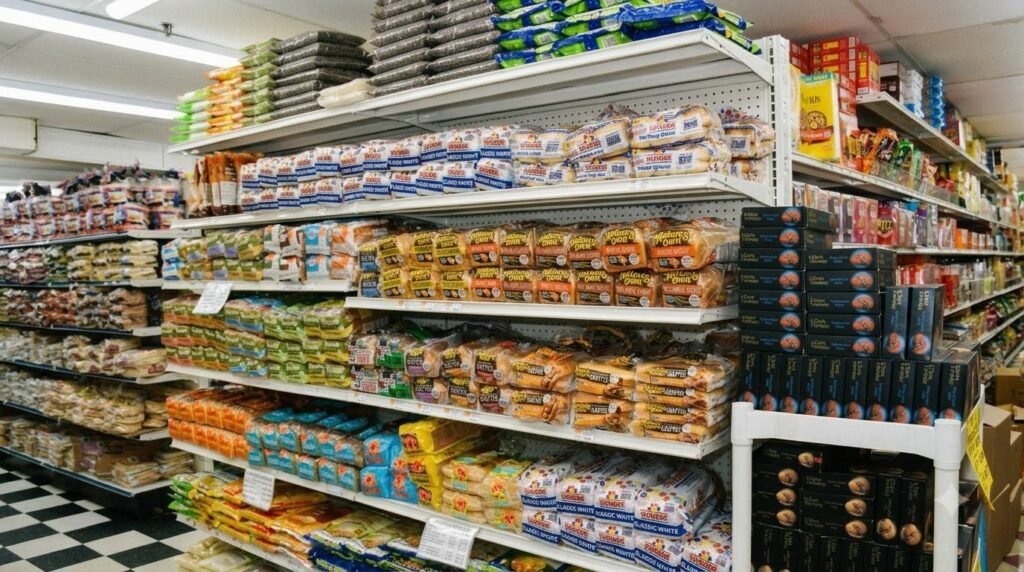
If you cook Indian food regularly, you’ve probably wondered whether to buy your groceries at an Indian grocery store or a regular supermarket. Both are useful, but they serve different needs.
A regular supermarket is convenient for everyday essentials like milk, bread, eggs, cleaning supplies and common produce. An Indian grocery store goes much deeper into ingredients used in Indian and South Asian cooking: regional rice varieties, lentils, atta and specialty flours, whole spices and masalas, Indian vegetables, pickles, snacks, sweets, frozen foods and familiar brands.
So the real difference isn’t store size. It’s depth of selection, how relevant the products are to your recipes, pack sizes and whether the exact ingredient you need is on the shelf.
Indian Grocery Store vs Supermarket: Quick Comparison
| Shopping Factor | Indian Grocery Store | Regular Supermarket |
| Indian spices and masalas | Extensive selection | Usually limited |
| Rice, dal and atta varieties | Wide range | Basic selection |
| Indian vegetables and herbs | Treated as core inventory | Mostly mainstream produce |
| South Asian brands | Several per category | One or two international brands |
| Frozen Indian foods | Broad selection | Small international section |
| Indian snacks and sweets | Extensive | Limited |
| Regional ingredients | Often available | Hard to find |
| Family-size staples | Common | Varies |
| General household products | Available in some stores | Usually extensive |
| Recipe-specific shopping | Strong advantage | May need substitutions |
| Festival products | Stronger, seasonal | Limited |
Which store is better depends on what you’re cooking, how often you use Indian ingredients and how you like to shop.
1. Product Depth Is the Biggest Difference
Supermarkets stock products with the broadest demand. An Indian grocery store serves a more specialized customer base, so it can give far more shelf space to South Asian ingredients.
Rice is a good example. A supermarket may carry white, brown and jasmine rice plus one or two basmati options. An Indian grocery store may carry several basmatis along with rice for everyday meals, biryani, idli, dosa and regional dishes. Our guide to basmati vs sona masoori vs ponni vs idli rice explains the differences.
Flour is similar. Instead of choosing between white and whole wheat, you’ll find atta, besan, maida, sooji, rice flour and millet flours, each made for specific recipes. That depth matters when a dish depends on the correct ingredient rather than a close substitute.
2. Spices Go Far Beyond “Curry Powder”
A supermarket may carry turmeric, cumin, coriander, chili powder and a general garam masala, and those can take you a long way. But Indian cooking uses a much broader spice vocabulary: ajwain, hing, kasuri methi, black cardamom, mustard seeds, fennel, amchur, black salt, chaat masala, biryani masala, sambar powder, pav bhaji masala and many regional blends.
You’ll also find whole spices, ground spices, blended masalas, pastes and ready-to-cook seasonings side by side. That makes an Indian grocery store especially useful when you want to recreate a specific regional recipe without substituting half the ingredients. Learn how each spice is used in our guide to understanding Indian spices.
3. Fresh Produce Looks Very Different
A mainstream supermarket is excellent for potatoes, onions, tomatoes, carrots, lettuce, bananas and apples. Indian cooking also calls for karela, tindora, bottle gourd, Indian eggplant, okra, drumsticks, amla, green chilies, curry leaves, methi and fresh coriander.
Some supermarkets in diverse areas carry a few of these, but a South Asian grocery store is far more likely to stock them as everyday items rather than occasional imports. For households that cook Indian meals several times a week, that can mean one trip instead of three to finish a recipe. Meet the vegetables in our guide to Indian vegetables in the USA, and learn to pick the freshest in how to buy fresh Indian vegetables.
4. More Regional Choice and Familiar Brands
There’s no single “Indian food.” Punjabi, Gujarati, Bengali, South Indian, Maharashtrian, Rajasthani, Goan and Kashmiri cooking each have their own staples, spice blends, snacks, pickles and grains. A supermarket’s international aisle can’t cover them all in depth, but a specialty store stocks them because its customers look for them. Explore the differences in our guide to Indian regional cuisines.
Brands matter more than they first appear. Tea, pickles, atta, ghee, namkeen, masala blends, biscuits and frozen parathas can taste noticeably different from one brand to the next, and people often want the one they grew up with. Supermarkets usually pick one or two brands per category, while Indian grocery stores carry several, which lets experienced shoppers find their favorite and newcomers compare.
5. Frozen and Ready-to-Cook Foods
A supermarket may stock naan, a few frozen curries and some popular Indian meals. A specialized store usually offers much more: parathas, samosas, snacks, frozen vegetables, breads, chutneys, sweets and ready-to-cook dishes. That’s useful not just for traditional cooks but for students, busy professionals and beginners who want Indian flavors without making every component from scratch. Read more in ready-to-eat Indian food vs home cooking.
6. Festival and Occasion Shopping Is Easier
Diwali, Holi, Navratri, Eid, Raksha Bandhan, Pongal, Onam, weddings and religious gatherings can call for sweets, dry fruits, specialty flours, fasting ingredients, snacks and ghee that aren’t part of a supermarket’s year-round inventory. A store serving South Asian communities is closely tied to this seasonal demand. Plan ahead with our Indian festival grocery checklist.
Is an Indian Grocery Store Cheaper Than a Supermarket?
Not always. A supermarket may have stronger buying power and promotions on mass-market products, while an Indian grocery store may offer better value on specialty ingredients, larger bags of staples and items a supermarket treats as niche. The answer depends on the product, brand, size, location and current promotion.
To compare fairly:
- Compare identical or equivalent products, not just similar categories.
- Check the unit price (per pound or ounce), not the total on the tag.
- Consider whether you’ll use the larger pack before its quality declines. A big bag of rice may cost less per pound, but a large spice packet makes little sense if you use a teaspoon every few months.
- Look at your whole basket, including current specials, not just one item.
Bulk buying only saves money when the product actually gets used. To estimate realistic quantities, try our 30-day Indian grocery calculator, and check Subzi Mandi’s weekly specials before you shop.
Where a Regular Supermarket Wins
A fair comparison has to admit what supermarkets do well. If most of your list is milk, eggs, cereal, bread, common vegetables, beverages, paper products, toiletries, cleaning and pet supplies, a supermarket is likely the most convenient choice. Large chains may also offer loyalty programs, pharmacies, big non-food sections, pickup, delivery or longer hours. And if you cook Indian food only occasionally, the international aisle may cover everything you need.
The Smartest Strategy: Split Shopping
Instead of asking which store is better, ask which store is better for what you need this week.
| Buy at the Indian Grocery Store | Buy at the Supermarket |
| Dal, rice and atta | Milk, eggs and bread |
| Spices and masalas | Cereal and breakfast items |
| Indian vegetables and fresh herbs | Mainstream produce you already buy there |
| Paneer and Indian dairy | Beverages |
| Frozen parathas, samosas and snacks | Paper products and toiletries |
| Pickles, chutneys and sweets | Cleaning and pet supplies |
| Festival and regional ingredients | Pharmacy items |
Before you leave home, check your pantry, review current specials and group your list by where each item is easiest to find. Some weeks a single trip will cover everything. New to Indian groceries? Start with our Indian grocery store shopping list.
What to Look For in an Indian Grocery Store
- Produce condition: buy what looks and feels fresh rather than assuming everything is.
- Clear pricing and dates: check labels and expiration dates just as you would anywhere.
- Pack sizes and unit prices: make sure bulk options actually suit your household.
- Helpful staff: ask what an unfamiliar product is used for before buying a large package.
For a full checklist, read how to choose an Indian grocery store in Iselin.
Shopping for Indian Groceries in Iselin
Subzi Mandi on Oak Tree Road in Iselin is built around the categories where an Indian grocery store offers the most depth: fresh produce including Indian vegetables, herbs, amla and drumsticks; authentic spices and masalas; rice and pulses; ready-to-cook products; specialty imports, sweets and chutneys; and frozen favorites like samosas and parathas. It’s a family-owned store where staff help you find the right ingredients and share recipe tips, and weekly specials offer seasonal savings.
Subzi Mandi Iselin: 1518 Oak Tree Rd, Iselin, NJ 08830 · (732) 603-0588
Subzi Mandi also has New Jersey stores in Cherry Hill, East Windsor, Hamilton Township, Parsippany and Piscataway, plus Texas stores in Plano, Irving and Garland. Find the nearest one on the contact page. Stocking a new kitchen? Our Indian pantry staples checklist helps you plan the first big trip.
Frequently Asked Questions
Do regular supermarkets sell Indian groceries?
Many do. Depending on the location, supermarkets may carry basmati rice, lentils, naan, curry sauces, common spices and frozen Indian meals. Their selection is usually far smaller than a store specializing in South Asian groceries.
Is an Indian grocery store only for Indian shoppers?
Not at all. Subzi Mandi serves locals and visitors from all backgrounds, and it’s a great place for anyone exploring Indian cooking. Start with a recipe, bring a list and ask staff when a product is unfamiliar.
Choose the Store That Fits Your List
Choose a regular supermarket when convenience, mainstream groceries and household products make up most of your list. Choose an Indian grocery store when authenticity, regional ingredients, specialty produce, spices, lentils, rice, atta, Indian brands or frozen foods matter more. And use both when that gives you the best mix of selection, convenience and value.
The best store is simply the one with the right product for the meal you’re planning. If your next recipe calls for the vegetables, spices and staples of Indian cooking, visit Subzi Mandi in Iselin and check the latest weekly specials before you go.
Subzi Mandi Iselin
1518 Oak Tree Rd, Iselin, NJ 08830
(732) 603-0588 | info@thesubzimandi.com
All Locations